







Northern Lights Strain Guide
Northern Lights is one of the most decorated, widely grown, and culturally significant cannabis strains ever created. A near-pure indica with Pacific Northwest roots and Amsterdam refinement, it won the Cannabis Cup six times between 1988 and 1994 and set the standard for what indoor indica cultivation could achieve. In the UK, it became the go-to strain for discreet indoor growers throughout the 1990s — its compact size, rapid flowering, and relatively mild odour making it the preferred alternative to the loudly pungent Skunk and Cheese lines.
- Genetics: Afghani indica landrace × Thai sativa landrace — indica dominant
- Origin: Pacific Northwest USA (1970s) → refined at Sensi Seeds, Amsterdam (1980s)
- THC: 16–21% — moderate to moderately high; accessible
- CBD: <1% — negligible
- Top Terpenes: Myrcene (dominant), Linalool, Caryophyllene
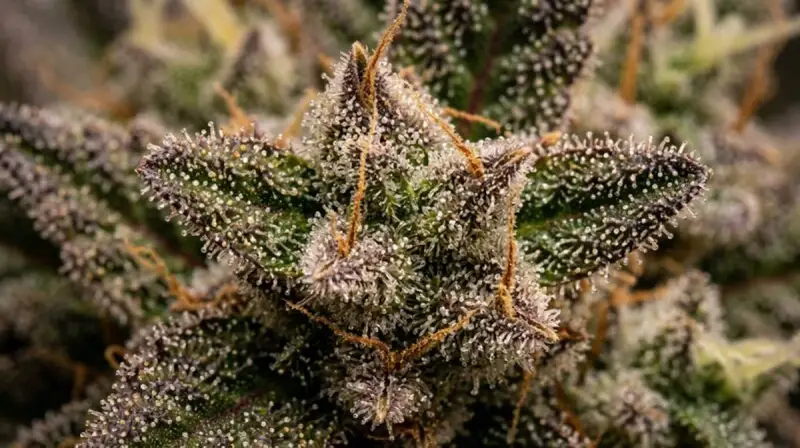
- Aroma: Sweet pine, earthy, subtle spice — notably less pungent than Skunk or Cheese lines
- Main Effects: Deep body relaxation, mental quietude, sedation, appetite stimulation
- Medical Uses: Insomnia, chronic pain, anxiety, muscle spasms, nausea
- UK Note: Preferred indoor strain for British cultivators throughout the 1990s due to low odour and fast finish
Origin & History: From the Pacific Northwest to Amsterdam
Northern Lights traces its origins to an anonymous group of breeders working in the Pacific Northwest of the United States in the late 1970s — the same era and region that gave the world many of the foundational hybrid genetics modern cannabis is built on. The original NL genetics were crosses of Afghani indica landraces with Thai sativa genetics, producing a fast-flowering, resinous plant that leaned heavily toward the Afghani parent in structure and effect while retaining a subtle cerebral quality from the Thai.
The critical chapter in Northern Lights' history came when these genetics reached Nevil Schoenmakers — an Australian-born breeder who established the Seed Bank in the Netherlands in 1985, later becoming part of Sensi Seeds. Schoenmakers recognised the exceptional quality of the NL genetics and worked to stabilise and improve them, eventually producing a range of Northern Lights variants. Of these, Northern Lights #5 became the most celebrated — a highly resinous, remarkably uniform plant that flowered in just 42–45 days and produced quality that consistently surpassed competing strains.
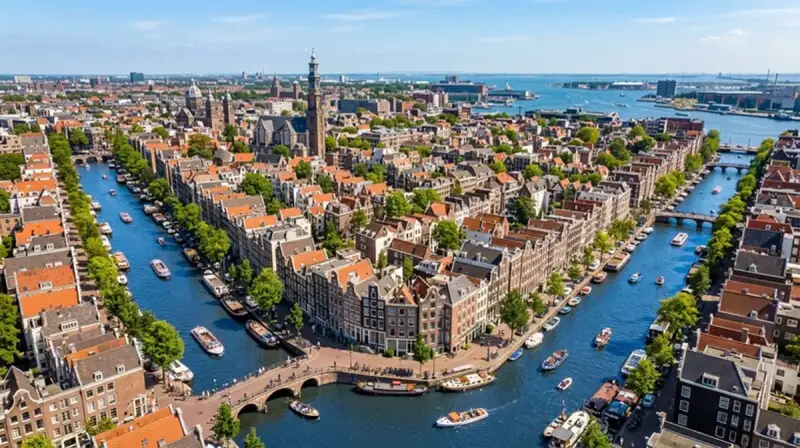
At the first Cannabis Cup in Amsterdam in 1988, organised by High Times magazine, Northern Lights took the top prize. It went on to win the indica category six times through the early 1990s, cementing its reputation as the definitive indoor indica and making Sensi Seeds the most respected genetics company in the world at that time. The Amsterdam Cannabis Cup era was transformative for cannabis culture globally — it created a vocabulary and evaluation standard for quality that has shaped the industry ever since.
“Northern Lights #5 set a standard that the cannabis industry spent the next twenty years trying to surpass. Fast, dense, potent, and consistent — it was the professional's choice.”
Northern Lights in the UK: The Discreet Professional
In the United Kingdom, Northern Lights achieved a particular cultural significance that went beyond the strain's Amsterdam reputation. Throughout the 1990s and into the 2000s, as indoor cannabis cultivation expanded rapidly in British homes and rented properties, the operational requirements of UK growing created a specific set of priorities: compact plant height (for low-ceilinged UK residential spaces), fast flowering (to reduce detection risk), high yield relative to footprint, and — critically — manageable odour.
Northern Lights met all of these criteria more cleanly than the alternatives. Where the Skunk and UK Cheese lines produced aromas so pungent they were nearly impossible to contain, Northern Lights' relatively mild sweet-pine profile was far more manageable with basic carbon filtration. Its compact structure suited the small tent and spare-room grows that defined UK domestic cultivation. Its 6–8 week flowering time matched the short-cycle growing practices that minimised risk. The result was that NL became the professional-standard strain of the British indoor market throughout the decade — the reliable workhorse to Cheese's cultural icon.
British consumers came to associate Northern Lights with a particular quality benchmark — dense, sticky, sweet-smelling buds with a consistent, deeply relaxing effect. In an era before reliable lab testing, the Northern Lights name carried reputational weight as a guarantee of quality. For UK tourists visiting Amsterdam coffee shops during this period, seeing Northern Lights on the menu was a reliable indicator — alongside Amnesia Haze — that the establishment stocked quality genetics. For more on UK cannabis culture, see our London, Manchester, and Edinburgh travel guides.
Genetics & Lineage
The elegance of Northern Lights' genetics lies in its simplicity: a two-way cross between some of the most proven landrace genetics in cannabis history. The Afghani parent contributed everything associated with classic indica cultivation — compact structure, dense buds, fast flowering, and extraordinary resin production. The Thai parent added the subtle cerebral warmth that prevents NL from being purely sedating, giving it a pleasant mood-lifting quality before the body takes over.
| Parent Strain | Type | Origin | Contribution |
|---|---|---|---|
| Afghani | Indica landrace | Hindu Kush mountains, Afghanistan | Compact structure, fast flower (6–8 wks), dense resinous buds, body sedation |
| Thai | Sativa landrace | Southeast Asia (Thailand/Laos region) | Subtle cerebral warmth, mood elevation, sweet aromatic compounds |
Northern Lights is also the genetic foundation for several important hybrid strains. Northern Lights #5 × Haze — a cross of NL#5 with a pure Haze sativa — became one of the most influential hybrid genetics in cannabis history, contributing to countless modern varieties. Super Silver Haze carries NL genetics through this cross.
Terpene & Cannabinoid Profile
Northern Lights' terpene signature is defined by a warm, enveloping earthiness that is sweet and piney rather than sharp or acrid. The dominant myrcene creates the sedative base and earthy musk. Linalool — the same terpene found in lavender — contributes a calming, anxiolytic quality that sets NL apart from purely myrcene-dominant indicas. Caryophyllene adds the subtle spice and anti-inflammatory CB2 receptor activity. Read our full terpenes guide for context on how each compound functions.
| Compound | Type | Typical % | Contribution |
|---|---|---|---|
| THC | Cannabinoid | 16–21% | Primary psychoactive; body sedation, pain relief, appetite |
| CBD | Cannabinoid | <1% | Minimal; slight edge-softening on THC intensity |
| Myrcene | Terpene | 0.5–0.9% | Dominant earthy musk; potentiates THC sedation; body relaxation |
| Linalool | Terpene | 0.2–0.4% | Floral sweetness; anxiolytic effect; softens indica heaviness; promotes sleep |
| Caryophyllene | Terpene | 0.1–0.3% | Peppery spice; anti-inflammatory CB2 agonist; stress relief |
| Alpha-Pinene | Terpene | 0.05–0.15% | Pine freshness; mild alertness; contributes to NL's characteristic pine aroma |
The linalool content is Northern Lights' most clinically interesting characteristic. Linalool is one of the most studied terpenes for anxiolytic (anti-anxiety) effects, with research suggesting it modulates GABA-A receptor activity similarly to benzodiazepines. This helps explain why NL is consistently reported as deeply calming without triggering the paranoid edge some high-THC strains can produce in sensitive users. See Drug Science for independent cannabinoid and terpene research context.
Effects: A Progressive Indica Arc
Northern Lights delivers one of the most classically satisfying indica experiences available. Its effect profile is predictable, consistent, and deeply pleasurable for those seeking physical relaxation and mental quietude. For broader context on how cannabis affects the body, see our cannabis effects guide.

Stage 1 — Warm Mental Uplift (0–15 minutes): Northern Lights opens with a surprisingly pleasant mental phase. The Thai genetics are most apparent here — a warm, comfortable euphoria settles over the mind without the cerebral intensity of a true sativa. Mood lifts. Anxiety softens. Music sounds better. This initial phase is gentle enough that newer users should not be misled into thinking the session will stay light — the body wave is coming.
Stage 2 — Full Body Relaxation (15–60 minutes): The Afghani genetics assert themselves progressively. Starting in the shoulders and neck, a wave of physical relaxation spreads downward through the torso and limbs. Muscle tension dissolves. The linalool's anxiolytic properties reinforce the mental calm established in stage one. Users who are stationary will feel a strong pull toward remaining so; those with minor pain or physical discomfort typically find it meaningfully relieved during this stage.
Stage 3 — Sedation & Sleep (60+ minutes): At higher doses or as the session arc completes, Northern Lights moves firmly into sedative territory. Eyelids become heavy. Appetite intensifies — the famous “munchies” are pronounced with this strain. Sleep typically follows without effort. This is why NL is consistently rated among the best strains available for insomnia management — the transition from relaxed to sleeping is smooth, complete, and repeatable.
Medical Applications
Northern Lights is one of the most therapeutically versatile indica strains available, with a well-documented profile across multiple medical use cases. As with all cannabis, individual responses vary and professional medical advice should precede any therapeutic use. See our medical cannabis resource centre.
| Condition | Mechanism | Notes |
|---|---|---|
| Insomnia | Myrcene + linalool sedation; THC sleep induction | Consistently rated among top strains for sleep; best consumed 1–2 hours before desired sleep time |
| Chronic Pain | THC analgesic; caryophyllene anti-inflammatory | Effective for neuropathic and musculoskeletal pain; widely prescribed in UK medical cannabis programme |
| Anxiety | Linalool GABA-A modulation; THC anxiolytic at low doses | Low-to-moderate doses typically anxiolytic; high doses can increase anxiety in sensitive users |
| Muscle Spasms | Myrcene muscle relaxant; THC central nervous system effect | Used by MS patients; Sativex (UK-approved) uses similar cannabinoid ratios |
| Nausea | THC antiemetic effect at CB1 receptors | Used alongside chemotherapy; well-tolerated by nauseous patients due to mild aroma |
Growing Northern Lights
Northern Lights is widely considered one of the most beginner-friendly indica strains to cultivate. Its Afghani genetics provide vigour, resilience, and a forgiving response to minor nutrient or environmental errors. The combination of compact structure, fast flowering, and exceptional yield-to-space ratio makes it the textbook choice for first-time indoor growers. See our complete cannabis growing guide.
Indoor Growing
Indoors, NL is the archetypal Sea of Green (SOG) strain. Its compact growth structure — typically 60–100cm under indoor conditions — makes it ideal for maximising plant count per square metre. Under 600W HPS or equivalent LED at 18–20 plants/m², growers can expect 400–550g/m² after a 6–8 week flowering cycle. Its relatively mild odour — compared to Cheese or Skunk genetics — means that a properly rated carbon filter manages the smell effectively without engineering challenges.
Nutrients: NL is a moderate feeder. Standard nitrogen-phosphorus-potassium progression: nitrogen-heavy in vegetative growth, phosphorus and potassium dominant from week 2 of flowering. Avoid overfeeding — the Afghani genetics make NL sensitive to nutrient burn. Flush thoroughly for the final 7–10 days before harvest.
Humidity: Keep relative humidity below 50% during late flowering. The dense bud structure increases botrytis (bud rot) risk in humid conditions — airflow is as important as filtration.
Outdoor Growing
NL performs excellently outdoors in temperate climates — its Pacific Northwest origins mean it handles the UK's cool, damp summers better than many strains. Outdoor plants can reach 150–180cm and yield up to 625g per plant in a warm extended season. Harvest falls in late September to early October in Northern Europe. Watch for powdery mildew in cool, wet conditions — the plant's dense foliage traps moisture. Strip lower fan leaves in the final 3–4 weeks to improve airflow.
| Parameter | Indoor | Outdoor |
|---|---|---|
| Flower Time | 6–8 weeks | Late Sep – Oct |
| Yield | 400–550g/m² | Up to 625g/plant |
| Height | 60–100cm | 150–180cm |
| Difficulty | Beginner–friendly | Beginner–friendly |
| Odour | Mild (manageable) | Moderate in flower |
Northern Lights vs. Similar Strains
| Strain | Type | THC | Key Difference | Best For |
|---|---|---|---|---|
| Northern Lights | Indica | 16–21% | — The classic | Insomnia, pain, deep relaxation |
| UK Cheese | Hybrid | 15–20% | Cheese aroma; more sociable onset; less sedating | Socialising, stress, evening use |
| Blue Cheese | Indica-Hybrid | 15–20% | Berry-cheese aroma; linalool overlap with NL; deeper body than UK Cheese | Pain, insomnia, appetite |
| Amnesia Haze | Sativa-Hybrid | 20–25% | Complete tonal opposite — cerebral, energetic, citrus; NL is the bedtime to NL's morning | Daytime creativity, socialising |
| Granddaddy Purple | Indica | 17–23% | Purple genetics; grape/berry aroma; similar sedative profile but fruitier | Pain, insomnia, appetite |
Northern Lights & Drug Testing
Northern Lights' THC content (16–21%) means standard detection windows apply. THC metabolites are fat-soluble and accumulate in body tissue, extending detection windows for regular consumers. For the full methodology breakdown, see our drug testing guide.
| Test Type | Occasional User | Regular User | Daily User |
|---|---|---|---|
| Urine | 3–4 days | 10–15 days | Up to 30 days |
| Blood | 12–24 hours | Up to 36 hours | Up to 7 days |
| Saliva | 24–72 hours | Up to 72 hours | Up to 7 days |
| Hair | Up to 90 days | Up to 90 days | Up to 90 days |
Further Reading & Research
- Drug Science — independent cannabinoid and terpene research (Prof. David Nutt)
- UK Government: Drug Possession Penalties