

Reviewed by the ZenWeedGuide Policy Team — laws verified
- Amendment 64 passed November 2012; first US state to legalize recreational cannabis
- Adult-use retail sales launched January 1, 2014 — the first in the world
- Age requirement: 21+ for recreational purchase and possession
- Public possession limit: 1 ounce (28 grams) of cannabis
- Home cultivation: up to 6 plants per adult, max 3 flowering at one time
- Purchase limit per transaction: 1 ounce of flower or equivalent concentrate
- Denver has additional local social consumption rules for licensed venues
Colorado Cannabis: Quick Reference
| Category | Rule |
|---|---|
| Possession limit (public) | 1 oz (28 g) flower |
| Home cultivation | Up to 6 plants per adult; max 3 flowering |
| Purchase age | 21+ |
| Medical program | Yes — since 2000 (Amendment 20) |
| Recreational legal since | 2012 (sales from 2014) |
| Regulator | Colorado MED (Marijuana Enforcement Division) |
| Purchase limit per visit | 1 oz flower or equivalent |
Recreational Use Laws
Colorado’s Amendment 64, the “Regulate Marijuana Like Alcohol” initiative, passed with 55% of the vote in November 2012. Colorado and Washington were the first two US states to legalize recreational cannabis. Colorado opened its recreational retail market on January 1, 2014 — the first in the world — setting the regulatory template adopted by other states.
Possession Limits
Adults 21 and older may legally possess up to 1 ounce (28 grams) of cannabis in public at any one time. This applies to all cannabis forms combined. At home, there is no explicit storage cap above 1 ounce for personally cultivated or legally purchased product, though demonstrating lawful acquisition matters if questioned. Concentrates and edibles are subject to the same 1-ounce equivalent limit for public possession.
Purchase Limits
Licensed dispensaries may sell up to 1 ounce of flower per transaction to recreational customers. Concentrates and edibles are measured in equivalents: 8 grams of concentrate or 800 mg of THC in edibles equals 1 ounce. Some dispensaries track purchases across their locations and may enforce daily caps. Colorado residents and non-residents are subject to the same purchase limits.
Public Consumption
Public consumption of cannabis remains prohibited in Colorado. Smoking, vaping, or ingesting cannabis in any public space, vehicle, or federal land is illegal. Violations are civil infractions carrying fines. Denver has a Social Consumption Pilot Program allowing certain licensed businesses (hotels, yoga studios, art galleries) to permit on-site cannabis consumption, but this is tightly regulated and venue-specific.
Home Cultivation
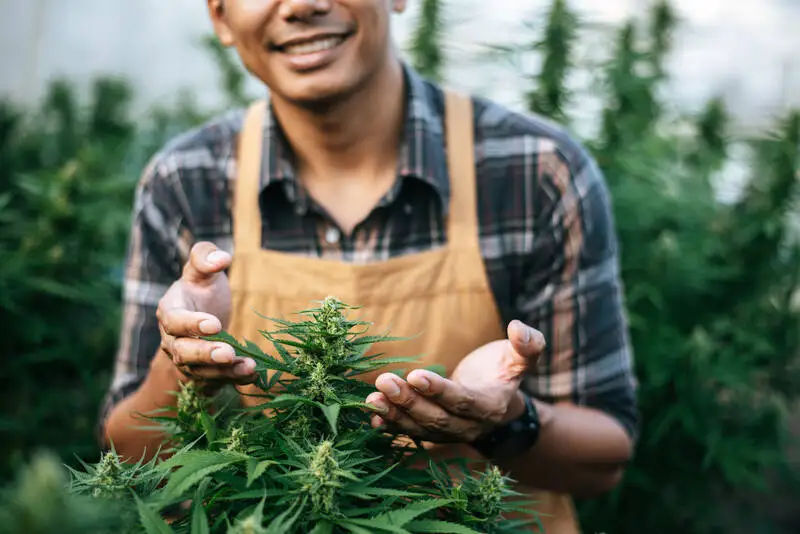
Adults 21+ may grow up to 6 plants per person, with a maximum of 3 plants in the flowering stage at any time. A household with two or more qualifying adults is capped at 12 plants total. Plants must be grown in an enclosed, locked space not visible from a public area. Landlords may prohibit cultivation in rental agreements.
Medical Cannabis in Colorado
Colorado voters approved Amendment 20 in 2000, establishing one of the country’s earliest state-level medical cannabis programs. The program is overseen by the Colorado Department of Public Health and Environment (CDPHE) and operates alongside the recreational market.
Qualifying Conditions
Colorado’s medical cannabis program covers cancer, glaucoma, HIV/AIDS, cachexia, severe pain, severe nausea, seizures (including epilepsy), persistent muscle spasms (including those from MS), and PTSD. A physician must certify the condition and issue a written recommendation. Patients receive a Red Card (Medical Marijuana Registry ID) from CDPHE.
Patient Card & Benefits
Medical patients may possess up to 2 ounces and may apply to grow more than the standard 6-plant recreational limit. Medical products carry lower tax rates. Patients under 18 may access the program with two physician recommendations and parental consent. The Red Card must be renewed annually.
Penalties for Cannabis Violations in Colorado
| Violation | Penalty | Notes |
|---|---|---|
| Public consumption | Civil infraction, $100 fine | Not criminal for first offense |
| Possession over 1 oz (up to 2 oz) | Petty offense, up to $100 fine | No jail time for first offense |
| Possession 2–6 oz | Misdemeanor; up to 18 months / $5,000 | Escalates with prior offenses |
| Possession over 6 oz | Felony; 1–18 months / up to $100,000 | Presumed intent to distribute |
| Underage possession (under 21) | Petty offense; drug education | Diversion preferred for minors |
| Unlicensed sale | Felony, up to 12 years imprisonment | Severity scales with quantity |
| Cannabis DUI | Misdemeanor; license suspension, fines | 5 ng/mL THC blood limit (rebuttable) |
Dispensary Access in Colorado
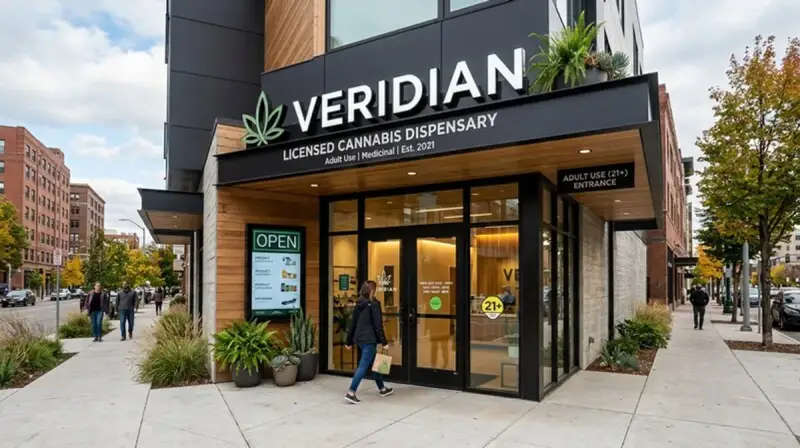
Colorado has hundreds of licensed recreational and medical dispensaries across the state, concentrated in Denver, Boulder, Colorado Springs, and resort towns like Aspen, Vail, and Telluride. The Marijuana Enforcement Division (MED) licenses and regulates all retail activity and maintains a public lookup tool for verifying retailer licenses.
Purchasing Process
Bring a valid government-issued photo ID proving you are 21 or older. Both in-state and out-of-state IDs are accepted. You may browse in-store menus or pre-order online for pickup at many locations. Some dispensaries offer delivery to private residences within their municipality. Cash is widely used; many larger dispensaries accept debit via PIN transaction systems.
ID Requirements and Local Variations
Valid government-issued photo ID is required at every dispensary visit. Acceptable forms include Colorado driver’s license, any US state driver’s license, US passport, military ID, and foreign passports. Visitors from other US states and international tourists are treated equally. The 1-ounce purchase and possession limit applies to everyone.
Cannabis DUI Laws in Colorado
Colorado law establishes 5 nanograms per milliliter (ng/mL) of THC in whole blood as a permissible inference threshold for impaired driving under CRS 42-4-1301. This is not an absolute legal limit — it creates a rebuttable presumption of impairment. Officers may also conduct field sobriety tests and call a Drug Recognition Expert (DRE). Penalties for a first DUI include license revocation, mandatory DUI education, fines, and potential jail time up to one year. Colorado expressly prohibits open cannabis containers in motor vehicles in the same manner as open alcohol containers.
Employer and Housing Rights
Colorado remains an at-will employment state where employers generally retain the right to drug test and terminate employees who test positive for cannabis, even for off-duty use. The Colorado Supreme Court’s 2015 Coats v. Dish Network decision upheld employer rights to terminate medical cannabis users, finding that “lawful activity” protections do not extend to federally illegal substances. Employers in safety-sensitive industries and federal contractors must maintain drug-free workplace policies.
Landlords may prohibit cannabis smoking and cultivation in rental agreements. Federally subsidized housing tenants are prohibited from cannabis use and possession as a condition of federal funding, regardless of Colorado law.
Interstate Travel Warning
Cannabis remains federally illegal. Crossing any state border with cannabis is a federal offense. This includes driving from Colorado to neighboring states such as Utah, Kansas, Nebraska, or Wyoming. Federal highways and airports are federal jurisdiction. Do not transport cannabis across state lines under any circumstances.
Frequently Asked Questions
Can tourists buy cannabis in Colorado?
Yes. Any adult 21+ with valid government-issued photo ID may purchase cannabis at a Colorado licensed dispensary, regardless of state of residence. International visitors with foreign passports are also eligible. However, all purchased cannabis must be consumed within Colorado. Taking it out of state is a federal crime.
Is cannabis legal in all Colorado cities and counties?
No. While state law permits recreational cannabis, local jurisdictions retain the right to ban sales within their borders. Some smaller towns and rural counties have opted out of allowing dispensaries. Always verify local rules before planning to purchase in a specific area.
What is the Denver Social Consumption Pilot Program?
Denver’s Social Consumption Pilot allows certain licensed businesses — including hotel lounges, yoga studios, art galleries, and dedicated cannabis lounges — to permit customers to consume cannabis on-premises. Businesses must obtain a specific permit, and consumption is restricted to the licensed area. This program is unique to Denver and not available statewide.
Does Colorado have a THC blood-level legal limit for driving?
Colorado law sets 5 ng/mL THC in whole blood as a permissible inference of impairment — but this is rebuttable, not an absolute limit. Prosecutors and defense attorneys both present evidence around the THC reading and observed driving behavior. Drivers may still face DUI charges at lower THC levels if other impairment evidence is present.
Further Reading
