








Reviewed by the ZenWeedGuide Policy Team — laws verified May 2026
- SB 1148 signed June 22, 2021; possession legal July 1, 2021; retail sales began January 10, 2023
- Public possession: 1.5 oz flower, 750 mg THC edibles, 7.5 g concentrate; home storage: 5 oz
- Home cultivation legal from July 1, 2023: 3 mature + 3 immature per adult, 6 mature max household
- Connecticut is the only US state taxing cannabis by THC potency (per mg THC at wholesale)
- Social Equity Council with $50 million fund; Hartford, Bridgeport, New Haven priority communities
- Automatic expungement for charges prior to October 2015 for acts now legal
- Per se THC DUI standard: 5 ng/mL blood THC creates rebuttable impairment presumption
- Micro-cultivator and social equity delivery licenses created lower-cost market entry pathways
Connecticut Cannabis: Quick Reference
| Category | Rule |
|---|---|
| Recreational legal status | Legal — retail sales since January 2023 |
| Minimum purchase age | 21+ |
| Public possession (flower) | 1.5 oz (42 g) |
| Public possession (edibles) | 750 mg THC |
| Public possession (concentrate) | 7.5 g |
| Home storage limit | 5 oz usable cannabis |
| Home cultivation (per adult) | 3 mature + 3 immature |
| Household cultivation maximum | 6 mature plants |
| Primary tax mechanism | THC potency tax (per mg THC, wholesale) |
| Retail sales tax | 6.35% state + up to 3% local |
| DUI threshold | 5 ng/mL blood THC (per se) |
| Medical program | Active since 2012 |
| Regulator | Department of Consumer Protection (DCP) |
Legislative History
Governor Ned Lamont signed the Social Equity Cannabis Act (Senate Bill 1148) on June 22, 2021. Adult possession became immediately legal on July 1, 2021, while the retail licensing and sales framework required an additional 18 months of regulatory development. Connecticut’s first licensed recreational retailers opened on January 10, 2023.
Connecticut was notably the first state to embed social equity licensing requirements as a core structural feature rather than a secondary program. The Department of Consumer Protection (DCP) administers cannabis licensing alongside a newly created Social Equity Council empowered to certify applicants, issue grants from the Social Equity and Innovation Fund, and monitor equity outcomes in licensing rounds. The law created distinct license categories: retailers, micro-cultivators, food and beverage manufacturers, dispensary facilities, and dedicated social equity delivery services.
Home cultivation was deliberately delayed to July 1, 2023 to allow the retail market to establish before home grow competition emerged. This staged approach was a deliberate policy decision to support the economic viability of licensed businesses in early market years.
Possession Limits in Detail
| Location | Flower | Edibles | Concentrate |
|---|---|---|---|
| Public possession | 1.5 oz (42 g) | 750 mg THC | 7.5 g |
| Home storage (purchased) | 5 oz | Proportional | Proportional |
| Per transaction (dispensary) | 1.5 oz | 750 mg THC | 7.5 g |
The 5-ounce home storage limit is relatively generous among New England states, allowing consumers to stock up with less frequent dispensary visits. Home-grown harvest amounts may be stored in addition to purchased cannabis limits during the home cultivation period.
Home Cultivation Rules
Home cultivation became legal on July 1, 2023. Connecticut’s split mature/immature framework allows adults to maintain a perpetual grow cycle while capping flowering production:
| Rule | Per Adult | Household Maximum |
|---|---|---|
| Mature (flowering) plants | 3 | 6 |
| Immature plants | 3 | No separate cap beyond 6 mature rule |
| Total plants per adult | 6 | 6 mature maximum |
| Visibility | Not visible from any public space | |
| Security | Locked and inaccessible to minors | |
| State registration | No registration required for personal grows | |
| Multi-adult households | Up to 6 mature plants regardless of how many adults | |
Connecticut’s Unique THC Potency Tax
Connecticut is the only US state to tax cannabis primarily by THC potency rather than by sale price. The wholesale-level tax applies per milligram of THC and varies by product category. This mechanism theoretically discourages high-potency products by making them disproportionately expensive while keeping lower-potency flower relatively affordable:
| Product Category | THC Potency Tax | Effect |
|---|---|---|
| Cannabis flower / leaf | $0.00625 per mg THC | Lowest rate per mg THC |
| Edible cannabis products | $0.01875 per mg THC | 3x flower rate; reflects processing premium |
| Other cannabis products (concentrates) | $0.025 per mg THC | 4x flower rate; highest burden |
| State sales tax (retail) | 6.35% | Standard CT rate on final sale price |
| Local option tax | Up to 3% | Municipal additions; varies by city |
For consumers, the practical impact is that high-potency concentrates carry a substantially higher effective tax burden per dollar of product value compared to standard flower. Critics of the model argue it creates complex compliance burdens for manufacturers and may drive consumers toward the unregulated market for high-potency products. Proponents argue it aligns tax incentives with public health goals by making lower-potency products more accessible.
Dispensary and Purchase Rules
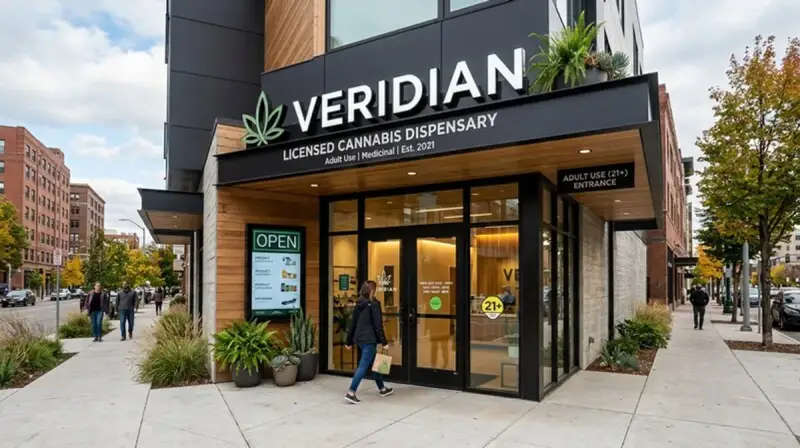
Licensed dispensaries and retailers must verify age at every transaction. No residency requirement applies; out-of-state visitors 21 and older may purchase freely. Hartford, New Haven, and Stamford represent the highest-density retail markets. Social equity delivery licenses were among the first issued in the licensing process, creating mobile delivery capacity across the state.
Connecticut is geographically positioned between New York City and Boston, creating significant cross-border consumer traffic. New York residents visit Connecticut dispensaries, and Rhode Island residents may find Connecticut pricing competitive depending on product type. All cannabis purchased in Connecticut must remain in Connecticut; interstate transport is a federal offense.
Social Equity Provisions
The Social Equity Council was created with authority to certify equity applicants, issue grants and loans from the $50 million Social Equity and Innovation Fund, and monitor licensing outcomes. Disproportionately impacted areas include Hartford, Bridgeport, New Haven, Waterbury, Windham, and others identified in the original statute based on historical arrest data and socioeconomic indicators.
Equity applicants receive priority licensing review, fee reductions, preference in delivery and micro-cultivator license rounds, and access to technical assistance programs. The micro-cultivator license category specifically creates a lower-cost entry point for small operators who cannot compete with large multi-state operator capital in standard cultivator licensing rounds.
Driving Under the Influence of Cannabis
Connecticut has a per se THC DUI threshold of 5 nanograms per milliliter of blood. Exceeding this level creates a rebuttable presumption of impairment. This is one of only a handful of US states with a numeric THC limit in its DUI statute, alongside Colorado and Washington. Prosecutors may also rely on observed behavior and Drug Recognition Evaluator assessments independent of blood THC levels. First-offense DUI in Connecticut carries mandatory fines, license suspension, and potential jail time. Cannabis in a vehicle must be in a sealed container; open-container violations are a separate civil infraction.
Employment and Housing Rights
Connecticut enacted employer cannabis testing protections in 2021. Employers generally may not take adverse action against employees for lawful off-duty cannabis use or for a positive drug test result absent evidence of on-duty impairment. However, safety-sensitive positions, roles subject to federal regulations, and positions where impairment would constitute a direct threat to health or safety remain exceptions. Federal contractors must comply with federal drug-free workplace requirements regardless of Connecticut state law.
Landlords may prohibit cannabis smoking on their properties. Federally subsidized housing applies federal cannabis prohibitions. Workers’ compensation coverage may be affected when cannabis use is found to have contributed to a workplace injury.
Expungement of Prior Convictions
Connecticut’s Social Equity Cannabis Act mandated automatic erasure of cannabis conviction records for acts that are now legal. The Office of Policy and Management oversees the process. Eligible records — primarily possession convictions for amounts now legal under SB 1148 from before October 2015 — are erased without requiring individual petitions. Courts process eligible cases in batches. More serious prior convictions or those outside the automatic category may require individual petitions to the court with jurisdiction.
Local Jurisdiction Opt-Out
Connecticut municipalities may not ban cannabis retail businesses outright but retain significant zoning authority. Local governments may impose setback requirements, limit hours of operation, restrict the number of retail licenses in their jurisdiction, and add the optional 3% local cannabis tax. Hartford, New Haven, and Bridgeport have been active in creating permissive zoning environments to attract social equity applicants. Some smaller towns have used restrictive zoning to limit retail concentration.
Medical Cannabis Program
Connecticut’s Palliative Use of Marijuana Act was signed in 2012. Qualifying conditions include cancer, HIV/AIDS, multiple sclerosis, Parkinson’s disease, epilepsy, PTSD, ALS, Crohn’s disease, sickle cell disease, chronic pain, and other conditions approved by the Department of Consumer Protection. Medical patients benefit from lower effective tax burdens — the THC potency tax still applies at wholesale, but medical patients receive sales tax exemptions at retail that reduce their overall cost. Medical patients also access higher-potency products and may purchase above recreational transaction limits.
Interstate Transportation Rules
Connecticut borders New York, Rhode Island, and Massachusetts, all of which have legal adult-use markets. Despite this legal corridor, transporting cannabis across any state border remains a federal offense. I-95, I-91, and Route 15 corridors are subject to federal jurisdiction at state crossings. Cannabis purchased in Connecticut must remain in Connecticut.
Penalty Reference Table
| Violation | Classification | Potential Penalty |
|---|---|---|
| Public consumption | Civil violation | Up to $150 fine |
| Possession 1.5–5 oz in public | Civil violation (escalating) | Increasing fines; no criminal record |
| Possession over 5 oz | Misdemeanor or felony | Fines; possible imprisonment |
| Unlicensed sale | Felony | Significant fines and imprisonment |
| Sale to minors | Felony (enhanced) | Prison time; mandatory minimum |
| Cannabis DUI (above 5 ng/mL) | Criminal misdemeanor / felony | Fines; license suspension; jail |
| Cannabis near schools | Criminal (enhanced) | Near K–12 schools and youth centers |
Frequently Asked Questions
Can New York residents buy cannabis in Connecticut?
Yes. Connecticut imposes no residency requirement. Any adult 21 or older with valid photo ID may purchase at a licensed retailer. Cannabis may not be transported back across the New York state border; doing so is a federal offense.
Are there cannabis consumption lounges in Connecticut?
SB 1148 included provisions for social consumption venues. As of May 2026, the Department of Consumer Protection has been developing on-site consumption permit rules. Check DCP announcements for current lounge licensing status in Hartford, New Haven, and Stamford.
How does expungement work in Connecticut?
Automatic erasure applies to most cannabis possession convictions for acts now legal under SB 1148 that occurred before October 2015. Courts process these in batches. For offenses outside the automatic category, consult a Connecticut attorney who handles expungement petitions.
Is cannabis delivery legal in Connecticut?
Yes. Licensed retailers and social equity delivery licensees may deliver to private residences within Connecticut. Delivery drivers must verify age at the door. Social equity delivery licenses were among the first issued in Connecticut’s priority equity licensing rounds.
How does the THC potency tax affect concentrate prices in Connecticut?
A typical 1-gram concentrate cartridge with 800 mg THC would carry a wholesale potency tax of $20 (800 x $0.025) before markup, sales tax, and local tax. This makes Connecticut concentrates significantly more expensive than flower on a per-gram basis and more expensive than concentrates in neighboring states with ad valorem (price-based) tax systems.