







Overview: The Strain That Changed Everything
Charlotte’s Web is not just a cannabis strain—it is a cultural and scientific landmark. Developed by the Stanley Brothers in Colorado, it was selectively bred to maximize CBD expression while keeping THC below the federal hemp threshold of 0.3%. The name honors Charlotte Figi, a young girl whose treatment-resistant Dravet syndrome seizures were dramatically reduced after using the strain’s oil extract. Her story, broadcast internationally, became a turning point in how the world viewed cannabis therapeutics.
Unlike most cannabis strains discussed for their psychoactive properties, Charlotte’s Web belongs firmly in the wellness and medical category. Its cannabinoid ratio—with CBD dominating by a factor of 60:1 or more over THC—means that the endocannabinoid system receives a rich CBD signal with virtually no risk of THC-driven intoxication. This makes it one of the few cannabis products legally and practically accessible in most jurisdictions worldwide.
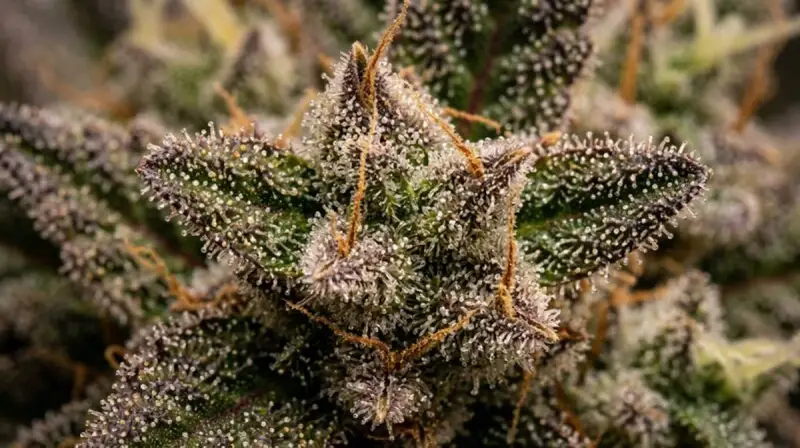
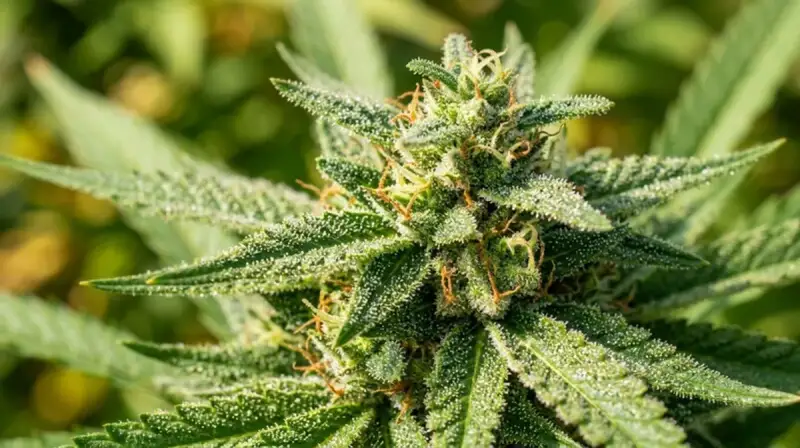
The plant is classified as a hemp cultivar and is grown both in large outdoor hemp operations and in carefully managed indoor environments. It expresses a natural sativa-leaning structure with long internodes, broad fan leaves, and dense resinous colas that are surprisingly fragrant for a CBD-dominant plant. The aroma blends earthy pine with subtle floral undertones and a mild sweetness that becomes more pronounced as the plant approaches peak harvest.
Cannabinoid & Terpene Profile
The defining characteristic of Charlotte’s Web is its exceptional CBD-to-THC ratio. Tested flowers typically show CBD concentrations between 13% and 20%, with some premium phenotypes pushing toward the upper end. THC content is consistently below 0.3%, the legal hemp threshold in the United States and many European countries. CBG and CBC are often present in minor amounts, contributing to what researchers call the entourage effect—the synergistic interaction between cannabinoids and terpenes.
Primary Terpene Breakdown
- Myrcene — The dominant terpene in most phenotypes, contributing earthy musk and enhancing CBD absorption through its reported effect on cell membrane permeability.
- Caryophyllene — Provides a spicy, peppery note and is the only terpene known to directly bind to cannabinoid receptors (CB2), offering additional anti-inflammatory action.
- Pinene (Alpha & Beta) — Responsible for the characteristic pine aroma. Research suggests pinene may support bronchodilation and alertness, complementing CBD’s calming effects.
- Linalool — A floral lavender-like terpene present in smaller amounts, associated with anxiety reduction and synergistic effects with CBD for seizure management.
- Bisabolol — Contributes mild floral sweetness and is studied for its skin-soothing and anti-inflammatory properties.
The full-spectrum extract preserves this terpene matrix alongside CBD, CBG, and trace cannabinoids. Research from the CW Botanicals and independent laboratories consistently shows that whole-plant Charlotte’s Web extracts outperform CBD isolate in pre-clinical models, supporting the entourage hypothesis first articulated by Dr. Ethan Russo.
Effects & Experience
Because THC is negligible, there is no psychoactive high with Charlotte’s Web. Users describe the experience as a gentle, gradual onset of calm clarity. Tension in the shoulders and jaw releases within 20 to 40 minutes of consuming an oil tincture. Racing thoughts quiet without sedation setting in. There is no euphoria in the recreational sense, but many users report a distinct sense of ease and emotional steadiness that persists for several hours.
In clinical observations and user reports, Charlotte’s Web has been associated with reduced seizure frequency in treatment-resistant epilepsy cases, including Dravet syndrome and Lennox-Gastaut syndrome. The 2018 FDA approval of Epidiolex—a purified CBD pharmaceutical—drew directly on the scientific literature that Charlotte’s Web helped generate.
Flavor & Aroma Profile
Charlotte’s Web offers an understated but genuinely pleasant sensory experience. On the nose, fresh buds deliver a piney woodland aroma with earthy undertones reminiscent of damp forest floor after rain. There are subtle floral notes—almost like chamomile or dried hay—that give the scent a calming, pastoral quality. The aroma is never sharp or industrial like high-THC strains bred purely for resin production.
When consumed as a tincture—the most common form—Charlotte’s Web oil has a characteristic mild earthiness with a hint of green bitterness and a pleasant aftertaste of pine and light sweetness. Full-spectrum oils taste noticeably more complex than CBD isolate, which is essentially flavor-neutral. When vaped as flower, the flavor is smooth and mild with pine and floral notes on the exhale.
Flavor Notes
Medical & Wellness Applications
No strain in the modern cannabis era has generated more medical attention than Charlotte’s Web. Its primary claim to fame—reduction of seizure frequency in treatment-resistant pediatric epilepsy—is supported by a body of peer-reviewed research, regulatory approval (via Epidiolex), and thousands of patient reports. The Stanley Brothers work to develop this cultivar represents one of the clearest examples of targeted cannabinoid breeding for a specific medical outcome.
Beyond epilepsy, Charlotte’s Web and its extracts are used across a wide spectrum of conditions where CBD’s documented mechanisms may be beneficial. Anxiety and post-traumatic stress are among the most common reasons adults use CBD products. The calming effect on the nervous system—mediated partly through CBD’s action on serotonin 5-HT1A receptors—provides measurable anxiety reduction without sedation or impairment.
Inflammation-driven conditions including arthritis, inflammatory bowel disease, and chronic pain syndromes are common use cases. Caryophyllene’s direct CB2 receptor binding adds an additional anti-inflammatory pathway beyond CBD itself. Sleep quality improvement is frequently reported by users who take CBD in the evening, though this is likely indirect—improved sleep resulting from reduced anxiety and pain rather than direct sedation.
- Seizure management (Dravet syndrome, Lennox-Gastaut syndrome)
- Generalized anxiety and social anxiety
- Chronic inflammatory pain and arthritis
- Post-traumatic stress disorder
- Sleep onset difficulty secondary to anxiety
- Inflammatory bowel conditions
- Nausea management (particularly in chemotherapy contexts)
Growing Guide
Charlotte’s Web is a moderately straightforward cultivar for growers with some experience, particularly those used to outdoor hemp production. The plant expresses a tall sativa-dominant structure, often reaching 150 to 200 cm outdoors. Internodes are spaced widely, and fan leaves are broad and dark green—a vigorous, healthy-looking plant that responds well to training techniques like low-stress training (LST) or a simple single-point tie-down to manage height.
Outdoors in a warm climate with a long growing season, Charlotte’s Web performs at its best. Colorado, where the Stanley Brothers originally cultivated it, provided ideal conditions: high altitude, intense direct sunlight, and relatively low humidity during the critical flowering window. The strain’s flowering period runs approximately 70 to 85 days from flip, placing harvest in late October in the Northern Hemisphere when grown outdoors.
Growers focused on CBD concentration should pay particular attention to harvest timing. Trichome inspection with a loupe or digital microscope is essential. For maximum CBD and minimum THC degradation, harvest when 70–80% of trichomes appear milky white with only the beginning of amber. Delayed harvest allows CBDA to degrade, reducing the final CBD percentage significantly.
Growing Specs at a Glance
Best Consumption Methods
Because Charlotte’s Web is primarily a hemp cultivar and not a recreational strain, the dominant consumption format is oil tincture. Full-spectrum extracts dissolved in MCT coconut oil or hemp seed oil are placed sublingually for rapid absorption through the oral mucosa. Sublingual absorption bypasses first-pass liver metabolism and delivers CBD to the bloodstream within 15 to 30 minutes, significantly faster than swallowed capsules or edibles.
CBD capsules provide convenience and precise dosing but have slower onset (45–90 minutes) and lower bioavailability due to digestive processing. They are preferred by users who dislike the earthy taste of tinctures and need a consistent daily dose without measuring drops. Topical creams and salves using Charlotte’s Web extract are effective for localized inflammation and skin conditions since CBD penetrates through the skin into superficial tissue without reaching the bloodstream.
Vaping dried Charlotte’s Web flower is another option that provides fast onset (2–10 minutes) and the full entourage effect from the intact terpene profile. This format is preferred by experienced users who want the nuanced effects of the whole plant rather than a processed extract. Starting doses for new CBD users should be conservative—10–20mg daily—and titrated upward gradually while observing effects.