Cannabis Cultivation Specialist at ZenWeedGuide. Expert in strain genetics, terpene profiles, and optimized growing techniques.
Last reviewed: May 2026
7 Key Findings — Dutch Treat
Dutch Treat originated in Amsterdam’s coffee shop culture and was later refined and popularized in British Columbia by Jordan of the Islands seed company, making it one of the few strains with dual European and North American heritage.
The cross of an unknown Dutch sativa (often reported as related to Haze lineage) with classic indica creates a sativa-dominant profile that tests 18–23% THC, delivering cerebral clarity without the anxiety spike common in pure Haze varieties.
Alpha-pinene is a co-dominant terpene alongside myrcene, which is clinically significant: pinene has been associated in preclinical studies with acetylcholinesterase inhibition, potentially moderating THC-induced short-term memory effects (Perry et al., 2000, J Pharmacy Pharmacology).
The eucalyptus-sweet aroma profile is driven by ocimene, a monoterpene also found in eucalyptus, mint, and parsley, contributing anti-inflammatory and antifungal properties documented in peer-reviewed literature.
Indoor flowering time of 7–8 weeks is unusually fast for a Haze-derived hybrid; typical Haze strains require 10–14 weeks, making Dutch Treat commercially viable for multi-cycle indoor cultivation.
Dutch Treat performs exceptionally as a daytime medical cannabis option for patients managing stress-related disorders, with the pinene-myrcene interplay supporting focused calm rather than sedation.
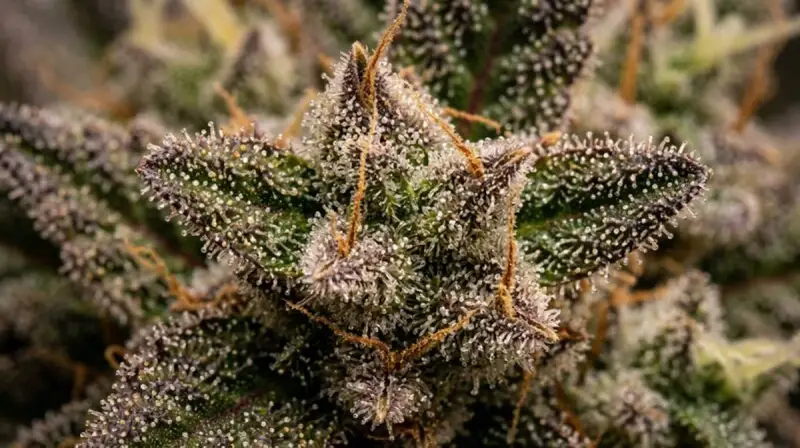
The strain consistently produces 400–500 g/m² indoors with dense, resinous buds that make it suitable for live rosin and dry-sift extraction with trichome yields above average for a hybrid.
Genetics & Lineage
Dutch Treat’s precise parentage is debated in cannabis circles, but the most documented lineage traces to a sativa-dominant Dutch cultivar crossed with an indica to shorten flowering time. The strain gained its enduring reputation through refinement by Jordan of the Islands, a pioneering British Columbia seed company that stabilized Dutch Treat genetics for consistent North American cultivation. The name reflects both its Amsterdam origins and the pleasant, uncomplicated high it delivers.
The sativa parent carries Haze-like qualities — uplifting, cerebral, terpene-rich — while the indica influence (likely a Northern Lights descendant) condenses the plant structure and reduces flowering time from the 12+ weeks typical of Haze to a commercially viable 7–8 weeks. The result is what breeders call a “fast sativa”: a plant that grows and finishes quickly but delivers sativa-dominant effects.
Dutch Treat became a Pacific Northwest icon during the 2000s dispensary era in Washington and Oregon, where its balance of productivity and pleasure resonated with the tech-industry consumer demographic. It remains a benchmark hybrid for what a functional daytime cannabis experience should feel like.
Jordan of the Islands (popularized); original Amsterdam breeding unknown
Origin
Amsterdam, Netherlands; refined in British Columbia, Canada
Era
Late 1980s–1990s coffee shop breeding; NA popularization 2000s
Cannabinoid Profile
Cannabinoid
Typical Range
Effect Contribution
THC
18–23%
Euphoria, creative uplift, mild analgesia
CBD
<0.5%
Minimal; high is THC-driven
CBG
0.3–0.8%
Neuroprotective potential; mood modulation
CBN
<0.2%
Trace sedative contribution in cured flower
Terpene Profile
Dutch Treat’s distinctive sweet-eucalyptus aroma is one of the most recognizable in the hybrid category. The dominance of ocimene alongside pinene is uncommon and produces a profile that smells almost medicinal in its freshness — simultaneously sweet, piney, and herbal.
Terpene
Concentration
Aroma
Effect Notes
Myrcene
0.45–0.65%
Earthy, herbal, musky
Relaxation; body ease; anchor terpene
Alpha-Pinene
0.25–0.40%
Sharp pine, fresh forest
Mental clarity; may counter THC memory impairment
Ocimene
0.20–0.35%
Sweet, tropical, eucalyptus
Uplifting; antifungal; signature Dutch Treat note
Beta-Caryophyllene
0.10–0.20%
Spicy, peppery
CB2 agonist; anti-inflammatory; stress relief
Terpinolene
0.05–0.15%
Floral, herbal, citrus
Antioxidant; mild uplifting quality
Effects & Experience
Dutch Treat delivers a textbook sativa-dominant hybrid experience: the high opens cerebrally, with a clear, warm euphoria that lifts mood without triggering the racing thoughts or anxiety that can accompany more intense Haze varieties. The alpha-pinene component appears to play a role here — preclinical evidence suggests pinene may moderate THC-induced hippocampal activity, keeping the experience grounded and productive.
Within 15–20 minutes of onset, a mild body warmth settles in from the indica side, releasing shoulder tension and promoting a relaxed posture without sedation. Users consistently describe the state as “alert and comfortable” — the sweet spot for afternoon creative work, social engagement, or an active outdoor session.
At higher doses (above 0.25g for inexperienced users), Dutch Treat can shift toward gentle couch-lock, and the euphoria may intensify to a level that some find overwhelming. Dosing discipline is recommended. The THC content of 18–23% places this firmly in the high-potency tier.
Gentle comedown; residual calm; easy sleep if desired
Medical Uses
Dutch Treat has a strong medical reputation built on its functional, non-sedating effect profile. The combination of mood elevation, stress reduction, and mild analgesia without heavy sedation makes it one of the most versatile daytime medical strains available.
Stress & anxiety management: The euphoric onset rapidly interrupts rumination cycles; the pinene component adds a grounding clarity that keeps anxiety in check at moderate doses.
Depression & mood disorders: Dutch Treat’s consistent mood elevation, without the crash associated with high-CBD or CBN-heavy strains, makes it a preferred option for patients managing dysthymia or situational depression.
Fatigue & motivation: Unlike many indica-dominant medical strains, Dutch Treat does not promote sedation at standard doses, making it suitable for patients who need functional pain or mood relief during working hours.
Mild chronic pain: The caryophyllene content (CB2 agonist) contributes an anti-inflammatory component; combined with myrcene’s analgesic properties, Dutch Treat provides moderate relief for musculoskeletal discomfort.
ADHD (anecdotal): Some patients report improved focus and task completion, consistent with pinene’s proposed cholinergic mechanism, though clinical evidence remains limited and individual response varies significantly.
Medical cannabis use should always be discussed with a qualified healthcare provider. Strain-based treatment is not FDA-approved for any condition. Individual response to cannabinoids and terpenes varies significantly.
Flavor & Aroma Profile
Dutch Treat is instantly recognizable by smell to those who know it. The nose is dominated by a fresh, sweet eucalyptus note — not the cough-drop kind, but a lighter, more botanical eucalyptus reminiscent of a mountain forest after rain. Underneath runs a sweet tropical fruit base from the ocimene, and a clean pine resin note from alpha-pinene ties the profile together.
On combustion or vaporization, the flavor profile is well-preserved in quality specimens. The inhale delivers the sweet-pine combination cleanly, with a slight tropical fruit sweetness on the mid-palate. The exhale introduces the earthy-herbal myrcene base, rounding out what is overall an exceptionally pleasant smoke. Dry herb vaporization at 185–190°C preserves the ocimene and pinene best, delivering the fullest expression of the strain’s signature sweetness.
Growing Guide
Dutch Treat is a rewarding cultivar that performs reliably across most growing environments. Its sativa growth pattern — stretchy internodes, large fan leaves — is kept in check by the indica genetics, resulting in a medium-height plant that manages well in standard tent setups without aggressive training.
Cultivation Specifications
Parameter
Indoor
Outdoor
Notes
Flowering Time
7–8 weeks
Mid-to-late October
Fast for a Haze hybrid; major commercial advantage
Yield
400–500 g/m²
500–600 g/plant
Dense, resinous buds; good commercial output
Height
80–110 cm
120–160 cm
Some stretch; low-stress training recommended
Difficulty
Moderate
Easy–Moderate
Forgiving; some humidity management needed late flower
VPD Target (Flower)
1.0–1.4 kPa
N/A
Maintain RH 45–50% at 24°C during peak flower
Feeding
Medium-Heavy
Medium
Responds well to phosphorus boost weeks 4–6
Training
LST, ScrOG
Topping once
ScrOG maximizes the dense bud sites
Growing Tips
Manage humidity in late flower: Dutch Treat’s dense bud structure can trap moisture; keep relative humidity below 50% during weeks 6–8 to prevent botrytis (grey mould).
Light defoliation at week 3: Remove large fan leaves blocking lower bud sites to improve airflow and light penetration without stressing the plant.
Feed with intent: Dutch Treat responds well to a phosphorus and potassium boost during weeks 4–6 of flower, which noticeably increases resin density and bag appeal.
60-day cure for best flavor: The ocimene and pinene terpenes are volatile; a 60-day cure at 62% RH in sealed jars significantly improves the aromatic complexity and smoke quality.
Extraction potential: Dense trichome coverage makes Dutch Treat excellent for live rosin or dry-sift hash; press at low temperature (65–75°C) to preserve the delicate terpene profile.
Consumption Methods
Method
Experience Notes
Recommendation
Dry-herb vaporizer
Best terpene expression; 185–190°C ideal
Highly recommended for flavor
Rolled / joint
Classic delivery; some terpene loss to combustion
Good; use unbleached papers
Glass pipe / bong
Intense delivery; cooled water softens the smoke
Water pipe preferred for smoothness
Live rosin
Amplifies the eucalyptus-sweet profile significantly
Premium option; exceptional flavor
Similar Strains
Blue Dream — Haze-derived sativa hybrid; comparable cerebral uplift with berry flavor
Super Silver Haze — Haze lineage with more energetic, longer-lasting sativa effect
Northern Lights — Indica parent of Dutch Treat; heavy body vs. Dutch Treat’s balanced profile
Amnesia Haze — Similar Amsterdam heritage; more psychedelic and less functional than Dutch Treat
Jack Herer — Comparable daytime hybrid with spicy-pine flavor and focused effect
Frequently Asked Questions
Is Dutch Treat indica or sativa?
Dutch Treat is a sativa-dominant hybrid. Despite the name, it leans cerebral and uplifting thanks to Haze lineage, while its indica side delivers a mild body ease. Most phenotypes are 60–70% sativa in effect profile.
What does Dutch Treat smell like?
Dutch Treat smells of sweet eucalyptus, pine resin, and tropical fruit. Ocimene contributes a floral-sweet topnote, alpha-pinene delivers the sharp pine, and myrcene grounds the profile with an earthy base.
How long does Dutch Treat take to flower?
Dutch Treat finishes flowering in 7 to 8 weeks indoors, which is fast for a Haze-derived strain. Outdoor harvest falls in mid-to-late October in temperate climates.
Is Dutch Treat good for daytime use?
Yes. Dutch Treat’s clear-headed euphoria and functional focus make it well-suited to afternoon or early-evening use. The alpha-pinene component may counteract THC-induced cognitive fog, keeping the high productive.