
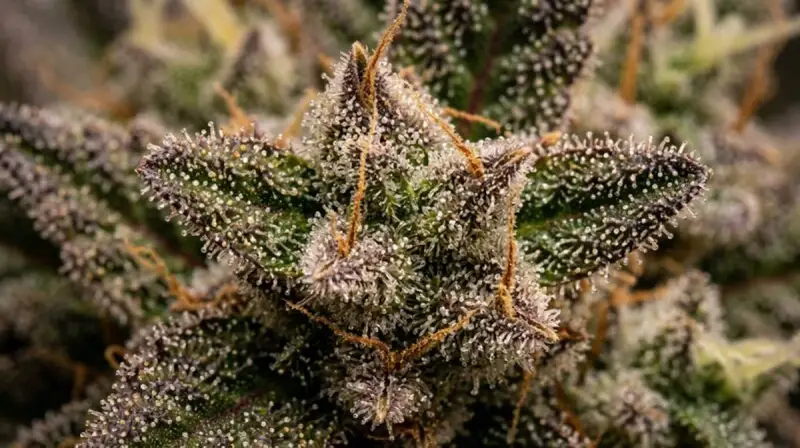






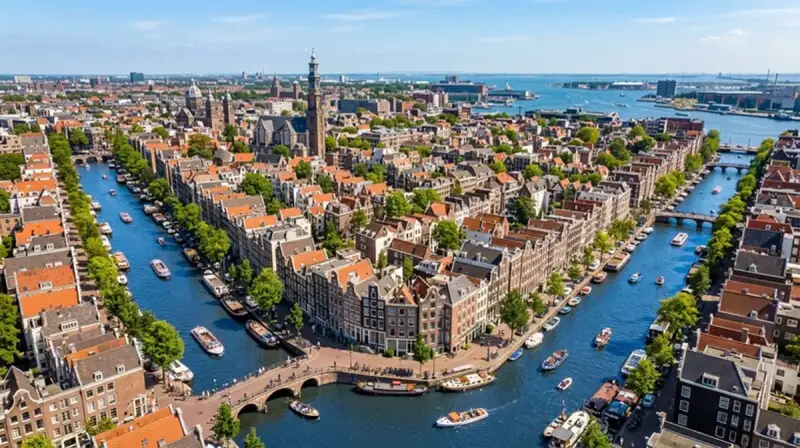

Amnesia Haze is one of the defining strains of modern cannabis culture — not because of a single breeder or a catchy name, but because for a generation of European cannabis consumers, it was the Amsterdam experience. Potent, cerebral, complex, and slightly intimidating to the uninitiated, it remains the benchmark for serious sativa-dominant cannabis more than two decades after its rise.
- Type: Sativa-dominant (~80% sativa / 20% indica)
- THC: 20–25% — potent, not for beginners
- Genetics: Haze × South Asian Indica × Jamaican × South American landraces
- Originator: Soma Seeds (Amsterdam) — most credited version
- Awards: Multiple High Times Cannabis Cup wins
- Effects: Intense cerebral euphoria, creative, energetic, psychedelic headspace
- Flavour: Earthy lemon-citrus, spicy herbal, sweet floral finish
- Best For: Daytime creativity, social sessions, depression, fatigue — experienced users
- Grow Difficulty: Intermediate to advanced
Origin: From California Haze to Amsterdam Icon
To understand Amnesia Haze, you have to understand the Haze family — one of the most significant genetic lineages in cannabis history. The original Haze was developed in Santa Cruz, California in the mid-1970s by a pair of breeders known as the Haze Brothers. They crossed Colombian, Mexican, South Indian, and Thai landrace varieties, creating a tall, long-flowering sativa with a complex terpene profile and cerebral effects that were qualitatively different from anything available at the time.
The Haze Brothers later shared their genetics with Sam "The Skunkman" Siebert, who brought Haze genetics to the Netherlands in the early 1980s. There, working with Dutch seed banks including Sensi Seeds, these genetics were refined, stabilised, and made available to a broader market. The Haze family formed the backbone of a generation of Dutch sativa breeding that produced strains like Super Silver Haze, Neville's Haze, and ultimately Amnesia Haze.
The specific version of Amnesia Haze that became legendary was developed by Soma Seeds in Amsterdam. Soma — a US expat who became one of the Netherlands' most respected cannabis breeders — created a complex cross incorporating Haze genetics with South Asian indica, Jamaican, and South American landrace influences. The result was a strain that maintained the Haze's cerebral intensity while adding aromatic depth and a marginally more manageable growth structure. When it began appearing on Amsterdam coffeeshop menus in the late 1990s and early 2000s, the response was immediate.
"The first time you smoke good Amnesia Haze, you understand immediately why people travel to Amsterdam specifically to try it. There is nothing else quite like it."
For British cannabis consumers, Amnesia Haze became the quintessential Amsterdam discovery strain. The short hop from London, Manchester, or Bristol to Amsterdam made it accessible to generations of UK travellers who had never experienced potent sativa-dominant cannabis at home — where the market was dominated by indica-leaning UK Cheese and Skunk. The contrast was revelatory. Our Amsterdam cannabis travel guide and Netherlands cannabis laws guide cover the coffeeshop scene in detail.
Genetics: The Haze Lineage
Amnesia Haze sits at the end of a long chain of crosses rooted in the original Haze genetics. The full lineage is complex and somewhat disputed between seed banks, but the foundational architecture is consistent:
| Genetic Component | Origin | Contribution |
|---|---|---|
| Haze (original) | Colombia × Mexico × South India × Thailand | Core sativa structure, cerebral effects, aromatic complexity, long flowering |
| South Asian Indica | Hindu Kush region | Slight body weight to balance pure sativa intensity; resin production |
| Jamaican landrace | Jamaica | Uplifting, reggae-warm euphoria quality; tropical fruit notes |
| South American landrace | Colombia / Brazil | Mental clarity, energising effect, citrus-spice aroma contribution |
The result is a genetic profile that draws from five continents and centuries of landrace cannabis evolution, assembled in a Dutch breeding lab and honed over multiple generations for consistency. This depth of lineage is why Amnesia Haze has an aromatic and experiential complexity that single-cross hybrids simply cannot replicate. For context on other important Haze-family strains, see our guides to Super Silver Haze, Purple Haze, and the broader strain database.
Terpene & Cannabinoid Profile
| Compound | Level | Contribution |
|---|---|---|
| THC | 20–25% | Intense cerebral psychoactivity; euphoria; possible memory effects at high doses |
| CBD | <1% | Negligible — pure psychoactive experience |
| Terpinolene | Dominant | Floral, herbal, slightly fruity — the signature top note; energising, slightly psychedelic quality |
| Limonene | High | Fresh lemon-citrus; mood elevation; stress and anxiety relief (paradoxically calms the terpinolene energy) |
| Myrcene | Moderate | Earthy musk base; slight body grounding; prevents the pure sativa experience from becoming too disorienting |
| Alpha-Pinene | Moderate | Fresh pine; documented to partially counteract THC-induced short-term memory impairment |
The terpinolene dominance is the key signature of Amnesia Haze's Haze heritage. Terpinolene is rare as a dominant terpene — most cannabis strains are myrcene-dominant — and its presence creates a uniquely cerebral, almost psychedelic quality that distinguishes Haze-family strains from other potent sativas. The interplay between terpinolene's energising effect and limonene's mood-lifting brightness creates the characteristic Amnesia high: mental, expansive, and almost intellectually stimulating rather than simply intoxicating. Explore our full terpene guide to understand how these compounds shape your experience.
Effects: The Cerebral Experience
Amnesia Haze is not a strain for relaxed evenings on the sofa. It is a daytime, active-mind strain for experienced users who want to push the boundaries of what a sativa head high can deliver. New consumers and those prone to anxiety should approach with extreme caution. Learn more about sativa effects in our cannabis effects guide.
Onset (0–15 mins): The Rush
Amnesia Haze hits fast. Within minutes of inhalation, a powerful wave of euphoria rises from the chest to the head — an almost electric sensation of mental acceleration. Thoughts sharpen and then begin to multiply. Sensory input becomes more vivid: colours slightly brighter, music more textured, conversations more engaging. There is a warm physical flush in the face and upper body, but no heaviness. The overwhelming feeling is one of energy and readiness — as if the day's possibilities have just expanded significantly.
Peak (15–90 mins): Expansion
The peak of an Amnesia Haze session is genuinely psychedelic in the broadest sense of that word — not hallucination, but a profound shift in how the mind engages with its surroundings. Creative connections form rapidly. The ability to stay focused on a single task oscillates with a tendency to follow thought-tangents enthusiastically. Social situations become highly stimulating; isolation can feel intense. At this stage, the strain earns its name — short-term memory becomes notably unreliable, with thoughts begun and forgotten in quick succession. This is the terpinolene-THC interaction at its most pronounced.
Experienced users often describe this as one of the most purely pleasurable cannabis experiences available. Less experienced users may find the intensity challenging. Set and setting matter enormously with Amnesia Haze. A creative project, a museum, a concert, a conversation with a close friend — these are optimal contexts. An unfamiliar social situation or an anxiety-prone state of mind are not.
Comedown (90–180 mins): Soft Landing
Unlike some potent sativas that drop users into fatigue, Amnesia Haze has a relatively pleasant comedown. The intensity decreases gradually rather than suddenly, settling into a comfortable, warm contentment. Many users report heightened appetite toward the end of the session. Fatigue arrives gently, making a natural transition to rest possible without the crash associated with stimulant-type experiences.
Medical Applications
Despite its intensity, Amnesia Haze has genuine medical applications for the right patients:
- Depression: The powerful mood-lifting effect provides relief from low mood and depressive symptoms in patients who tolerate high-THC sativas well
- Fatigue: The energy burst of the onset is one of the more reliable cannabis-based solutions to daytime fatigue
- ADHD: Counter-intuitively, some ADHD patients find that the focused, stimulating onset actually improves task engagement — though outcomes vary significantly
- Chronic stress: The complete break from ordinary thought patterns that Amnesia Haze provides can offer genuine stress relief for those who need mental distance from their concerns
- Appetite: Strong appetite stimulation in the comedown phase

Growing Amnesia Haze
Amnesia Haze is a rewarding but demanding grow. Its sativa heritage means tall, stretchy plants, a long flowering period, and specific environmental requirements. Beginners should gain experience with more forgiving genetics first. Growers with a few successful grows under their belt will find it one of the most satisfying cultivars to work with. Check our cannabis growing guides for full cultivation knowledge.
| Parameter | Detail |
|---|---|
| Flowering Time | 10–11 weeks indoor; late October–early November outdoor |
| Indoor Yield | 600–700g/m² under optimised conditions |
| Outdoor Yield | 700–800g per plant in warm, long-season climate |
| Plant Height | 100–180cm indoor; 200cm+ outdoor — significant stretch |
| Grow Difficulty | Intermediate to advanced |
| Climate | Warm, Mediterranean-type preferred; cold shortens outdoor season too much for NW Europe |
The primary challenge is managing the stretch. Amnesia Haze doubles or even triples in height during the flowering transition — growers who do not plan for this will run out of vertical space quickly. Low-Stress Training (LST) and aggressive topping during vegetative growth help create a more manageable, bushy structure. Screen of Green (SCROG) is particularly effective, keeping the canopy flat and maximising light exposure across a large number of bud sites.
Nutrient requirements are moderate to high. Amnesia Haze is a heavy feeder during late flowering — push phosphorus and potassium as buds develop. The long flowering period demands patience but rewards it: the resin development in the final two weeks is significant. Harvesting too early dramatically reduces both potency and terpene expression. Learn more in our when to harvest guide.
Amnesia Haze vs. Similar Sativa Strains
| Strain | Type | THC | Character | Best Comparison |
|---|---|---|---|---|
| Amnesia Haze | Sativa (~80%) | 20–25% | Psychedelic, cerebral, citrus | The Amsterdam benchmark |
| Super Silver Haze | Sativa | 18–23% | Energetic, less intense | Haze family, more approachable |
| Jack Herer | Sativa-dom. | 18–23% | Clear-headed, spicy | Smoother onset, less psychedelic |
| Haze | Pure Sativa | 15–20% | Pure cerebral, very long flower | The ancestor — less refined |
| Sour Diesel | Sativa-dom. | 19–25% | Fuel aroma, fast-hitting | Similar potency, different character |
Further Reading & Research
- Drug Science — independent cannabinoid and terpene research (Prof. David Nutt)
- UK Government: Drug Possession Penalties