
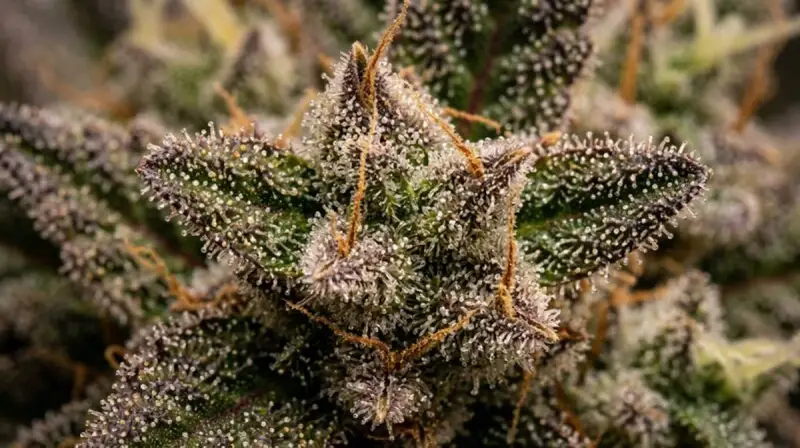








- Green Crack was originally called “Cush” before Snoop Dogg renamed it in the 1990s after experiencing its intensely stimulating effects — a name that stuck despite its provocative connotations.
- Sativa-dominant (65/35) with Skunk #1 genetics; some phenotypes carry Afghani indica influence, producing a separate indica-leaning version with more body effect.
- THC range of 17–25% with no body lock — one of the cleanest energizing highs in the cannabis catalog, suited exclusively for daytime use.
- Dominant terpenes — myrcene, caryophyllene, and ocimene — create a tropical mango-citrus aroma that is distinctly different from diesel or cookies strains.
- Stimulant-profile effects: sharp mental focus, creative energy, social activation, elevated mood — no sedation at any typical dose.
- Medical applications: fatigue, depression, ADHD symptom management (daytime); anxiety-prone users should approach with caution due to the stimulant-like intensity.
- Shorter flowering time (7–8 weeks) than many sativas, compact structure, and adaptability to indoor growing make it one of the most cultivator-friendly sativas available.
Strain Data Overview
| Attribute | Detail |
|---|---|
| Genetics | Skunk #1 (possibly with Afghani influence in some phenotypes) |
| Original Name | Cush (renamed by Snoop Dogg) |
| Type | Sativa-Dominant — 65% Sativa / 35% Indica |
| THC | 17–25% (batch-variable; premium cuts reach 25%) |
| CBD | <1% |
| Dominant Terpenes | Myrcene, Caryophyllene, Ocimene |
| Flowering Time | 7–8 weeks indoor; late September–early October outdoor |
| Indoor Yield | 500–600 g/m² (generous for a sativa) |
| Outdoor Yield | 600–800 g/plant under optimal conditions |
| Difficulty | Moderate — easy-moderate for outdoor |
Genetics, Background & the Snoop Dogg Renaming
Green Crack is widely understood to be a phenotype of Skunk #1, a legendary hybrid from the early 1980s developed by Sacred Seeds in California. Skunk #1 itself was a three-way cross of Afghani indica, Acapulco Gold (Mexican sativa), and Colombian Gold — genetics that explain why Green Crack combines a dominant sativa effect character with occasional minor body warmth from its indica background.
The strain circulated under the name “Cush” for years before rapper and cannabis advocate Snoop Dogg experienced it and coined the more evocative “Green Crack” name in the 1990s, referencing its intensely stimulating, almost addictive energy. Some dispensaries and growers prefer to use the original name “Cush” or “Green Cush” to avoid negative connotations, but Green Crack has become the universally dominant commercial name.
Despite the name, Green Crack contains no illegal stimulants — the name purely refers to the strain’s reputation for delivering a clean, sharp, focused energy that users find compelling for productive daytime use. It remains one of the top-10 most requested strains at US dispensaries year over year.
Terpene Profile
Green Crack’s aroma is dominated by tropical fruit notes backed by a sharp citrus edge. Three primary terpenes drive both its scent and effects, creating a synergistic profile that amplifies the strain’s energizing sativa character.
| Terpene | Aroma | Effect Role | Typical % in GC |
|---|---|---|---|
| Myrcene | Earthy, mango, tropical | Potentiates THC uptake; provides a mild grounding undertone to the otherwise racy sativa | 0.25–0.5% |
| Caryophyllene | Spicy, peppery, slight wood | Binds CB2 receptors; anti-inflammatory support; adds a light spice note to the palate | 0.15–0.4% |
| Ocimene | Sweet, floral, herbal, tropical | Uplifting; amplifies the bright, energetic sativa character; contributes the sweet herbal top note | 0.1–0.3% |
Ocimene is the key differentiating terpene in Green Crack vs. most other sativas. Its sweet herbal-tropical contribution to the aroma and its uplifting effect contribution are what give Green Crack its distinctive “clean energy” quality rather than the sharper, more anxious edge common in high-limonene or high-pinene sativas like Sour Diesel.
Effects Profile: The Energizing Daytime Arc
Green Crack produces one of the most reliably energizing effects profiles in cannabis — no couch-lock, no sedation at any typical dose, and a sharp mental clarity that many users describe as comparable to strong coffee without the jitteriness.
Onset (0–15 minutes)
Green Crack hits quickly, often within minutes of inhalation. Users notice a sudden mental clarity and a gentle pressure behind the eyes that signals the cerebral rush beginning. Mood lifts almost immediately. Physical movement feels effortless and motivated rather than heavy or reluctant.
Peak (15–90 minutes)
The peak is characterized by sharp focus, elevated mood, and a burst of creative energy that users consistently describe as almost caffeinated. Social inhibition drops and physical activity feels natural. Tasks that require sustained attention become easier rather than more difficult — a key differentiator from anxiety-inducing high-THC indicas. For users with ADHD or depression, this phase is often cited as the most therapeutically relevant.
Tail (90–180 minutes)
Energy gradually softens into a calm, alert baseline without heavy couch-lock or sedation — users typically remain productive and functional. Some mild hunger and light eye dryness are common as the session winds down. The clean tail phase with no heavy comedown is one of Green Crack’s most appreciated qualities.
Medical Applications
- Fatigue: Green Crack’s stimulant-profile energy is among the most effective cannabis interventions for physical and mental fatigue — particularly useful during treatment-related fatigue.
- Depression: The sharp mood elevation and motivating energy can interrupt the low-energy, anhedonic state characteristic of depressive episodes.
- ADHD (daytime): Some ADHD patients report that focused sativa effects improve attention and reduce distractibility better than broad-spectrum hybrids; evidence is anecdotal but consistent.
- Caution for anxiety: The stimulant intensity of Green Crack can be excessive for anxiety-prone users. Racing thoughts, heart rate elevation, and heightened sensory sensitivity are possible at doses above individual tolerance. Start with a single small inhalation and wait 15 minutes before redosing.
Two Phenotypes: Sativa vs. Indica-Leaning
| Phenotype | Dominant Character | Bud Structure | Effect Profile |
|---|---|---|---|
| Sativa Phenotype | Classic Green Crack: energizing, focused, no sedation | Looser, airier buds; taller structure | Pure daytime; cerebral all the way |
| Indica-Leaning Phenotype | More balanced; slight body warmth alongside cerebral energy | Denser, compact buds; shorter plant | Energy + mild body ease; slightly more sedating tail |
When purchasing Green Crack from a dispensary, ask staff which phenotype is in stock if possible. The sativa phenotype is more common and is considered the “true” Green Crack experience; the indica-leaning version is sometimes sold under the same name and can disappoint consumers expecting the full-energy sativa profile.
Growing Green Crack
Green Crack is one of the most cultivator-friendly sativas in the market. Shorter-than-average flowering time for a sativa (7–8 weeks), a compact tight structure that adapts well to indoor environments, and generous yields make it an excellent choice for intermediate growers seeking their first sativa experience. It responds well to topping and low-stress training (LST) to manage height and maximize canopy light distribution.
| Factor | Indoor | Outdoor |
|---|---|---|
| Flowering Time | 7–8 weeks | Late September–early October |
| Yield | 500–600 g/m² | 600–800 g/plant |
| Height | 90–130 cm | 150–220 cm |
| Climate | 75–85°F, RH 40–55% | Mediterranean; warm and sunny |
| Difficulty | Moderate | Easy–Moderate |
| Training | Topping + LST recommended | LST to manage height |
| Mold Resistance | Moderate (good airflow needed) | Good in dry climates |
Green Crack is moderately resistant to common molds, making it a solid outdoor choice in sunny, Mediterranean-climate regions. Its fast flowering time relative to other sativas means it finishes before many other outdoor strains and can avoid late-season rain and cold. Indoors, the compact structure makes it manageable in limited vertical space with simple training.
Green Crack vs. Similar Sativas
| Strain | THC | Key Difference |
|---|---|---|
| Sour Diesel | 20–25% | Heavier diesel aroma; slightly higher anxiety risk due to pinene content |
| Jack Herer | 18–23% | Earthier pine flavor; smoother, more balanced buzz; slightly less intense energy |
| Purple Haze | 18–22% | More dreamy and psychedelic; berry aroma; slightly less focused energy |
| Durban Poison | 15–20% | Spicier anise notes; pure landrace; cleaner energy without Skunk influence |
Drug Test Detection Windows
| Test Type | Casual Use (1–2x/week) | Moderate Use (3–4x/week) | Daily Use |
|---|---|---|---|
| Urine | 3–7 days | 7–21 days | Up to 30 days |
| Blood | 12–24 hours | Up to 36 hours | Up to 7 days |
| Saliva | 24–48 hours | 24–72 hours | Up to 72 hours |
| Hair | Up to 90 days | Up to 90 days | Up to 90 days |
Detection windows vary by metabolism, body fat, hydration, and frequency. General guidance only — not legal or medical advice.
Related Strains
Jordan Price has spent over a decade studying cannabis genetics, cultivation science, and consumer pharmacology. All strain guides on ZenWeedGuide are reviewed for factual accuracy before publication.