










Sour Diesel Strain Guide
Sour Diesel — Sour D, SDIESEL, Sour Deez — is one of the most recognisable and searched cannabis strains on earth. Born in New York in the early 1990s from Chemdawg 91 and Super Skunk genetics, it defined what a high-potency American sativa could be: a pungent, diesel-scented cerebral rocket that delivers fast-acting euphoria, creative energy, and a long-lasting dreamy quality unlike anything in the indica spectrum. Thirty years after its emergence from the New York underground, it remains a dispensary cornerstone across every legal US market.
- Genetics: Chemdawg 91 × Super Skunk (some lineage accounts add a Mexican Sativa cross)
- Origin: New York City, early 1990s; attributed to the NYC underground cannabis circuit
- THC Range: 19–25% (potent — not for beginners)
- Top Terpenes: Caryophyllene, Limonene, Myrcene, Terpinolene
- Main Effects: Cerebral euphoria, energy, creativity, mood elevation, focus
- Medical Uses: Depression, stress, fatigue, chronic pain, appetite stimulation
- Indoor Yield: ~400g/m² | Outdoor: Up to 700g per plant
- Aroma: Diesel, lemon, earthy skunk, chemical citrus
Origin & Genetics: New York, the 1990s, and the Chemdawg Lineage
Sour Diesel's origin story is one of cannabis culture's most discussed — and most disputed — narratives. The consensus places its emergence in New York City in the very early 1990s, with the most widely cited account crediting a breeder known in the community as "AJ" (or "A-Train") with stabilising the strain from a cross of Chemdawg 91 and Super Skunk. Some accounts include a Mexican Sativa component that would explain the pronounced energetic, cerebral character that distinguishes it from the heavier Chemdawg family baseline.
The Chemdawg 91 parent is itself shrouded in mythology — believed to have emerged from a bag of high-quality cannabis purchased at a Grateful Dead concert, grown from seed and eventually isolated into what became one of the most influential genetics in modern cannabis history. Chemdawg is also the progenitor of OG Kush and a significant contributor to dozens of subsequent high-potency hybrids. Sour Diesel inherited its pungency and potency ceiling directly from that lineage — and then pushed further with the sativa influence that makes its high so distinctively cerebral and long-lasting.
The name is literal: the dominant first impression of the aroma is petroleum, fuel, diesel. It is not subtle. In the early 1990s New York underground, a strain with this kind of olfactory aggression would have been instantly identifiable and highly memorable — essential qualities in a pre-legal market where reputation moved by word of mouth through a tight network of consumers and collectors. By the mid-1990s, Sour Diesel clones were circulating through the Northeast US cannabis circuit. By the 2000s, it was a national reference point. By the 2010s, with the expansion of legal markets, it was a dispensary institution.
"There are strains you appreciate and strains that change how you understand what cannabis can be. Sour Diesel was the second kind for a lot of people — the first time they got it, they understood why people talked about it the way they did."
Cannabinoid & Terpene Profile
Sour Diesel's chemical identity is dominated by a caryophyllene-limonene-myrcene terpene combination that produces both the fuel-and-citrus aroma and the majority of its effect character. THC ranges from 19–25%; CBD stays below 1%. Explore our full terpene guide for context on how each compound contributes to the cannabis experience.
| Compound | Type | Typical % | Aroma Contribution | Effect Contribution |
|---|---|---|---|---|
| THC | Cannabinoid | 19–25% | — | Euphoria, energy, psychoactivity |
| CBD | Cannabinoid | <1% | — | Minor modulation |
| Caryophyllene | Terpene | 0.4–0.9% | Diesel, spicy, fuel-chemical | Anti-inflammatory, CB2 receptor; stress relief |
| Limonene | Terpene | 0.3–0.6% | Lemon, citrus zest, bright | Mood elevation, anxiety reduction |
| Myrcene | Terpene | 0.2–0.4% | Earthy, herbal, musky | Potentiates THC; muscle relaxation |
| Terpinolene | Terpene | 0.1–0.3% | Pine, fresh, slightly floral | Uplifting; energetic sativa character |
The key to Sour Diesel's unique aroma is the interaction between caryophyllene's fuel-chemical character and limonene's citrus brightness — the result is a smell that is simultaneously acrid and fresh, heavy and sharp. This combination is as chemically distinctive as the sulfur compounds in Cheese strains, and it is why Sour Diesel is instantly recognisable in a room even before visual confirmation. The myrcene underpins the body component that prevents the high from becoming uncomfortably wired, while terpinolene maintains the sativa energy ceiling. This is the entourage effect operating at high efficiency.
Effects of Sour Diesel
Sour Diesel delivers one of the most celebrated sativa highs in the cannabis world — fast, bright, euphoric, and long-lasting without the anxiety ceiling of some ultra-high-THC pure sativas. Onset when smoked or vaped: 2–5 minutes. Peak: 20–40 minutes. Duration: 2–3 hours for most users. Edibles extend this significantly. Read our cannabis effects guide for detailed onset and duration context.
Phase 1: The Head Rush (0–15 min)
Sour Diesel's opening is unmistakable. Within minutes of the first hit, a wave of cerebral pressure moves behind the eyes and across the forehead — the Chemdawg family signature — followed immediately by a rapid elevation of mood that borders on euphoric. Energy levels jump. Mental fog lifts. The world feels immediately more interesting, more vivid, more worth engaging with. This initial phase is the one most often described by users who have never encountered a genuinely high-quality sativa before: it is categorically different from the heaviness of an indica.
Phase 2: Creative Peak (15–60 min)
The peak settles into what long-term Sour Diesel users describe as its "dreamy" quality — a state of heightened creativity, social ease, and focused energy that is productive without being jittery. Conversations flow. Creative work accelerates. Music and visual experiences intensify. The body remains functional — there is no couch-lock, no heaviness, no sedation. This phase is why Sour Diesel became the default "daytime work strain" for a generation of American cannabis consumers who needed functional medicine rather than recreational sedation.
Phase 3: Long Energetic Tail (60 min+)
Unlike indica-dominant strains that resolve into sleep-precursor sedation, Sour Diesel's tail is still energetic. The euphoria gradually softens, the creative intensity fades, but the user remains alert, in a good mood, and physically functional. Higher doses can eventually produce a more introspective, slightly dreamier headspace in the final hour. The total duration for most users is 2–3 hours from first inhale. For medical cannabis patients, this profile is particularly suited to depression, chronic fatigue, stress disorders, and appetite stimulation.
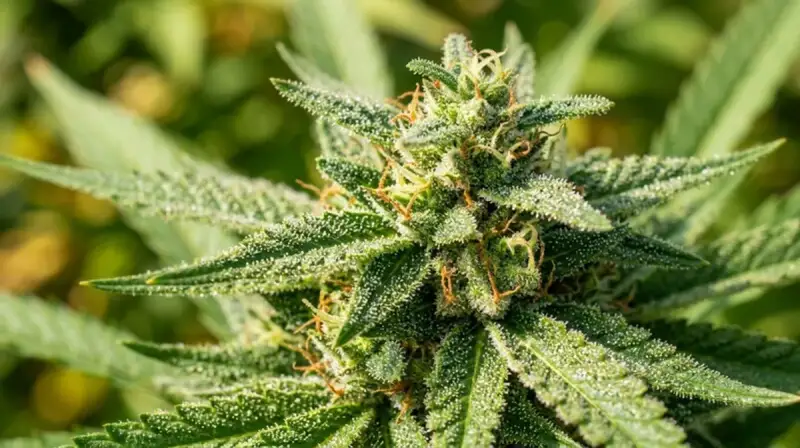
The dense trichome coverage of premium Sour Diesel — the visual confirmation of the potency that made it a dispensary cornerstone across every US legal market.
Sour Diesel and American Cannabis Culture
Sour Diesel's cultural significance extends well beyond its pharmacological profile. In the 1990s and 2000s, it became a fixture of New York City cannabis culture — referenced in hip-hop, associated with the creative scenes of the East Village, Williamsburg, and Harlem, and used as shorthand for quality in a market where most cannabis was anonymous. The strain's name became both a product identifier and a cultural signal: if someone said they had "Sour D," they were making a quality claim as much as a strain identification, in much the same way that Stardawg would later function in the UK.
The strain's influence on breeding is enormous. Its Chemdawg lineage connects it to OG Kush and the entire Kush family tree. Its sativa character and diesel terpene profile were copied, crossed, and refined into dozens of subsequent "diesel" strains — NYC Diesel, East Coast Sour Diesel, Sour Kush, and hundreds of branded derivatives. None of them quite replicate the original's balance of pungency, potency, and effect. That balance is the reason the name still commands a premium in dispensaries three decades after its emergence.
Sour Diesel vs. Similar Strains
Sour Diesel occupies a specific niche: high-potency, strongly aromatic, long-duration sativa with functional daytime effects. The comparison below places it in context against its closest relatives and competitors. Browse our full strain index for more.
| Strain | Type | THC Range | Key Difference | Aroma |
|---|---|---|---|---|
| Sour Diesel | Sativa-Hybrid | 19–25% | — | Diesel, lemon, earthy skunk |
| Chemdawg | Hybrid | 18–26% | Parent strain; more balanced indica component, heavier body | Chemical diesel, earthy |
| OG Kush | Hybrid | 19–26% | Shares Chemdawg lineage; more balanced, stronger body component | Fuel, lemon, spice |
| Jack Herer | Sativa-Hybrid | 18–23% | Pine-spice vs diesel; slightly gentler onset; longer pedigree | Pine, spice, earth |
| Green Crack | Sativa | 17–25% | More purely energetic; mango-citrus profile vs diesel | Mango, citrus, sweet |
| Durban Poison | Sativa (Landrace) | 15–20% | Pure landrace; earthier, less pungent; different cerebral character | Sweet, anise, earthy |
Growing Sour Diesel
Sour Diesel is a moderately demanding strain — not impossible for intermediate growers, but unforgiving of significant mistakes. Its long flowering time and pronounced stretch during early flower are the primary management challenges. The rewards — exceptional aroma, high potency, and the satisfaction of growing one of the most celebrated strains in cannabis history — are substantial for those who commit to it.
| Parameter | Indoor | Outdoor |
|---|---|---|
| Flowering Time | 10–11 weeks | Late October / early November |
| Yield | ~400g/m² | Up to 700g per plant |
| Height | 100–150cm (topping essential) | 150–250cm |
| Difficulty | Intermediate–Advanced | Advanced (long season required) |
| Mould Resistance | Moderate — good airflow critical in dense canopy | Moderate — late-season humidity is the risk |
| Odour | Extremely strong from week 4 of flower — robust carbon filtration essential | Very strong — site selection critical |
The most critical growing advice for Sour Diesel: do not harvest early. The strain's terpene profile fully develops only in the final 1–2 weeks of flower. Premature harvest produces a pale, underdeveloped version of the aroma and a thinner effect profile. Trichomes should show a majority of milky-white with 10–20% amber for the classic Sour D experience. Feeding should be moderate — the strain is sensitive to nitrogen excess in late flower, which degrades the terpene expression. Flush for 10–14 days before harvest.
Sour Diesel and Drug Testing
At 19–25% THC, Sour Diesel produces significant metabolite concentrations. Detection windows vary based on frequency, body composition, and metabolism. See our drug testing guide for full panel detail.
| Test Type | Occasional User | Regular User | Daily User |
|---|---|---|---|
| Urine | 3–10 days | 10–21 days | Up to 30+ days |
| Blood | 1–3 days | 3–7 days | 7–14 days |
| Saliva | 24–72 hours | 3–5 days | Up to 7 days |
| Hair Follicle | Up to 90 days | Up to 90 days | Up to 90 days |