




Headband: The California Hybrid That Wears Its Effect on Its Name
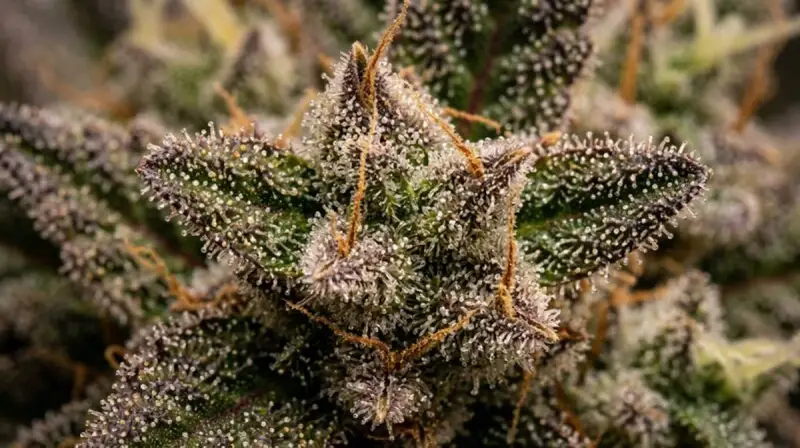
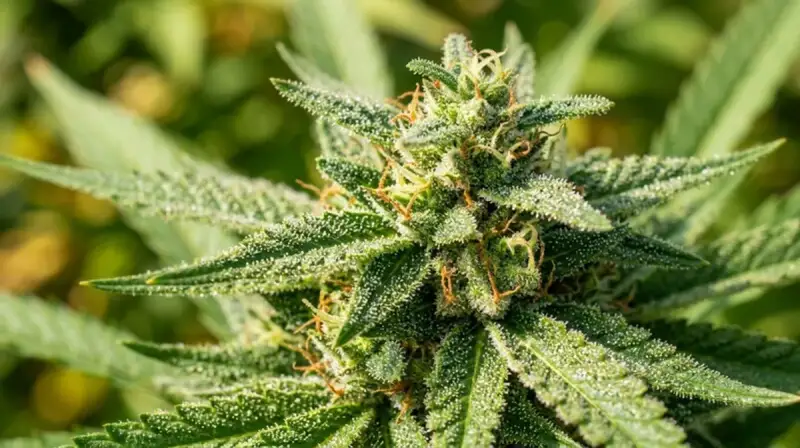
Headband is one of the original California hybrid legends — a balanced cross most commonly attributed to OG Kush and Sour Diesel, though a secondary origin listing of Master Kush crossed with OG Kush also circulates among breeders. Whatever the precise parentage, Headband’s effect profile is unmistakable and has made it a benchmark strain for the OG-Diesel hybrid category. At 18–24% THC, it delivers a balanced combination of cerebral euphoria from the Sour Diesel side and deep physical relaxation from the OG Kush side — but its defining characteristic is entirely its own: a persistent sensation of pressure around the forehead and temples, as though wearing a headband, that develops 10–20 minutes after onset. Few strains have ever been named for a physical sensation so precisely. In California dispensary culture, Headband has been a fixture since the mid-2000s and remains a reference point for educated cannabis consumers.
- Genetics: OG Kush × Sour Diesel (primary); Master Kush × OG Kush (alternate listing)
- THC Range: 18–24% | CBD: <1%
- Top Terpenes: Myrcene, Caryophyllene, Limonene
- Defining Effect: Forehead/temple pressure sensation (the “headband”)
- Effect Profile: Balanced euphoria + body relaxation; clear-headed focus
- Aroma: Diesel, lemon, earth, pine, fuel
- Medical Uses: Stress, pain, headaches, depression, anxiety
- Origin: California, mid-2000s
Cannabis botany primer — how terpenes, CB1 receptors, and hybrid genetics shape the effect experience.
The Headband Sensation: Why It Causes Head Pressure
The characteristic pressure around the forehead and temples is Headband’s most discussed and best-documented effect. Understanding its origin requires a brief look at how THC interacts with the cerebral vasculature. CB1 receptors are present not only in neurons but also in the smooth muscle of cerebral blood vessels, including the meningeal and dural vessels that surround the outer brain. THC’s agonist activity at these receptors can induce vasodilation in cerebral circulation, transiently increasing blood flow and altering intracranial pressure dynamics in ways that produce the characteristic pressure sensation at the forehead and temples.
This mechanism is distinct from the central euphoric effects (which are primarily mediated by CB1 activation in the prefrontal cortex, basal ganglia, and limbic system) and appears to be amplified in Headband compared to most other strains — likely due to a specific terpene-cannabinoid interaction profile. The high myrcene content may enhance THC’s ability to cross the blood-brain barrier rapidly, intensifying the vascular response. The sensation is typically mild and non-painful — more a gentle squeeze than discomfort — and is considered by many users to be a pleasant and uniquely recognisable aspect of the strain’s identity.
| Mechanism Layer | Location | Receptor | Physiological Result | Experienced As |
|---|---|---|---|---|
| Cerebrovascular CB1 activation | Meningeal/dural vessels | CB1 (smooth muscle) | Vasodilation, increased cerebral blood flow | Pressure sensation at forehead/temples |
| Trigeminal nerve sensitisation | Forehead, temples | CB1, TRPV1 | Altered sensory threshold in trigeminal distribution | Warmth, mild tightness, headband feeling |
| Intracranial pressure shift | Cerebrospinal fluid dynamics | Indirect (vascular) | Transient pressure fluctuation | Pressure behind eyes (some users) |
| Central CB1 (PFC) | Prefrontal cortex | CB1 (neuronal) | Dopamine disinhibition, mood elevation | Euphoria, clear-headed focus |
| Myrcene BBB enhancement | Blood-brain barrier | Lipid membrane | Increased THC permeability, rapid onset | Fast onset; intensified head effect |
Full Cannabinoid & Terpene Profile
Headband is a THC-dominant strain with a minor cannabinoid profile consistent with most modern hybrids. CBD is typically below 1%, and CBG levels are minor. The terpene profile reflects both OG Kush (myrcene, caryophyllene, earthy depth) and Sour Diesel (limonene, caryophyllene, fuel-diesel character). It is the limonene specifically — the lemon citrus top note from the Sour Diesel lineage — that distinguishes Headband aromatically from pure OG Kush descendants.
| Compound | Typical Range | Role / Effect |
|---|---|---|
| THC (delta-9) | 18–24% | Primary psychoactive; euphoria, analgesia, relaxation |
| THCA | 20–27% (pre-decarb) | Precursor; non-psychoactive until heated |
| CBD | <1% | Minimal; not a CBD-dominant strain |
| CBG | 0.1–0.5% | Minor; potential antibacterial, focus-support |
| Myrcene | 0.3–0.8% | Earthy base note; sedation, BBB permeability |
| Caryophyllene | 0.2–0.5% | Spicy, diesel note; CB2 binding, anti-inflammatory |
| Limonene | 0.1–0.4% | Lemon citrus; mood elevation, stress relief |
| Ocimene | Trace | Sweet, herbal top note |
OG × Sour Diesel Cross Family: Strain Comparison
Headband belongs to a broader category of OG Kush and Sour Diesel crosses that emerged from California cannabis culture in the 2000s. These strains share a common genetic foundation but differ significantly in their effect balance, terpene emphasis, and physical characteristics. The following comparison contextualises Headband within this influential strain family.
| Strain | Genetics | THC% | Dominant Aroma | Effect Balance | Defining Trait |
|---|---|---|---|---|---|
| Headband | OG Kush × Sour Diesel | 18–24% | Diesel, lemon, earthy | Balanced hybrid | Forehead pressure sensation |
| Sour OG | Sour Diesel × OG Kush | 17–22% | Sour, pine, fuel | Slightly sativa-leaning | More energetic, less body effect |
| Lemon OG | Las Vegas Lemon Skunk × OG#18 | 17–20% | Lemon, OG earth | Balanced-indica leaning | Pronounced lemon, relaxing onset |
| Diesel OG | OG Kush × NYC Diesel | 18–23% | Fuel, citrus, pine | Slightly sativa-leaning | More diesel-dominant aroma than Headband |
| OG Kush (parent) | Chemdawg × Hindu Kush (est.) | 19–26% | Earthy, pine, lemon | Indica-leaning | Benchmark OG character; heavier body |
Medical Applications
Headband has a particular reputation among medical cannabis users for its effectiveness against stress and tension-type headaches — a paradox given its defining head-pressure characteristic. At lower doses, the CB1-mediated vasodilation and analgesic effect can reduce perceived headache pain. The limonene content supports mood elevation and reduces the cortisol-driven tension component of stress headaches. At higher doses, the effect can become stimulating rather than therapeutic for headache sufferers, so dose control is important.
| Condition | Mechanism | Recommended Dose | Notes |
|---|---|---|---|
| Stress | Limonene mood elevation; limbic CB1 activation | 5–10mg THC | Most consistent use case; fast onset |
| Headaches (tension) | CB1 in trigeminal vasculature; analgesic pathway | Low dose (2.5–7.5mg THC) | High dose may worsen head pressure; use carefully |
| Pain (moderate) | CB1/CB2 dual; caryophyllene anti-inflammatory | 10–20mg THC | Body effect provides analgesia without full sedation |
| Depression | Dopamine disinhibition; serotonin 5-HT1A (limonene) | 5–15mg THC | Energising Sour Diesel side suits daytime use |
| Anxiety | Caryophyllene CB2; linalool-like calming | Low dose only (2.5–5mg THC) | High dose risk: THC can exacerbate anxiety; start low |
Grow Specifications
Headband is a moderately demanding grow, inheriting vigorous stretch from the Sour Diesel parent and a sensitivity to environmental stress from the OG Kush side. Growers need to account for significant vertical growth during the flowering stretch — plants can double in height in the first two weeks of 12/12 lighting. Topping and LST training are strongly recommended to manage canopy height and maximise light penetration. The OG Kush influence produces dense, resinous buds that require careful humidity management in late flower to prevent bud rot.
| Parameter | Indoor | Outdoor | Notes |
|---|---|---|---|
| Flowering Time | 9–10 weeks | Mid to late October | Sour Diesel genetics extend flower period |
| Yield (Indoor) | 400–500g/m² | 500–700g/plant | Above-average yield rewarding the longer flower period |
| Height | 90–140cm | 150–220cm | Significant stretch; top at week 2–3 veg |
| Humidity (Flower) | 40–50% RH | Low humidity preferred | Dense OG buds susceptible to botrytis above 55% |
| Temperature | 21–27°C day | Warm, Mediterranean ideal | Tolerates heat better than OG Kush alone (SD influence) |
| Difficulty | Moderate | Moderate | Height management + humidity control are critical |
| Training | LST, topping, ScrOG | Topping, mainlining | ScrOG recommended indoors for canopy control |
Related Strains & Comparisons
Explore strains that share Headband’s OG-Diesel genetic heritage or effect character:
- OG Kush — the indica parent; earthier, heavier body effect, less energetic
- Sour Diesel — the sativa parent; more energising, less body stone, pure diesel aroma
- Legend OG — powerful OG phenotype; heavier, more sedating, classic OG lemon-fuel
- Gorilla Glue #4 — Chemdawg cross family; heavier resin, more sedating than Headband
- Blue Dream — balanced hybrid alternative; gentler head effect, less head pressure
Compare Headband
See how Headband compares to OG Kush, Sour Diesel, and other California hybrids.
Browse all strain comparisons →