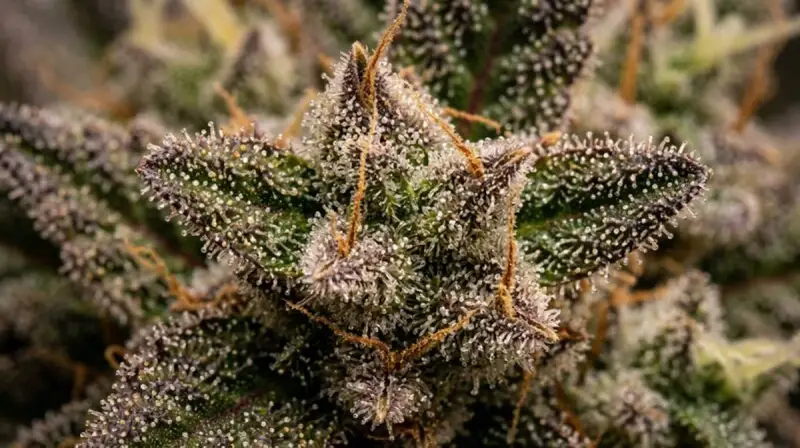
7 Key Findings — Lemon Skunk
- Lemon Skunk was created from two lemon-expressing Skunk #1 phenotypes: one sourced from a Las Vegas-area collection by DNA Genetics, and one from the Green House Seeds Skunk library; both were selected specifically for their unusual, intense lemon expression—an uncommon characteristic in traditional Skunk genetics.
- The collaboration between DNA Genetics and Green House Seeds produced a strain that won the 2009 Cannabis Cup, establishing Lemon Skunk as a commercially proven flavor variety with award-level terpene expression.
- Terpinolene is the lead terpene, which is relatively unusual among indica-leaning or hybrid strains; terpinolene contributes the sharp, zesty, almost metallic lemon edge that distinguishes Lemon Skunk from limonene-dominant citrus strains like Papaya.
- THC ranges 15–22%—a wider range than many modern cultivars because multiple Lemon Skunk cuts exist in the market; seed-grown expressions average 15–18%, while elite clone selections can reach 20–22%.
- The effect is sativa-dominant and functional: uplifted, creative, and happy without the racing anxiety that some high-sativa strains produce; myrcene in the profile moderates the stimulant edge and prevents overcranking.
- The flavor is highly distinctive and immediately identifiable: a sharp lemon rind combined with a classic skunky note that functions as a background amplifier; the result is more complex and interesting than pure lemon strains that lack the Skunk backbone.
- Lemon Skunk is a 9-week strain with moderate yields and intermediate difficulty; it stretches more than pure indicas during early flower and benefits from training techniques (LST, topping) to manage the canopy.
Genetics & Breeding History
The Skunk #1 lineage is one of cannabis breeding’s foundational achievements. Originally developed in the 1970s by Sacred Seeds (and later Skunkman Sam / David Watson) from a cross of Acapulco Gold, Colombian Gold, and an Afghani indica, Skunk #1 became the first truly stable, commercially reproducible cannabis hybrid and the genetic backbone of the modern seed industry.
Within the Skunk #1 family, lemon-expressing phenotypes have always existed as rare outliers—the typical Skunk expression is earthy, musky, and skunky, with only occasional hints of citrus. DNA Genetics, founded in Amsterdam by brothers Don and Aaron Morris, encountered a particularly lemon-forward Skunk #1 phenotype from a Las Vegas collection. Green House Seeds possessed their own lemon-expressing Skunk selection. The collaboration between these two banks produced a cross of two exceptional lemon-Skunk phenotypes that reliably expresses the citrus character across seed batches.
The resulting strain won the Green House Seed Company section of the High Times Cannabis Cup in 2009, validating the quality of the collaboration and establishing Lemon Skunk as a named variety rather than simply a phenotype selection.
Lemon Skunk Lineage
| Component |
Origin |
Characteristic |
| Skunk #1 (lemon pheno, DNA Genetics source) | Las Vegas private collection | Sharp lemon rind expression, high terpinolene |
| Skunk #1 (lemon pheno, Green House source) | Green House Seeds Skunk library | Classic skunk backbone, citrus modifier genes |
| Skunk #1 base genetics | Acapulco Gold × Colombian × Afghani | Hybrid vigor, stability, resin production |
| Lemon Skunk | Amsterdam, 2009 Cannabis Cup Winner | — |
Terpene Profile
Lemon Skunk’s terpene signature is dominated by terpinolene, which is the defining feature that separates it from most other citrus strains. Terpinolene produces a sharper, more complex lemon character than limonene alone—more lemon rind and zest than lemon candy or fruit pulp. Myrcene provides a secondary grounding effect and moderates the stimulant qualities of the terpinolene. Ocimene contributes a herbal-sweet complexity that adds depth to the overall profile.
| Terpene |
Level |
Aroma Note |
Effect Contribution |
| Terpinolene | High (dominant) | Sharp lemon rind, zesty, slightly piney | Uplifting, antioxidant; contributes sativa energy |
| Myrcene | Moderate | Earthy, herbal, musky (the Skunk backbone) | Moderates stimulant edge; adds body relaxation |
| Ocimene | Moderate | Sweet herbal, slightly floral | Anti-inflammatory; adds sweetness and complexity to aroma |
Cannabinoid Profile
| Compound |
Typical Range |
Effect Contribution |
| THC (Δ9) | 15–22% | Euphoria, creativity, mild energy, appetite |
| CBD | <1% | Minimal; typical for commercial sativa-dominant hybrid |
| CBG | Trace–0.4% | Minor contribution to anti-anxiety and focus properties |
Flavor & Aroma Profile
Lemon Skunk is one of the most polarizing aromas in cannabis—strongly appealing to those who like citrus and skunk combined, surprising to those who encounter the combination for the first time. The dominant impression is a very sharp, zesty lemon rind, not sweet or juicy lemon but the sharp bitterness of the outer skin. This is layered over a classic Skunk #1 musky-earthy foundation that acts as a flavor amplifier rather than a competing note.
On consumption, the lemon is the first and strongest flavor, with the skunk becoming more apparent on the exhale and as the bowl or joint progresses. The combination is distinctive enough to be immediately identifiable—veteran users can reliably identify Lemon Skunk blind from its flavor alone. Vaporization at 160–175°C best captures the terpinolene-driven lemon character before transitioning to the warmer myrcene notes.
Effects Profile
Lemon Skunk produces functional sativa-dominant effects: the primary experience is uplifted mood and mental energy, followed by gentle creative activation. This is not an anxiety-inducing or racing high—the myrcene and ocimene in the profile provide sufficient grounding to make the sativa stimulation pleasant and controllable. Creative tasks, social activities, and light physical activity are all appropriate contexts for Lemon Skunk’s effect range.
Compared to pure sativas or high-THC sativa dominants, Lemon Skunk is accessible and manageable. The 40% indica genetics provide enough body relaxation to prevent the experience from becoming overstimulating, and the THC ceiling of around 22% means most users can dose comfortably without exceeding their threshold.
| Effect |
Intensity |
Onset |
Notes |
| Uplifted Mood | High | 5–10 min | Primary sativa effect; bright, energetic mood shift |
| Creativity | Moderate–High | 10–20 min | Loose associative thinking; good for creative work |
| Happiness | High | 5–15 min | Social, talkative; good for group settings |
| Body Relaxation | Moderate | 20–30 min | Indica backbone provides comfort without sedation |
| Anxiety Risk | Low–Moderate | — | Low at normal doses; possible at very high doses in sensitive users |
Medical Applications
Lemon Skunk’s medical profile is most appropriate for daytime conditions: depression, fatigue, lack of motivation, and mild anxiety that responds to mood elevation rather than sedation. The terpinolene-driven uplifted effect combined with moderate THC makes it a reasonable option for mild-to-moderate depression where daytime function needs to be maintained.
Chronic pain at moderate levels can be addressed by Lemon Skunk, though patients requiring deep sedative pain relief will find indica-dominant strains more appropriate. Stress relief in a functional context (users who need to remain active) is a strong secondary application. Appetite stimulation is consistent but mild.
Growing Lemon Skunk
| Parameter |
Indoor |
Outdoor |
Notes |
| Flower Time | 9 weeks | Mid October | Consistent; sativa stretch in weeks 1–3 of flower |
| Yield (indoor) | 400–500g/m² | 500–800g/plant | Good producer; sativa structure gives lighter bud density vs. pure indicas |
| Height | 90–140cm | 150–200cm | Taller than indica parents; LST or topping recommended indoors |
| Difficulty | Intermediate | Easy–Intermediate | Sativa stretch requires height management; otherwise forgiving |
| Resin Production | High | High | Skunk #1 heritage provides strong trichome coverage |
| Aroma Intensity | Very High | Very High | Carbon filtering is essential; skunk aroma is penetrating |
Grow Tips
- Manage the stretch: Lemon Skunk has a notable sativa stretch in the first 2–3 weeks of flower; top plants at 4–6 nodes in veg or use LST to prevent height issues indoors.
- Carbon filter is not optional: The skunk terpene profile is extremely pungent; a quality carbon filter and negative pressure setup are essential during late flower.
- Low temperatures intensify lemon: Dropping night temperatures to 18–20°C in the final 2–3 weeks of flower enhances terpene production and intensifies the lemon character.
- Harvest slightly early for maximum terpinolene: Terpinolene degrades faster than myrcene post-harvest; harvesting at 10–15% amber (mostly cloudy) and quick-drying in controlled conditions preserves the sharp lemon profile.
Similar Strains
About the Author
JP
Jordan Price
Jordan Price has spent over a decade researching cannabis genetics, terpene science, and medical applications. Specializing in indica and hybrid strain analysis, Jordan has documented hundreds of strain profiles with a focus on accuracy, medical utility, and practical growing information.
Video: Lemon Skunk Strain Review
Search “Lemon Skunk strain review DNA Genetics” on YouTube for grow journals, terpene comparisons, and effects reviews from the cannabis community.
Frequently Asked Questions
What are the genetics of Lemon Skunk?
Lemon Skunk is a cross of two lemon-expressing Skunk #1 phenotypes—one sourced by DNA Genetics from a Las Vegas collection, and one from the Green House Seeds Skunk library. Both parent plants were selected specifically for their unusual lemon terpene expression within the Skunk #1 family. The Skunk #1 base genetics trace back to Acapulco Gold, Colombian Gold, and Afghani. Lemon Skunk won the 2009 Cannabis Cup.
What makes Lemon Skunk smell so strongly of lemon?
Lemon Skunk’s dominant terpene is terpinolene, not limonene as one might expect. Terpinolene produces a sharper, more zesty lemon-rind character compared to the sweeter, juicier lemon note of limonene. Both DNA Genetics and Green House Seeds selected parent plants that expressed unusually high terpinolene levels within the Skunk #1 family, and the resulting cross consistently inherits this trait. The classic Skunk #1 myrcene backbone amplifies and contrasts the citrus, making the aroma more complex and distinctive.
Is Lemon Skunk a daytime or nighttime strain?
Lemon Skunk is primarily a daytime and early evening strain. Its 60% sativa genetics produce uplifted, creative, and happy effects that support functional activity. The 40% indica component provides enough grounding to prevent the experience from becoming overstimulating. Most users find it appropriate for creative work, social settings, and active daytime use. It is not well-suited for insomnia treatment or deep sedation—choose an indica-dominant strain for those applications.
How difficult is Lemon Skunk to grow?
Lemon Skunk is rated intermediate difficulty, primarily due to its sativa stretch during early flowering, which requires height management in indoor spaces. Plants can reach 90–140cm indoors without training. LST (low-stress training) or topping during vegetative growth manages height effectively. Beyond the stretch, Lemon Skunk is a reasonably forgiving plant. Growers should also invest in quality carbon filtration—the skunk-lemon aroma is very strong and penetrating during late flower.
What medical conditions is Lemon Skunk best suited for?
Lemon Skunk is best suited for daytime medical use, particularly for depression, chronic fatigue, and lack of motivation. The terpinolene-driven uplifted effect combined with the indica grounding provides functional mood elevation without overwhelming sedation. Mild-to-moderate anxiety that responds to mood elevation (rather than sedation) is also appropriate. For chronic pain management during daytime hours, Lemon Skunk is a viable option. Patients requiring deep sedative pain relief or insomnia treatment should choose indica-dominant varieties.