









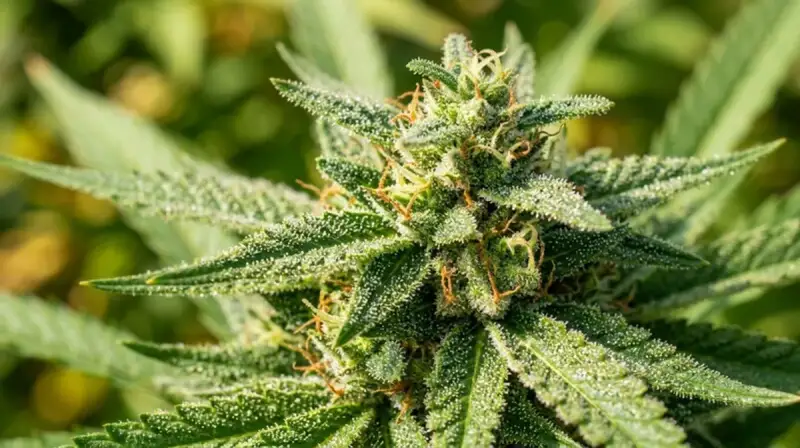
UK Cheese Strain Guide
UK Cheese is one of the most iconic cannabis varieties in British history — a uniquely pungent, balanced hybrid born from a single Skunk #1 phenotype that circulated through squat parties and free raves in Luton and beyond during the early 1990s. It is the founding strain of an entire family tree, a cultural artifact of the UK underground, and to this day one of the most recognisable aromas in cannabis culture worldwide.
- Genetics: Skunk #1 phenotype; selected in Luton, UK, early 1990s by the Exodus collective
- THC Range: 15–20% — accessible to moderately experienced consumers
- Top Terpenes: Myrcene (dominant), Caryophyllene, Limonene
- Aroma: Sharp, pungent cheddar cheese; earthy skunk; sweet undertone
- Main Effects: Relaxation, social euphoria, creativity, progressive body buzz
- Medical Uses: Stress, anxiety, mild to moderate pain, appetite stimulation, insomnia
- Indoor Yield: 400–500g/m² under optimal conditions
- Outdoor Yield: Up to 700g per plant in warm, extended seasons
- Cultural Note: Distributed by the Exodus collective; inseparable from UK rave culture
Origin & History: The Exodus Collective
The story of UK Cheese begins not in a commercial seed bank or a university laboratory, but at a squat in Luton, Hertfordshire, in the early 1990s. The Exodus collective — a pioneering UK free-party and commune movement that blended rave culture, communal living, and countercultural politics — is most commonly credited with cultivating and distributing the original UK Cheese clone. Exodus operated sound systems, organised unlicensed raves attended by thousands, and ran a genuine intentional community. Cannabis cultivation was central to their economic and cultural model.
The strain they cultivated was not a deliberate breed. It was a single Skunk #1 phenotype — one cut from a batch — that displayed a spontaneous olfactory mutation. Where other Skunk #1 plants produced the expected earthy, pungent skunk aroma, this particular clone smelled unmistakably of sharp, ripe cheddar cheese. Growers were initially uncertain whether this was a quality or a defect. The clone was kept, propagated, and began moving through cutting networks across the UK underground.
What made UK Cheese's spread historically unusual was its propagation method: clone-only. No seeds were sold or traded. The strain spread purely through cuttings changing hands at parties, at communes, through trusted networks. This meant that every UK Cheese plant grown in the 1990s and early 2000s was a genetic copy of the original mother — producing extraordinary genetic consistency at a time when seed genetics were far more variable. The name “Exodus Cheese” specifically honours the collective's role; our Exodus Cheese guide covers that variant in depth.
“UK Cheese is not just a strain — it's a cultural artifact. That clone travelled through a generation of British cannabis enthusiasts before the world ever heard of it.”
In the early 2000s, seed banks — most notably Big Buddha Seeds — worked to stabilise UK Cheese into seed form by crossing the original clone with Afghani and other indica genetics. This made the genetics commercially reproducible and gave rise to the broader Cheese family. Blue Cheese (UK Cheese x Blueberry) followed, and dozens of Cheese-family hybrids now fill dispensary menus worldwide. But the original clone-based UK Cheese remains the gold standard by which all Cheese variants are measured. For the genetics upstream of all this, see our Skunk #1 guide.
Genetics & Lineage
UK Cheese is a direct phenotype of Skunk #1, which was itself a landmark three-way hybrid developed in California in the 1970s. The Cheese phenotype represents a spontaneous terpene expression that differentiated it from the parent line — a mutation in the volatile organic compound profile rather than the cannabinoid structure.
| Ancestor Strain | Type | Origin | Contribution to UK Cheese |
|---|---|---|---|
| Skunk #1 (direct parent) | Hybrid | California, USA, 1970s | Vigour, resin production, broad-spectrum hybrid effect |
| Afghani | Indica landrace | Afghanistan/Pakistan | Body weight, flowering speed, resin density (via Skunk #1) |
| Acapulco Gold | Sativa landrace | Mexico | Cerebral elevation, golden resin expression (via Skunk #1) |
| Colombian Gold | Sativa landrace | Colombia | Euphoric quality, mental clarity at onset (via Skunk #1) |
Cannabinoid & Terpene Profile
UK Cheese's cannabinoid profile is moderate by modern standards — its 15–20% THC range predates the era of 30%+ high-potency breeding — but its terpene expression is where it truly distinguishes itself. The combination of dominant myrcene, secondary caryophyllene, and supporting limonene creates the characteristic aroma and shapes an effect profile that is coherent, sociable, and deeply relaxing without being incapacitating. Read our complete terpenes guide to understand how these compounds interact with cannabinoids.
| Compound | Type | Typical % | Contribution |
|---|---|---|---|
| THC | Cannabinoid | 15–20% | Primary psychoactive effect, euphoria, pain relief |
| CBD | Cannabinoid | <1% | Minimal; slight moderation of THC intensity |
| Myrcene | Terpene | 0.4–0.8% | Dominant earthy musk and cheese base note; sedative quality; body relaxation |
| Caryophyllene | Terpene | 0.2–0.5% | Spicy, peppery note; anti-inflammatory; CB2 receptor agonist |
| Limonene | Terpene | 0.1–0.3% | Citrus brightness; mood elevation; anxiety reduction |
| Alpha-Pinene | Terpene | 0.05–0.15% | Pine note; mild alertness; partial counterbalance to myrcene sedation |
The sharp cheese aroma itself results from a high concentration of sulfur-containing volatile compounds — specifically thiols and sulphides — produced by myrcene oxidation under specific growing conditions. This is the same chemistry responsible for the smell of aged cheddar, which explains why the aroma is so immediately recognisable to anyone who has encountered either.
Effects: A Three-Stage Experience
UK Cheese delivers a well-rounded hybrid experience that follows a predictable arc. The balanced nature of this progression — cerebral onset, physical development, and eventual relaxation — has made it a perennial favourite for those who want a full evening experience rather than a single-note effect. See our cannabis effects guide for broader context on how hybrid strains work.

Stage 1 — Social Uplift (0–20 minutes): The onset is characterised by a mental lift that feels warm and sociable rather than jolting. Conversation flows more easily. Mild euphoria builds without the paranoid edge that high-THC sativas can trigger in sensitive users. This first stage is where limonene's mood-elevating properties are most noticeable. Creativity often opens in this window — many users report that UK Cheese makes music sound better and social interaction feel effortless.
Stage 2 — Physical Settlement (20–60 minutes): The mental warmth of stage one gradually deepens into a progressive body buzz. Shoulders relax. Muscle tension releases. The myrcene base becomes dominant in the experience — a grounding heaviness that spreads from the chest and shoulders downward. Users who are active during this phase (walking, cooking, making music) find it enhances sensory engagement. Those who are stationary often feel drawn toward comfortable stillness.
Stage 3 — Deep Relaxation (60+ minutes): At higher doses or after the full session arc, UK Cheese transitions into a sedative final phase. Couchlock is common. The mental component quiets as the physical takes over. Appetite stimulation is pronounced in this stage — a feature that has made UK Cheese genuinely valuable for patients managing chemotherapy side effects, nausea, and eating disorders. Sleep follows naturally for most users who consume a full session in the evening.
UK Cheese vs. Related Strains
Understanding how UK Cheese compares to its own family members and other popular hybrids helps you know when to choose it over alternatives. See our full strain index for more.
| Strain | Type | THC | Key Difference from UK Cheese | Best For |
|---|---|---|---|---|
| UK Cheese | Hybrid | 15–20% | — The original | Socialising, stress, evening use |
| Exodus Cheese | Hybrid | 14–18% | More uplifting, daytime-oriented; named directly after the Exodus collective | Daytime creativity, mild stress |
| Blue Cheese | Indica-Hybrid | 15–20% | Blueberry cross adds linalool; berry sweetness softens the funk; deeper body effect | Pain, insomnia, appetite |
| Skunk #1 | Hybrid | 15–19% | Parent strain; no cheese expression; more versatile, less distinct aroma | All-day versatile use |
| OG Kush | Hybrid | 19–26% | Higher THC; more potent; fuel/earth aroma vs cheese; less sociable onset | Experienced users, pain relief |
Growing UK Cheese
UK Cheese is considered an intermediate grow — it rewards attentive cultivators generously, but requires specific attention to airflow and humidity due to its dense bud structure and extremely pungent aroma. Its Skunk #1 heritage gives it excellent vigour and resilience. For foundational knowledge, see our complete cannabis growing guide.
Indoor Growing
Indoors, UK Cheese thrives at 20–27°C (68–80°F) with relative humidity kept around 40–50% during flowering. Dense buds are susceptible to mould in humid conditions — airflow and canopy management are critical. Under 600W HPS or equivalent LED, indoor growers can expect 400–500g/m² after 8–9 weeks of flowering.
Training: UK Cheese responds excellently to SCROG (Screen of Green) and LST (Low-Stress Training). Opening the canopy significantly improves light penetration to lower bud sites and can increase yields by 20–30%. Topping is also effective — performed at week 3–4 of vegetative growth it encourages multiple main colas and a more even canopy.
Nutrients: UK Cheese is a moderate feeder. Push nitrogen during vegetative growth, then transition to phosphorus and potassium-heavy feeding as flowering begins. Calcium-magnesium deficiency can appear in mid-flower — supplement if yellowing appears between leaf veins. Flush thoroughly in the final 7–10 days before harvest to ensure a clean, smooth smoke and full expression of the terpene profile.
Odour management: The aroma during late flowering is exceptionally strong. A carbon filter rated generously above room volume is not optional — it is essential for any serious indoor UK Cheese grow. Even a brief equipment failure will leave detectable odour in adjacent spaces.
Outdoor Growing
Outdoors, UK Cheese performs best in warm temperate climates with a long autumn. It can produce up to 700g per plant in optimal conditions. The strain is moderately cold-tolerant given its UK origins — it was cultivated successfully in British weather for decades. It is ready for outdoor harvest in late September to mid-October in Northern Hemisphere gardens. Protect from rain and humidity in the final flowering weeks to prevent botrytis.
| Parameter | Indoor | Outdoor |
|---|---|---|
| Flower Time | 8–9 weeks | Late Sep – mid Oct |
| Yield | 400–500g/m² | Up to 700g/plant |
| Height | 80–120cm (manageable) | 150–200cm |
| Difficulty | Intermediate | Intermediate |
| Climate | Controlled 20–27°C | Warm temperate; tolerates cool |
Cultural Legacy: UK Cheese and British Cannabis History
To understand UK Cheese fully, you have to understand the cultural ecosystem that produced it. The Exodus collective operated during one of the most politically charged periods in British social history. The Criminal Justice and Public Order Act 1994 — passed specifically to criminalise free parties, traveller communities, and rave culture — was a direct response to movements like Exodus. The collective was simultaneously a sound system, a squat commune, a cannabis cultivation operation, and a political act.
UK Cheese circulated through a network of free parties, festivals, and squats that formed the backbone of British counterculture in the early 1990s. These were the same circuits that hosted early performances from acts who would define British music: the same years that saw the rise of the Prodigy, Orbital, and the explosion of UK garage, drum and bass, and jungle. Cannabis was not incidental to this culture — it was structural. UK Cheese became the preferred strain precisely because its effect profile — sociable, creative, physically relaxing but not incapacitating — was well-suited to the long physical and social demands of all-night rave events.
By the late 1990s, UK Cheese had moved from the free-party underground into the broader UK cannabis market. It had become the standard by which British consumers judged everything else — “proper Cheese” versus inferior imitations. This cultural currency made it the first genuinely British cannabis “brand” — a strain with cultural identity rather than just a genetic profile.
Today, the legacy is visible across the cannabis world. Dispensary menus in California, Colorado, and Canada stock Cheese-family variants. Amsterdam coffee shops have carried Cheese products for twenty years. The UK Cheese story represents one of the most successful examples of a street-level cultivation community producing a strain that achieved global cultural significance. For visitors to London, Manchester, or Bristol — all cities with deep Cheese culture roots — understanding this history adds another layer to exploring the country. Our London, Manchester, and Bristol travel guides provide more context on how cannabis culture is woven into each city's identity.

UK Cheese and Drug Testing
UK Cheese has a moderately high THC content (15–20%) which means standard detection windows apply. THC is fat-soluble and accumulates in body tissue — detection windows extend significantly for regular consumers compared to occasional users. For a full breakdown of test methodologies, see our drug testing guide.
| Test Type | Occasional User | Regular User | Heavy Daily User |
|---|---|---|---|
| Urine (most common) | 3–4 days | 10–15 days | Up to 30 days |
| Blood | 12–24 hours | Up to 36 hours | Up to 7 days (chronic use) |
| Saliva | 24–72 hours | 72 hours | Up to 7 days |
| Hair follicle | Up to 90 days | Up to 90 days | Up to 90 days |
Further Reading & Research
- Drug Science — independent cannabinoid and terpene research (Prof. David Nutt, former ACMD chair)
- UK Government: Drug Possession Penalties — official legal information
- Transform Drug Policy Foundation — UK drug policy reform context