
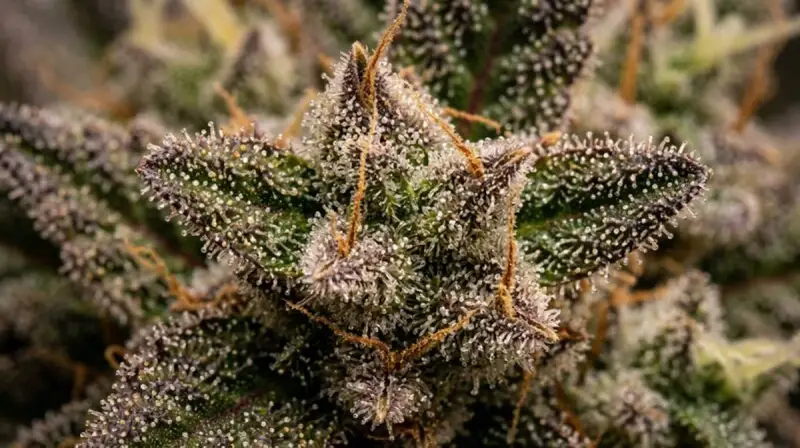
Key Findings — Sour Tsunami
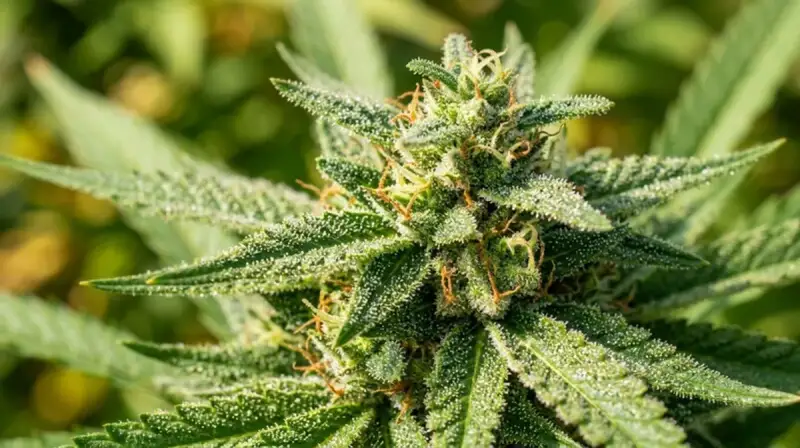
- Created by Lawrence Ringo (Southern Humboldt Seed Collective) — Sour Tsunami is historically the first cannabis strain intentionally bred to express high CBD, predating the modern CBD market by over a decade
- CBD range 10-13% with THC 6-10% — phenotype-variable: some expressions approach 1:1 CBD:THC, others reach 2:1 CBD:THC, dramatically altering the intoxication profile
- Dominant terpene Myrcene with Caryophyllene and Pinene — the diesel parentage (Sour Diesel × NYC Diesel) gives it a more approachable, familiar aroma for experienced cannabis users versus purely hemp-bred CBD strains
- Effects: mild euphoria, clear-headed calm, anti-inflammatory body effect, low intoxication for most users — particularly those with prior cannabis experience
- Primary medical applications: epilepsy, inflammation, chronic pain, anxiety, MS spasticity — among the first strains documented in paediatric epilepsy cases that eventually drove FDA approval of Epidiolex (pharmaceutical CBD)
- Lawrence Ringo (1950-2014) spent four generations of selective breeding to stabilise the CBD expression in Sour Tsunami — a landmark contribution to both medical cannabis and the global CBD market
- Flowers in 9-10 weeks, moderate difficulty, outdoor preferred — diesel genetics perform best in warm, stable outdoor climates
Lawrence Ringo and the Birth of CBD Breeding
Before Sour Tsunami, the cannabis industry was entirely focused on maximising THC. CBD was considered a contaminant — an unwanted compound that “wasted” plant metabolic capacity that could otherwise be directed toward THC production. High-CBD plants had been inadvertently discarded by generations of breeders.
Lawrence Ringo (1950-2014) was a Northern California cannabis cultivator and activist who became convinced, through personal experience treating his own spinal condition, that CBD — not THC — held the key to cannabis’s therapeutic potential. Working from his Southern Humboldt Seed Collective in Humboldt County, California, Ringo crossed Sour Diesel with NYC Diesel and then engaged in a multi-generation selective breeding programme to identify and stabilise phenotypes expressing unexpectedly high CBD ratios.
The process took approximately four years and numerous growing cycles. Ringo did not use modern genomic testing — he worked by observing plant phenotype and effect, then selectively propagating plants that expressed the CBD-dominant profile. By the time Sour Tsunami was stabilised, it was producing CBD:THC ratios of approximately 1:1 to 2:1, with total CBD of 10-13% — levels that had essentially never been intentionally achieved in a commercial cannabis strain before.
Ringo later extended his work to create additional high-CBD cultivars including Harle-Tsu (Harlequin × Sour Tsunami) and Canna-Tsu (Cannatonic × Sour Tsunami). He died in 2014 of complications from his spinal condition — before seeing the explosion of the CBD market that his work made possible. The CBD industry that now generates billions of dollars annually in the United States alone has a direct intellectual lineage to Lawrence Ringo’s quiet, determined breeding work in Humboldt County.
Terpene and Cannabinoid Profile
| Compound | Type | Level | Aroma | Effect / Mechanism |
|---|---|---|---|---|
| Myrcene | Primary terpene | High | Earthy, diesel-herbal, musky | Sedative synergy with cannabinoids; muscle relaxation; may enhance CBD absorption via BBB modulation |
| Caryophyllene | Secondary terpene | Moderate | Spicy, peppery, woody | CB2 direct agonist — anti-inflammatory; amplifies CBD’s peripheral anti-inflammatory pathway |
| Alpha-Pinene | Tertiary terpene | Lower-moderate | Pine, sharp, clean, resinous | Bronchodilator; acetylcholinesterase inhibition (counteracts THC memory impairment); alertness |
| CBD (CBDA) | Cannabinoid | 10-13% | — | TRPV1 agonist, 5-HT1A, GPR55 antagonist, FAAH inhibitor — multi-target anti-inflammatory and anxiolytic |
| THC (THCA) | Cannabinoid | 6-10% | — | CB1 agonism — mild euphoria and analgesic amplification; negative allosteric modulation partially counteracted by CBD |
CBD pharmacology note: Unlike THC, CBD does not produce its effects primarily through CB1 or CB2 agonism. Instead it acts as a negative allosteric modulator of CB1 (reducing THC intoxication), a TRPV1 agonist (vanilloid pain receptor), a 5-HT1A partial agonist (serotonergic anxiolytic), and an inhibitor of FAAH (the enzyme that degrades endocannabinoids). This multi-target mechanism explains why CBD’s effects are broad and relatively modest — it is modulating existing systems rather than forcibly activating them. See our guide on THC vs. CBD for a full comparative pharmacology breakdown.
CBD:THC Ratio — Effects and Intoxication Guide
Sour Tsunami’s phenotype variability means the CBD:THC ratio can differ meaningfully between plants and batches. Understanding ratios is essential for predicting the experience and choosing the right product for a specific medical application.
| CBD:THC Ratio | Typical Profile | Intoxication Level | Best Medical Application | Example Sour Tsunami Pheno |
|---|---|---|---|---|
| 20:1 CBD:THC | Essentially non-intoxicating | None / trace | Paediatric epilepsy, daytime anxiety, inflammation | Not typical for Sour Tsunami; ACDC range |
| 10:1 CBD:THC | Minimal psychoactivity | Very mild for most users | Epilepsy, MS spasticity, daytime pain | High-CBD Sour Tsunami pheno (rare) |
| 2:1 CBD:THC | Mild calming euphoria | Low; functional for most | Anxiety, pain, inflammation | Common Sour Tsunami expression |
| 1:1 CBD:THC | Balanced calm + mild euphoria | Moderate; noticeable for new users | Pain, anxiety, sleep, nausea | Typical Sour Tsunami mid-range pheno |
| 1:2 CBD:THC | THC-forward with CBD modulation | Moderate-high; sativa-style | Pain, appetite, PTSD | Lower-CBD Sour Tsunami expression |
CBD Pioneer Strains — Historical Comparison
Sour Tsunami belongs to a small cohort of strains that defined the first wave of intentional high-CBD breeding. These four cultivars collectively shifted the entire cannabis industry toward CBD-focused medicine.
| Strain | CBD Range | THC Range | Breeder / Origin | Key Medical Legacy | Aroma Profile |
|---|---|---|---|---|---|
| Sour Tsunami | 10-13% | 6-10% | Lawrence Ringo, S. Humboldt SC | First intentional high-CBD strain; paediatric epilepsy pioneer; Harle-Tsu parent | Diesel, earthy, pine, sour |
| Harlequin | 8-16% | 4-7% | Wade Laughter, Harborside | First widely commercially available CBD strain in dispensaries; MS/pain community favourite | Earthy, mango, musky |
| ACDC | 14-20% | <1% | Derived from Cannatonic phenotype selection | Highest CBD:THC ratio of the four; near-zero intoxication; preferred for sensitive patients and children | Earthy, sweet, wood, pine |
| Cannatonic | 6-17% | 6-17% | Resin Seeds, Spain | First commercially sold high-CBD seed from a seed company; introduced CBD genetics to European breeders; parent of many CBD strains | Sweet, citrus, earthy, hash |
Medical Evidence for High-CBD Strains
The medical case for CBD-rich cannabis has strengthened substantially. While most clinical trials have used pharmaceutical-grade CBD rather than whole-plant preparations, the following evidence base supports the conditions for which Sour Tsunami is most frequently sought.
| Condition | Evidence Level | Key Studies / Data | CBD Role | THC Contribution |
|---|---|---|---|---|
| Epilepsy (Dravet/LGS) | Level I (FDA approved) | Devinsky 2017 NEJM (39% seizure reduction); Epidiolex Phase III RCTs; FDA approval 2018 | Primary; TRPV1 + sodium channel modulation | Avoid at high doses (pro-convulsant risk) |
| Inflammation | Level II-III (strong preclinical) | Kozela 2011 (NF-kB suppression); Carrier 2006 (COX-2 pathway); multiple rodent models | Primary; TRPV1 + FAAH + cytokine suppression | CB2 amplification via Caryophyllene |
| Neuropathic Pain | Level II (moderate clinical) | Whiting 2015 JAMA review; Rog 2005 MS pain RCT (Sativex, 1:1 CBD:THC) | Contributory; 1:1 ratio superior to CBD alone | Significant; CB1 analgesic essential for neuropathic |
| Anxiety | Level II (clinical + RCT) | Bergamaschi 2011 (social anxiety, fMRI); Blessing 2015 Neurotherapeutics systematic review | Primary; 5-HT1A agonism, amygdala modulation | Low doses anxiolytic; high doses anxiogenic — CBD moderates |
| MS Spasticity | Level I (Sativex EU approved) | Wade 2004 (Sativex spray, 1:1 CBD:THC); NICE guidance UK; EMA approval multiple EU states | Contributory in combination | CB1 spasticity reduction essential; 1:1 required |
Growing Sour Tsunami
Diesel genetics are vigorous and stretch-prone. Sour Tsunami grows well outdoors in warm, stable climates — its flowering time of 9-10 weeks and preference for consistent late-season warmth makes it suited to California, Southern Europe, and similar Mediterranean zones.
| Parameter | Indoor | Outdoor | Notes |
|---|---|---|---|
| Flowering Time | 9-10 weeks (12/12) | October / early November | Longer than average — diesel genetics take time to mature fully |
| Yield | 350-450 g/m² | 400-600 g/plant | Good yield for a CBD strain; outdoor excels with space |
| Plant Height | 100-150 cm | 150-220 cm | Diesel sativa stretch — top early or use ScrOG indoors |
| Climate | 22-26°C, RH 40-50% flower | Warm, dry October preferred | CBD strains can show lower trichome density — humidity management important |
| Difficulty | Moderate | Easy-moderate | Height management is the main indoor challenge |
| CBD:THC Phenotype | Variable without chemotype testing | Variable without chemotype testing | Critical: COA test early-flower clones to confirm CBD:THC ratio before full-cycle investment |
| Watch For | Nitrogen toxicity (sativa-vigour feeder), mould in dense buds late flower | Harvest timing; wet weather risk in October | COA test trichome-amber at 30% for harvest decision |
Important for CBD growers: Sour Tsunami, like all CBD-rich strains, is phenotype-variable. A single pack of seeds can produce plants ranging from 1:1 CBD:THC to 2:1 CBD:THC (or rarely higher). The only reliable way to confirm a CBD-dominant phenotype is to test a clone from each plant during early flower using a COA (Certificate of Analysis) from an accredited cannabis testing laboratory. Many growers test 10-12 plants per run and retain only the 2-3 highest-CBD expressions as mothers for future cloning.
For growing technique guides relevant to Sour Tsunami’s tall sativa structure, see our Topping Cannabis and Screen of Green guides.
Cannabis CBD biology, cannabinoid synthesis pathways, and the CBDA-to-CBD conversion
Jordan Price covers cannabis genetics, cultivation science, and the history of the medical cannabis movement. His work on high-CBD strains draws on historical breeder documentation, phytochemistry research, and clinical evidence reviews for conditions including epilepsy, inflammation, and pain.