No lethal dose exists, but overconsumption is real. Symptoms, emergency response, CBD antidote evidence, edible overdose risks, and full recovery guide.
Senior Cannabis Editor at ZenWeedGuide. Specialist in cannabis pharmacology, the endocannabinoid system, and evidence-based effect guides.
Last reviewed: May 2026
Medical Notice: This article is educational information. If you or someone else is experiencing a medical emergency, call 911. This content does not substitute for professional medical advice.
No Lethal Dose Has Ever Been Established
Unlike alcohol, opioids, stimulants, and virtually every other psychoactive substance with recreational use, cannabis has no documented lethal dose in humans. Not a single death from cannabis toxicity alone — without co-involvement of other substances or physical accidents — has been confirmed in peer-reviewed medical literature.
The scientific basis: THC produces its effects by activating CB1 receptors. CB1 receptors are distributed throughout the brain, but are not present in significant quantities in the brainstem regions that control breathing and heart rate — the areas affected by lethal opioid or alcohol overdoses. This anatomical distribution means that even at very high doses, THC cannot cause respiratory depression or cardiac arrest through direct receptor activation.
The extrapolated lethal dose (LD50) for THC in humans — based on scaling from animal studies — has been estimated at approximately 30mg/kg of body weight administered intravenously. For a 150-pound person, this equates to roughly 2,000mg of pure intravenous THC. For comparison, a strong cannabis joint contains approximately 10–30mg of consumable THC. The therapeutic index is enormous.
Cannabis Overdose: Core Facts
Zero confirmed deaths from cannabis toxicity alone in medical history
THC does not depress respiration — the mechanism of fatal opioid and alcohol overdose
Edibles are the most common cause of cannabis overconsumption requiring ER visits
Anxiety and panic are the most distressing symptoms — not physiologically dangerous in healthy adults
CBD can reduce THC-induced anxiety via CB1 allosteric modulation
Duration: 30–120 min for inhaled; 4–8 hr for edible overconsumption
Symptoms of Cannabis Overconsumption
Cannabis overconsumption produces a cluster of symptoms that range from mildly uncomfortable to severely distressing but are rarely medically dangerous in isolation:
Psychological Symptoms
Acute anxiety and panic — most commonly reported; thought loops, catastrophizing, sense of impending doom
Paranoia — unfounded belief that others are watching, judging, or planning harm
Dysphoria — profound discomfort and unhappiness, the opposite of the desired euphoric effect
Depersonalization/derealization — feeling detached from one’s own body or from reality
Temporal distortion — time appears to stop; minutes feel like hours
Confusion and disorientation — inability to remember basic facts or maintain conversation
Physical Symptoms
Tachycardia — rapid heart rate (100–170 BPM), often the most alarming physical sign
Nausea and vomiting — more common with edibles and when combined with alcohol
Pallor and diaphoresis — pale skin and cold sweating (the "green" of greening out)
Dizziness — postural instability, inability to stand without support
Bloodshot, glazed eyes — vasodilation of conjunctival blood vessels
Dry mouth (cottonmouth) — CB1-mediated reduction in salivary secretion
Hypothermia — decrease in core body temperature at very high doses
Symptom
Frequency
Dangerous?
Duration
Anxiety / Panic
Very common
Distressing, not dangerous
30 min – 4 hr
Tachycardia
Common
Watch in cardiac patients
20–90 min
Nausea / Vomiting
Common (edibles++)
Generally not dangerous
1–3 hr
Depersonalization
Moderate
Distressing, not dangerous
30 min – 6 hr
Seizure
Very rare
Seek emergency care
Variable
Emergency Response Guide: Helping Someone Who Is Greening Out
The most important first step is staying calm yourself. Panic is contagious, and an anxious bystander significantly worsens the experience of someone who is already panicking from THC overconsumption.
Step-by-Step Response
Confirm what they took — cannabis alone, or combined with alcohol, other drugs? If combined with alcohol or unknown substances, medical evaluation is more important.
Verbal reassurance loop — use calm, slow speech: "You consumed too much cannabis. It is going to feel uncomfortable, but it will pass. You are physically safe. This is temporary." Repeat as needed. Do not dismiss their fear — acknowledge it ("I know this feels awful") and then redirect to the facts.
Move to a calm environment — reduce sensory stimulation: lower volume of music or TV, dim lights, move away from crowds. Familiar environments are better than unfamiliar ones.
Physical positioning — sitting or lying on their side is safer than standing. If nausea is present, the recovery position (on side) prevents aspiration if vomiting occurs.
Hydration — small sips of cold water. Avoid alcohol, caffeine, or sugary drinks.
Tactile grounding — offer ice cubes to hold; skin temperature input activates sensory pathways that can interrupt anxiety loops.
The 5-4-3-2-1 technique — ask them to name 5 things they can see, 4 they can touch, 3 they can hear, 2 they can smell, 1 they can taste. Grounding exercises reduce dissociation and panic.
Time — for inhaled cannabis, most acute symptoms peak at 30–60 minutes and significantly improve by 90–120 minutes.
CBD as Antidote: What the Evidence Shows
CBD (cannabidiol) can meaningfully reduce the intensity of THC-induced anxiety and panic, and there is a coherent pharmacological mechanism to explain why.
CBD acts as a negative allosteric modulator at CB1 receptors. Unlike a competitive antagonist (which blocks the receptor completely), a negative allosteric modulator binds to a different site on the receptor and reduces its responsiveness to THC — think of it as "turning down the volume" rather than "muting" the signal. This reduces THC-mediated anxiety, paranoia, and tachycardia without entirely reversing the cannabis effect.
A 2013 clinical trial by Das et al. in the Journal of Psychopharmacology demonstrated that pre-treatment with CBD significantly attenuated THC-induced anxiety and paranoia in healthy volunteers. A subsequent 2019 study showed that 600mg of CBD administered alongside THC reduced paranoia and anxiety scores compared to THC + placebo.
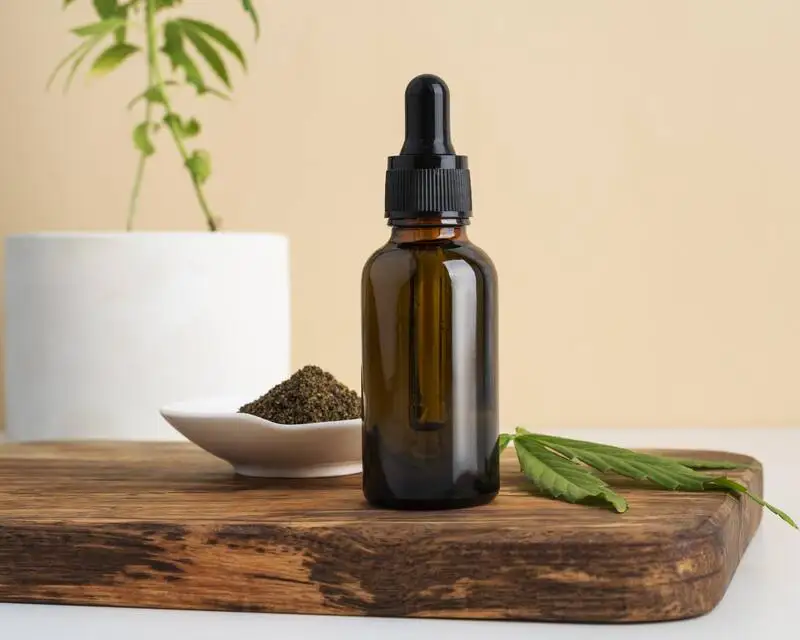
Practical Application: If someone is greening out, a high-CBD product (CBD oil drops, 50–100mg CBD) may reduce the intensity of anxiety and panic. This is not a medical protocol, but the pharmacological basis is sound and the risk profile is extremely low. CBD alone has no significant adverse effects at these doses.
Edible Overdose: The Most Common Cause of ER Visits
Emergency room visits related to cannabis overconsumption rose dramatically after edible legalization in multiple US states. Edibles are the most common cause of cannabis-related ER visits — not because they are more toxic, but because of the pharmacokinetic trap they set.
Concludes the edible "didn’t work" and takes another 10–20mg
At 90–120 minutes, both doses hit simultaneously — total effective dose doubles
Additionally, 11-hydroxy-THC (the liver metabolite) is 4–5× more potent than THC
Result: overwhelming, extended experience that may last 4–8 hours
Colorado’s Department of Public Health data showed that edible-related ER visits were disproportionately concentrated among tourists (unfamiliar with state product potency), people who did not eat before consuming, and adults over 55 (lower tolerance baseline). Children accessing edibles accidentally is a separate and serious pediatric issue — all edibles must be stored in child-proof, clearly labeled containers.
Edible Dosing Guidelines
Dose
Experience Level
Effects
Wait Time
1–2.5mg THC
Microdose / first-timers
Subtle, mood lift
Wait 2+ hr
5mg THC
Beginner
Mild euphoria, relaxation
Wait 2+ hr
10mg THC
Occasional user
Clear intoxication
Wait 3+ hr
20–50mg THC
Experienced / high tolerance
Strong, extended experience
Wait 3+ hr
100mg+ THC
Very experienced only
Intense, day-disrupting
High greening-out risk
The golden rule: Start low (5mg), go slow (wait 2–3 hours), and do not redose at the first sign of nothing happening.
How Long Does Cannabis Overconsumption Last?
Duration depends almost entirely on the consumption route, because route determines how quickly plasma THC levels rise and fall:
Inhaled cannabis (smoked/vaped): Acute peak at 15–30 min. Most severe symptoms resolve in 30–120 min. Fatigue and mild disorientation may persist for 2–4 hours. Sleep generally resolves residual symptoms.
Edibles: Peak typically at 2–4 hours post-ingestion. Severe symptoms can last 4–8 hours. With 11-hydroxy-THC having a longer half-life than THC, effects may persist for up to 10–12 hours at high doses. Full recovery usually within 24 hours.
Concentrates (dabbing): Rapid onset similar to inhalation but higher peak plasma THC. Duration similar to flower, but intensity can be significantly higher — making greening out more likely if dose is misjudged.
When to Seek Medical Help
Most greening-out episodes do not require emergency medical care. However, certain situations warrant calling 911 or going to an emergency room:
Severe chest pain, especially in a person with known cardiac history
Suspected cannabis contamination with other substances (particularly synthetic cannabinoids or fentanyl in illicit products) — signs include extreme rigidity, very high fever, or symptoms inconsistent with normal cannabis use
The affected person is a child — pediatric cases require immediate medical evaluation
Cannabis was consumed with other CNS depressants (opioids, benzodiazepines, alcohol in large amounts)
You are simply not sure — when in doubt, call. Emergency services would rather respond to a non-emergency than miss a serious event
Prevention: How to Avoid Greening Out
Know your tolerance — it changes with usage patterns. A 2-week break substantially reduces tolerance.
Edibles: always wait 2–3 hours before redosing
Avoid combining with alcohol — especially "alcohol first, then cannabis"
Eat before consuming — empty stomach increases nausea risk and alters absorption
Choose known products — illicit market products have no quality control; potency varies wildly
Start sessions in a comfortable, familiar environment
Stay hydrated
Have CBD on hand if you are anxiety-prone or using particularly high-THC products
Frequently Asked Questions
No fatal overdose from cannabis alone has ever been documented in scientific literature. The estimated lethal dose of THC in humans (based on extrapolation from animal data) would require consuming approximately 1,500 pounds of cannabis in 15 minutes — physically impossible. However, cannabis overconsumption can cause serious acute distress including panic, tachycardia, and vomiting, and indirect harms (accidents, falls) are possible while impaired. Cannabis combined with other substances — particularly opioids or alcohol — carries different risk profiles.
The acute phase of greening out — nausea, panic, tachycardia — typically lasts 30–120 minutes when caused by inhaled cannabis. Edible-induced greening out may last significantly longer: 4–8 hours is common because orally consumed THC produces sustained plasma levels via 11-hydroxy-THC. After the acute phase, residual fatigue, anxiety, and mild disorientation can persist for several hours. Most people feel fully recovered after sleeping.
There is evidence that CBD can reduce the intensity of THC-induced anxiety and panic. CBD acts as a negative allosteric modulator at CB1 receptors — meaning it reduces CB1 receptor sensitivity to THC without fully blocking it. Several clinical studies have shown CBD co-administration reduces THC-induced anxiety, paranoia, and tachycardia. Practically, consuming a CBD-dominant product (oil, gummy) during the acute phase of greening out may help calm the reaction, though this is not a formal medical treatment and evidence from acute overdose scenarios specifically is limited.
Call emergency services if: the person loses consciousness, has a seizure, cannot be roused, has a known heart condition with severe chest pain or irregular heartbeat, shows signs of severe allergic reaction, or if you are concerned the cannabis may have been contaminated with other substances (fentanyl contamination in illicit products is a real concern). For standard greening out in a healthy person, emergency care is rarely needed — but if you are unsure, calling is always the safer choice.