










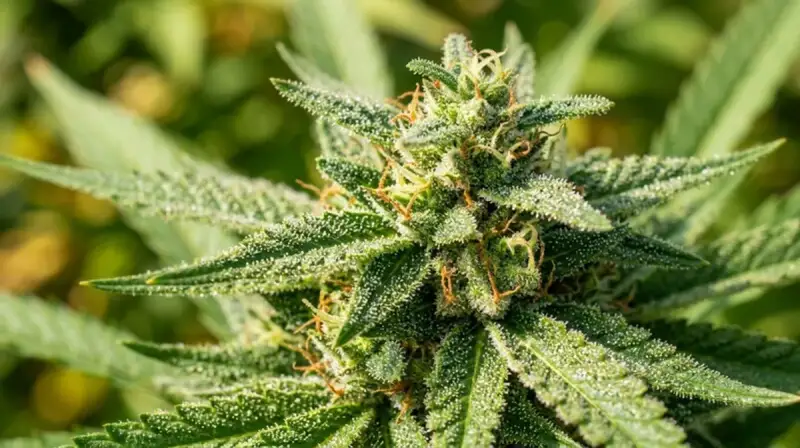
- Prop 64 (2016) + MAUCRSA (2018): California legalized recreational cannabis November 2016. MAUCRSA consolidated regulation under the DCC in 2021. Retail sales launched January 2018.
- World’s largest market: California cannabis retail sales reached $5.3 billion in 2023 — largest single legal cannabis market on Earth.
- Possession: Adults 21+ may possess up to 1 oz (28.5g) flower or 8g concentrate in public. Home storage of harvest from 6 plants is unrestricted under state law.
- Home grow: 6 plants per residence; locked and not publicly visible. Local jurisdictions may restrict outdoor cultivation. Northern California’s Emerald Triangle (Humboldt, Mendocino, Trinity) has deep cultivation heritage.
- 1,200+ dispensaries: DCC-licensed statewide. Key operators: Cookies, MedMen, Harborside, Jungle Boys. Delivery cannot be banned locally.
- Tax burden 30–45%: 15% state excise + 7.25–10.25% sales + 5–15% local. Among highest effective rates in the US — key driver of California’s persistent illicit market.
- AB 2188 (eff. Jan 2024): Bars most employers from discriminating based on off-duty cannabis use or inactive metabolite tests. Building/construction trades and federal roles exempt.
- CASP social equity + AB 1793: Fee reductions and priority DCC processing for impacted-community applicants; proactive statewide expungement of prior cannabis convictions.
Quick Legal Reference — California
| Category | Rule / Limit |
|---|---|
| Recreational legal since | Prop 64: November 2016; retail sales January 1, 2018 |
| Medical legal since | Prop 215 (1996) — first state to legalise medical cannabis |
| Regulatory body | Department of Cannabis Control (DCC) — cannabis.ca.gov |
| Framework | MAUCRSA (Medicinal and Adult-Use Cannabis Regulation and Safety Act, 2018) |
| Public possession — flower | 1 oz (28.5 g) |
| Public possession — concentrate | 8 g |
| Edible retail limit | 10 mg THC per serving; 100 mg per package |
| Home cultivation | 6 plants per residence; locked, not publicly visible; local restrictions may apply |
| Minimum purchase age | 21+ recreational; 18+ with physician recommendation |
| State excise tax | 15% (cultivation tax eliminated 2022) |
| State sales tax | 7.25% base; up to 10.25% in many districts |
| Local cannabis tax | 5–15% (varies widely) |
| Effective total (LA / SF) | ~30–45% |
| Public consumption | Illegal; licensed lounges in LA, SF, West Hollywood |
| Cannabis delivery | Legal statewide; municipalities cannot ban delivery |
| DUI standard | Impairment-based; 5 ng/mL THC referenced but not statutory per se limit |
| Employer protection | AB 2188 (eff. Jan 2024): off-duty use; metabolite test restrictions |
| Licensed dispensaries statewide | 1,200+ |
| Social equity | CASP: fee reductions, priority processing; AB 1793 expungement |
Prop 64, MAUCRSA and California’s Legal History
California’s path to recreational cannabis was built on two decades of medical cannabis leadership. Proposition 215 (Compassionate Use Act, 1996) made California the first US state to legalise medical cannabis. The state operated an informal collective and dispensary system for 20 years before the adult-use era.
Proposition 64 (Adult Use of Marijuana Act, AUMA) passed in November 2016 with 57.1% of the vote. Commercial adult-use sales launched January 1, 2018. The initial regulatory structure was divided across three state agencies, creating complexity for license applicants.
The Medicinal and Adult-Use Cannabis Regulation and Safety Act (MAUCRSA, 2018) merged those agencies. The DCC was formally consolidated in 2021 and administers all commercial cannabis licensing: retail, cultivation, distribution, manufacturing, testing labs, and microbusinesses. Local government retains authority to permit, restrict, or ban storefronts, but licensed delivery cannot be banned by any local jurisdiction — ensuring access even in conservative opt-out areas.
Possession and Home Cultivation
| Category | Recreational (21+) | Medical Patient |
|---|---|---|
| Public possession — flower | 1 oz (28.5 g) | 8 oz (with valid recommendation) |
| Public possession — concentrate | 8 g | Higher per physician recommendation |
| Home cultivation | 6 plants per residence; locked, not visible | 6+ plants if medically necessary and documented |
| Home storage | Full harvest; no state ceiling | More permissive per recommendation |
| Penalty — 1–28.5 g excess in public | $100 civil infraction | N/A |
| Penalty — larger possession | Misdemeanor; felony for large quantities with intent | N/A |
| Gifting between adults | Up to 1 oz without compensation permitted | N/A |
Northern California’s Emerald Triangle (Humboldt, Mendocino, Trinity counties) has a decades-long outdoor cultivation tradition predating legalization. Adults may keep the full harvest from 6 plants at home; the 1 oz limit applies only when transporting in public. Local zoning may restrict outdoor grows; indoor cultivation in a locked space is generally permissible.
Dispensaries, Delivery and Social Equity (CASP)
California has over 1,200 DCC-licensed retail dispensaries as of 2026. Notable operators include Cookies, MedMen, Harborside (Oakland — one of the oldest licensed dispensaries in the US), and Jungle Boys. California’s delivery ruling ensures that licensed retailers in one jurisdiction may deliver statewide — critical for consumers in opt-out cities.
| Feature | Details |
|---|---|
| Minimum age | 21+ recreational; 18+ with physician recommendation |
| Purchase limit | 1 oz flower or 8 g concentrate per transaction |
| Operating hours | Typically 6 am–10 pm; local permits vary |
| Delivery | Statewide; cannot be banned locally — a national model policy |
| Consumption lounges | Licensed in LA, SF, West Hollywood |
| CASP social equity | DCC fee reductions, priority processing for impacted-community applicants |
| License verification | cannabis.ca.gov — always verify; unlicensed shops a known problem in LA |
Unlicensed storefronts: Los Angeles has persistent unlicensed shops resembling legitimate dispensaries. Always confirm an active DCC license at cannabis.ca.gov before any purchase.
Tax Structure and the Illicit Market
| Tax Type | Rate | Notes |
|---|---|---|
| State excise tax | 15% | Applied at retail; cultivation tax eliminated 2022 |
| State sales tax (base) | 7.25% | Statewide minimum |
| District / county add-on | Up to ~3% | LA County ~2.25%; effective sales rate 9.5–10.25% in urban areas |
| Local cannabis tax | 5–15% | LA city ~10%; SF ~5% |
| Effective combined (urban) | ~30–45% | Among highest in the US |
| Medical patients | Excise may be exempt in some circumstances | Significant incentive for medical card registration |
California has collected over $5 billion in cannabis tax revenue since 2018, directed to youth prevention, environmental restoration, public safety, and the general fund. Unlicensed cannabis is untested — DCC-licensed products must pass mandatory lab testing for potency, pesticides, heavy metals, and microbials. Always buy licensed.
AB 2188: Employer Cannabis Protection (2024)
| Area | Rule under AB 2188 (eff. Jan 2024) |
|---|---|
| Pre-employment test | Cannot discriminate based on inactive metabolite THCCOOH alone |
| Off-duty use | Cannot discriminate based on off-duty, off-premises cannabis use |
| Test methodology | Must detect recent active THC impairment, not historical metabolites |
| Workplace impairment | Employers may test for reasonable suspicion and prohibit on-duty impairment |
| Exempt roles | Building/construction trades; DOT-regulated; federal contractors; security clearances; military |
THCCOOH (the inactive metabolite in most urine tests) can remain detectable for days or weeks after impairment has resolved. AB 2188 addresses this unfairness. California joins New York, New Jersey, and Minnesota in limiting metabolite-based pre-employment testing.
DUI, Penalties and Federal Land
California has no statutory per se blood THC limit. Cannabis DUI is prosecuted under Vehicle Code 23152(f) using an impairment-based standard. The 5 ng/mL threshold is referenced in enforcement but is not a bright-line legal rule, unlike Washington or Nevada.
| Offense | Classification | Penalty |
|---|---|---|
| Possession 1–28.5 g excess in public | Civil infraction | $100 fine |
| Possession over 28.5 g | Misdemeanor | Up to 6 months jail, $500 fine |
| Public consumption | Infraction | $100 fine |
| DUI cannabis — first offense | Misdemeanor | 3–5 years probation, $390–$1,000 fine, license suspension, DUI school |
| Unlicensed sale | Misdemeanor or felony | Varies by quantity |
| Sale to minor | Felony | Up to 7 years |
Federal land: Yosemite, Joshua Tree, Sequoia, Death Valley, national forests, and military bases prohibit cannabis regardless of California law. Interstate transport to Nevada, Arizona, or Oregon is a federal offense.
California Medical Cannabis Program
California’s medical program (Prop 215, 1996) remains active alongside the adult-use market. Medical patients may possess up to 8 oz in public, grow more than 6 plants if medically necessary, and benefit from lower effective tax rates. No fixed qualifying conditions list — any licensed physician may recommend cannabis for any condition they deem appropriate. Patients register for a Medical Marijuana ID Card (MMIC) through county health departments, though many operate on a physician recommendation alone.
AB 1793: Expungement and CASP Social Equity
AB 1793 (2018) required prosecutors statewide to proactively review and dismiss or reduce eligible cannabis convictions. The California DOJ and county prosecutors have reviewed millions of records. CASP provides fee reductions and priority DCC processing for applicants from communities disproportionately impacted by prior enforcement. One of the most far-reaching cannabis expungement programs in US history.
California Cannabis for Tourists
| Topic | What Visitors Need to Know |
|---|---|
| Purchasing | Any valid government-issued ID showing 21+; no California ID required |
| Airports (LAX, SFO, SAN) | Within-state possession is state-lawful; flying with cannabis interstate or internationally remains illegal |
| Hotels | Most prohibit smoking; vaporizers/edibles in private rooms common practice; always confirm with property |
| Consumption lounges | Licensed in LA, SF, West Hollywood — legal on-site option for visitors |
| National parks | Yosemite, Joshua Tree, Death Valley, Sequoia — federal property, cannabis strictly prohibited |
| Interstate transport | Federal offense; do not drive cannabis to Nevada, Arizona, or Oregon |
Watch: Cannabis Laws Overview
Related State Guides
- Colorado Cannabis Laws →
- New York Cannabis Laws →
- Nevada Cannabis Laws →
- Massachusetts Cannabis Laws →
- Florida Cannabis Laws →
- Washington Cannabis Laws →
View All 50 US State Cannabis Laws → | Legalization by State Overview →
How Long Does Weed Stay in Your System? → | Cannabis Effects Guide →