










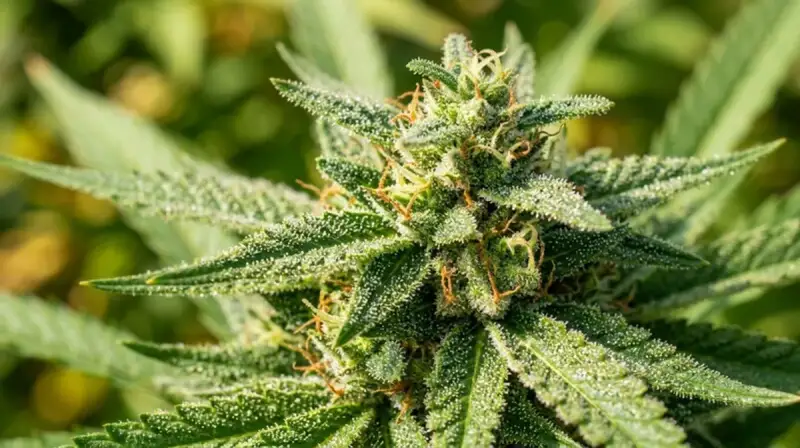
- I-502 — November 2012: Washington was one of the first two states in the USA to legalize recreational cannabis, alongside Colorado. Retail sales launched July 2014.
- Public possession limit: 1 oz (28.35 g) flower, 7 g concentrate, 16 oz solid edibles, 72 oz liquid edibles for adults 21+.
- No recreational home grow: Washington is one of the strictest legal states — recreational cultivation at home is not permitted. Medical patients with authorization may grow up to 6 plants.
- 37% excise tax: Applied at retail point-of-sale on all recreational purchases — among the highest effective cannabis tax rates in the USA. No separate state sales tax applies at that rate since 2015.
- WSLCB oversight: The Washington State Liquor and Cannabis Board licenses approximately 700 retail stores statewide and enforces product testing and packaging standards.
- DUI threshold: RCW 46.61.502 sets a 5 ng/mL whole-blood THC per se limit — one of the few states with a specific numeric DUI threshold for cannabis.
- No employment protection: Washington does not protect employees from termination for off-duty cannabis use. Employers may enforce drug testing policies freely.
Quick Legal Reference — Washington State
| Category | Rule / Limit |
|---|---|
| Public possession — flower | 1 oz (28.35 g) |
| Public possession — concentrate | 7 g |
| Public possession — solid edibles | 16 oz |
| Public possession — liquid edibles | 72 oz |
| At-home possession | Same limits apply (no separate home allowance) |
| Recreational home grow | Not permitted |
| Medical home grow | 6 plants per patient with valid authorization |
| Medical possession at home | Up to 8 oz |
| Purchase age | 21+ recreational; qualified patient any age with authorization |
| State excise tax | 37% on retail price (replaces separate sales tax) |
| Public consumption | Illegal; class 1 civil infraction |
| DUI threshold | 5 ng/mL THC in whole blood (RCW 46.61.502) |
| Delivery | Not currently permitted for recreational sales |
| Licensed retailers statewide | ~700 |
Home Cultivation Rules in Washington
Washington stands out among recreational states for its strict prohibition on home growing for adult recreational users. Initiative 502, which passed in November 2012, explicitly omitted any home cultivation provision. Unlike California, Colorado, Oregon, and most other legal states, recreational consumers in Washington may not grow cannabis plants at home regardless of the number of plants or their location on private property.
Legislation to add a home grow right has been introduced in the Washington legislature multiple times since 2012 but has not passed into law as of 2026. Advocates argue home cultivation would reduce illicit market participation and provide affordable access for lower-income residents; opponents including the WSLCB and licensed retailers have raised regulatory enforcement concerns.
Medical patients are the exception. Patients who hold a valid healthcare practitioner’s authorization and are registered in the Medical Cannabis Consultant Authorization Database (MCA) are permitted to:
| Medical Patient Rule | Limit |
|---|---|
| Home grow plants | Up to 6 plants per patient (up to 15 if a recognized cooperative of up to 4 patients) |
| Usable cannabis at home | Up to 8 oz |
| Cooperative grows | Up to 4 patients may form a cooperative; max 15 plants collectively |
| Growing location | Private property only; not visible to the public |
| Transport | Patients may transport their own cultivation products to their registered address |
Recreational users who grow even a single plant without medical authorization face criminal penalties. Possession of cannabis plants by a non-patient can be prosecuted as an unlicensed production offense under RCW 69.50.401.
Taxes and Pricing in Washington
Washington’s 37% excise tax is applied at the point of retail sale and is included in the shelf price displayed at licensed stores. This structure replaced an earlier three-tier system (producer-to-processor-to-retailer) abolished by SB 5052 in 2015. The current single-rate approach eliminates a separate state sales tax on cannabis, though local municipalities and counties may levy their own additional taxes.
| Tax Type | Rate | Applies To |
|---|---|---|
| State excise tax | 37% | All recreational cannabis retail sales |
| State sales tax on cannabis | 0% (included in excise) | Replaced by excise since 2015 |
| Local municipal tax | Varies (typically 0.1–1%) | Where applicable |
| Medical cannabis | Same 37% unless patient-authorized tier | Medical-tier dispensaries may have different structure |
Average retail prices in Washington reflect the high tax burden. In 2026, recreational flower typically sells for $8–$14 per gram at licensed stores, though product quality and brand positioning vary significantly. Seattle and Tacoma metro areas feature high retail density, which creates price competition among stores despite the fixed excise rate. The legal market in Washington does not currently allow cannabis delivery, which limits price competition from the unlicensed channel in some contexts.
Since legalization, Washington has collected over $1.4 billion in cannabis excise taxes, with revenue directed to healthcare services, substance-use prevention, the Basic Health Plan, and general fund appropriations.
Dispensaries and Purchasing
Washington operates a single-tier retail licensing system under the WSLCB. There is no separate recreational versus medical storefront distinction — licensed retailers may serve both populations. Approximately 700 retail cannabis stores operate across the state, making Washington one of the better-served legal states by retailer-to-population ratio.
The Seattle-Tacoma metro corridor has the highest retail density, with hundreds of licensed stores concentrated in King, Pierce, and Snohomish counties. Spokane on the eastern side also has a strong retail presence. Some rural counties have fewer stores due to local zoning restrictions or county-level opt-out decisions.
Out-of-state visitors may legally purchase recreational cannabis in Washington with a valid government-issued ID showing age 21 or older. Visitors face the same possession limits as residents. Critically, transporting any cannabis purchased in Washington across a state line is a federal crime regardless of the legal status of cannabis in the destination state.
Cannabis delivery is not currently authorized for recreational sales in Washington. The WSLCB has examined delivery regulations in recent legislative sessions but as of 2026, licensed home delivery is not available outside of specific medical-tier arrangements.
Washington’s Social Equity in Cannabis (SEC) program, created in 2021, provides priority processing and licensing fee assistance to applicants from communities disproportionately impacted by cannabis enforcement. A percentage of new licenses are prioritized for equity applicants, and the state maintains an equity fund to assist with startup costs.
Employment and Housing Rights
Washington State provides no statutory employment protection for recreational cannabis users. Employers may maintain zero-tolerance drug-testing policies and may discipline or terminate employees who test positive for THC, including for use that took place entirely off-duty and off-premises. This applies in most industries, including tech, healthcare, transportation, and public-sector roles.
Washington is one of the legal states that has not passed employment protection legislation for cannabis users comparable to laws enacted in New Jersey, New York, or Minnesota. Bills to add off-duty-use protections have been considered in the Washington legislature but have not advanced to passage as of 2026.
Federal workers and employees of federally regulated industries (aviation, rail, maritime, trucking, federal contractors) have no cannabis-use protections regardless of state law under federal workplace drug-testing requirements.
Housing protections are similarly absent at the state level. Landlords in Washington may prohibit cannabis use or cultivation on rental properties. No state law prevents eviction or lease non-renewal on cannabis grounds, though local fair-housing advocates continue to push for change.
| Employment / Housing Area | Washington State Protection |
|---|---|
| Off-duty recreational use — private employer | No protection; employer may test and terminate |
| Off-duty recreational use — safety-sensitive roles | No protection |
| Federal employer / federal contractor | No protection under any state law |
| Medical patient employment protection | Limited; case law developing |
| Rental housing — cannabis use | No state protection; landlord may prohibit |
| Rental housing — cultivation | Recreational grow not permitted; medical patients subject to lease terms |
Washington Medical Cannabis Program
Washington’s medical cannabis program predates recreational legalization. The Washington State Medical Use of Cannabis Act originally allowed patient use beginning in 1998. The program was substantially restructured by SB 5052 (2015), which integrated medical cannabis into the WSLCB-regulated retail framework and eliminated unregulated dispensaries and collective gardens.
To access medical-tier products and benefits, patients must receive a healthcare practitioner authorization and voluntarily register in the Medical Cannabis Authorization Database (MCA database). Key patient benefits include:
- Higher-potency product access not available on the recreational shelf
- Authorization to possess up to 8 oz at home (versus 1 oz recreational)
- Home grow rights: up to 6 plants (recreational home grow is not permitted)
- Participation in cooperative grows with up to 3 other patients (up to 15 plants collectively)
- CBD:THC ratio products and concentrations above recreational limits
Registration is voluntary — patients may use their authorization for purchases without formally entering the database — but database-registered patients receive the full set of enhanced limits. Healthcare providers authorized to issue cannabis authorizations include physicians, osteopathic physicians, physician assistants, advanced registered nurse practitioners, and naturopathic physicians.
Washington does not have a standalone medical-only dispensary network. Medical and recreational products are sold through the same WSLCB-licensed retail stores, with designated medical sections or product tiers where applicable.
DUI, Penalties and Enforcement
Washington’s cannabis DUI law (RCW 46.61.502) established a 5 ng/mL THC per se limit in whole blood. A driver with 5 ng/mL or more of active THC is per se impaired in Washington regardless of observed behavior. This contrasts with most other legal states (California, Oregon, Colorado) which use impairment-based enforcement without a specific numeric threshold. The 5 ng/mL limit is widely criticized by scientists because THC blood concentrations correlate poorly with actual impairment, particularly in frequent users who may maintain elevated baseline blood levels long after impairment has resolved.
Penalties for possession violations above the legal 1 oz limit:
| Offense | Classification | Potential Penalty |
|---|---|---|
| Possession of 1–40 g over limit | Class B misdemeanor | Up to 90 days jail, $1,000 fine |
| Possession of over 40 g (combined) | Class C felony | Up to 5 years, $10,000 fine |
| Unlicensed sale / distribution | Class C or B felony (quantity-dependent) | Varies |
| Giving cannabis to a minor | Class C felony | Up to 5 years |
| Public consumption | Class 1 civil infraction | $100 fine |
| Unlicensed cultivation (recreational) | Felony (RCW 69.50.401) | Varies by quantity |
Watch: Cannabis Laws Overview
Related State Guides
- Oregon Cannabis Laws →
- California Cannabis Laws →
- Colorado Cannabis Laws →
- Nevada Cannabis Laws →
- Michigan Cannabis Laws →
- Illinois Cannabis Laws →
View All 50 US State Cannabis Laws → | Legalization by State Overview →
How Long Does Weed Stay in Your System? → | Cannabis Effects Guide →