Class B misdemeanor (any amount)
1st Offense Possession
✓
Last reviewed: May 2026 — Verified against Kansas Statutes Annotated and KDHE guidance
Key Facts — Cannabis in Kansas
- Legal Status: Fully illegal — one of the strictest states in the US
- Possession (1st offense, any amount): Class B misdemeanor — up to 6 months jail, $2,500 fine
- Possession (subsequent offense): Class A misdemeanor escalating to felony
- Medical Program: None — Kansas is among very few states with no program whatsoever
- Wichita decrim: City ordinance since 2015 reduces penalty to $50 civil fine within city limits only
- CBD: KDHE hemp program exists; enforcement of trace-THC CBD products is a gray area
- Kansas City metro: Missouri side has recreational cannabis — transporting across state lines is a federal crime
Cannabis is completely illegal in Kansas (KS). The state has no medical program, no decriminalization law at the state level, and no legal framework for any cannabis use. Kansas is consistently ranked among the three or four most restrictive states on cannabis policy in the United States.
The Kansas Legislature, dominated by conservative Republicans, has repeatedly rejected medical cannabis bills. Unlike neighboring Colorado or Missouri, Kansas has not seen successful ballot initiatives on cannabis, in part because the state’s initiative process has high signature thresholds and has historically been difficult to use for major policy changes.
Residents and visitors must understand that cannabis possession in Kansas — even a small amount — is a criminal offense, not a civil infraction, at the state level. The consequences of a first-offense conviction include potential jail time and a permanent criminal record that can affect employment, housing, and professional licensing.
Kansas imposes criminal charges for possession regardless of amount. The penalty structure escalates significantly with repeat offenses:
| Offense | Charge | Jail | Max Fine |
|---|
| 1st offense — any amount | Class B misdemeanor | Up to 6 months | $2,500 |
| 2nd offense — any amount | Class A misdemeanor | Up to 1 year | $2,500 |
| 3rd+ offense — any amount | Drug severity level felony | Varies (probation to years) | $100,000+ |
| Possession with intent to distribute | Drug severity level 3–4 felony | 46–83 months (level 3) | $300,000 |
| Cultivation (any plants) | Felony — treated as distribution | Varies | Varies |
| Within 1,000 ft of school or park | Enhanced felony | Enhanced sentence | Enhanced fine |
Kansas uses a drug severity level system (1–5) for felonies; level 1 is most serious. First-offense possession can trigger mandatory drug evaluation and treatment in some courts through diversion programs, but this is not guaranteed and is at prosecutorial discretion.
Kansas has no medical cannabis program. Medical bills have been introduced in multiple legislative sessions, including proposals modeled after neighboring states’ programs. Each has failed to advance, typically dying in committee without a hearing.
Key reasons reform has stalled in Kansas include a deeply conservative legislature, strong opposition from law enforcement lobbying groups, and limited executive support. Unlike Indiana, Kansas has seen occasional bipartisan interest in a limited medical program, but not enough to overcome leadership resistance in the Republican-controlled legislature.
There is no near-term outlook for a Kansas medical or recreational program based on the current legislative composition. Cannabis patients in Kansas who require access for serious medical conditions have no legal option within the state and must consider whether medical travel or relocation is feasible.
In August 2015, Wichita voters approved a ballot measure reducing the penalty for first-offense cannabis possession within city limits to a $50 civil fine rather than pursuing criminal misdemeanor charges at the city level. This was a significant local reform vote in a deeply conservative state.
However, critical limitations apply to anyone relying on Wichita’s ordinance:
- The ordinance applies only within Wichita city boundaries — not in surrounding Sedgwick County or anywhere else in Kansas
- Kansas state law still criminalizes possession — state prosecutors and the Kansas Highway Patrol can file state misdemeanor or felony charges regardless of the city ordinance
- The ordinance reduced city enforcement priority but did not remove criminal exposure under state statute
- No other Kansas city has followed Wichita with a similar measure
- Wichita police retain discretion to escalate cases to state-level charges in any circumstance
In practical terms, Wichita’s ordinance means a city officer is less likely to pursue criminal charges for a small possession amount, but there is no guarantee. A state trooper or county sheriff faces no such limitation whatsoever.
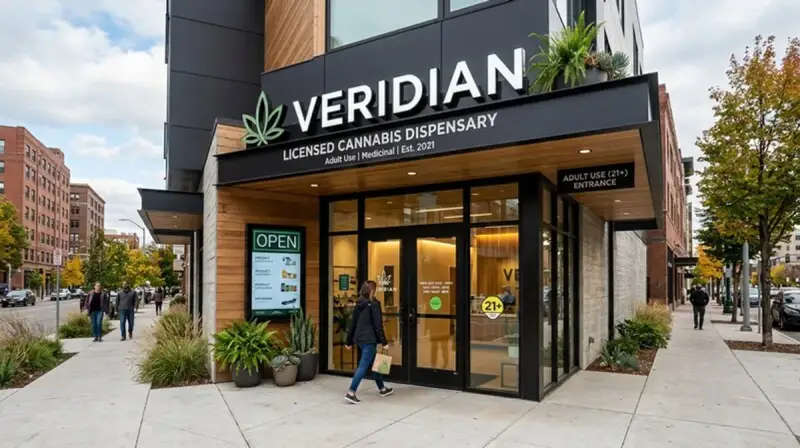
Kansas City straddles the Kansas-Missouri state line. The Missouri side operates under Missouri’s recreational cannabis program, which voters approved in 2022. Legal dispensaries operate throughout Kansas City, MO.
| Location | Cannabis Status | Possession / Purchase |
|---|
| Kansas City, Missouri | Recreational (legal) | Yes — licensed dispensaries open to adults 21+ |
| Kansas City, Kansas | Illegal | No — state prohibition fully applies |
| Crossing the state line with cannabis | Federal crime | Never — interstate transport prohibited under federal law |
The proximity of legal cannabis in Missouri creates significant temptation for Kansas residents to purchase across the state line. Bringing cannabis from Missouri into Kansas is a federal crime under the Controlled Substances Act and a Kansas state felony. Law enforcement in the Kansas City metro area is well aware of this pattern and monitors border corridors. Do not transport cannabis across the state line in either direction.
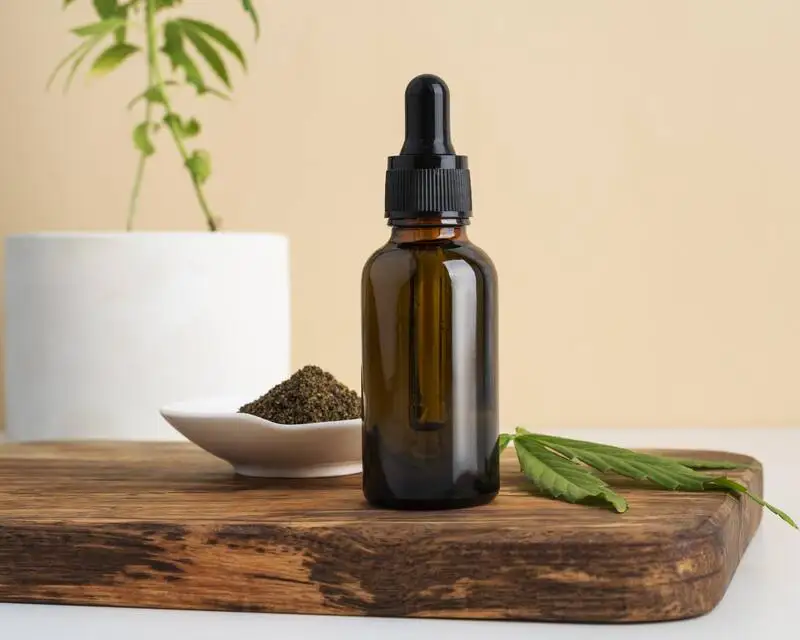
The Kansas Department of Health and Environment (KDHE) administers a state hemp program aligned with the federal 2018 Farm Bill. Hemp-derived CBD products with less than 0.3% THC are sold broadly at retail across Kansas. However, Kansas state law has not explicitly defined CBD’s legal status as clearly as some other states, creating ongoing enforcement uncertainty.
| Product | Status in Kansas |
|---|
| Hemp-derived CBD oil (<0.3% THC) | Generally tolerated; enforcement gray area under state law |
| Hemp flower (smokable) | High risk — visually indistinguishable from cannabis |
| Delta-8 / Delta-10 THC products | Contested legality; enforcement varies; high risk |
| Cannabis-derived CBD (any THC) | Illegal — treated as marijuana possession |
Smokable hemp flower is particularly dangerous to possess in Kansas because officers cannot distinguish it from cannabis without laboratory analysis. Multiple arrests for legal hemp products have occurred across Kansas. Always carry product documentation and certificates of analysis (COA) when transporting any hemp product.
Kansas employers face no legal restrictions on cannabis drug testing. Positive tests routinely result in termination and can affect unemployment eligibility. Government employees and those in safety-sensitive positions face particularly strict consequences. Kansas provides no off-duty cannabis use protections for employees.
See: How long does THC stay in urine? and Workplace Drug Testing Laws by State.
MW
Written & reviewed by
Marcus Webb — Senior Cannabis Policy Editor
Marcus covers US state cannabis legislation and regulatory policy. Analysis based on primary legislative sources, official state agency guidance, and case law research.
Kansas stands isolated from the broader Midwest cannabis reform trend. Its neighboring states span a wide range of approaches, creating significant policy contrasts for Kansas residents:
| State | Medical | Recreational | First Offense Possession |
|---|
| Kansas | None | Illegal | Class B misdemeanor (6 months/,500) |
| Missouri | Yes | Legal since 2022 | Civil for over-limit |
| Colorado | Yes | Legal since 2012 | Civil fine for over-limit |
| Nebraska | None | Illegal | Class III misdemeanor (7 days/00) |
| Oklahoma | Yes (liberal) | Recreational vote 2023 failed | Misdemeanor for non-patients |
Notably, Kansas’s first-offense possession fine of up to ,500 is among the highest in the nation for a first offense. This is significantly more punitive than neighboring Nebraska (00) and dramatically more than the civil penalty structures in Missouri and Colorado. The ,500 maximum fine can create severe financial hardship for low-income defendants even without jail time.
Whether you live in Kansas or are traveling through, understanding the practical realities of cannabis enforcement is essential:
- No medical card protection: Out-of-state medical cannabis cards provide zero protection in Kansas. A Colorado or Oklahoma medical card is legally meaningless in Kansas.
- Kansas City, KS vs. Kansas City, MO: These two cities share a metro area but are governed by different state laws. Legal cannabis on the Missouri side cannot be transported across the state line. Law enforcement is aware of this pattern and monitors the border area.
- Hemp documentation: Always carry certificates of analysis (COA) for hemp-derived CBD products. Smokable hemp flower is particularly risky to possess in Kansas due to visual indistinguishability from cannabis.
- No safe city: Unlike in Kansas City, MO, there is no city in Kansas where cannabis is decriminalized at a level that removes criminal exposure. Wichita’s ordinance reduces city enforcement priority but does not prevent state charges.
- Interstate highways: I-70 and I-135 are actively monitored by Kansas Highway Patrol for drug transport. Vehicles coming from Colorado are subject to scrutiny.
Kansas has no expungement provision specifically for cannabis convictions under current state law, though the general Kansas expungement statute may apply in some circumstances after a waiting period. A first-offense misdemeanor cannabis conviction creates a permanent public record that affects employment, housing, and professional licensing applications throughout Kansas.
If I have a medical card from Oklahoma, can I use cannabis in Kansas?
No. Kansas does not recognize out-of-state medical cannabis cards. Possession of cannabis in Kansas by a registered Oklahoma medical patient is treated identically to any other possession — a Class B misdemeanor on the first offense.
Is it safe to buy cannabis on the Missouri side of Kansas City and bring it back to the Kansas side?
No. Transporting cannabis from Missouri to Kansas is a federal crime under the Controlled Substances Act and a Kansas state felony. Law enforcement in the Kansas City metro area actively monitors this pattern. Never transport cannabis across the state line regardless of direction.
When might Kansas legalize medical cannabis?
There is no clear near-term timeline. The Kansas Legislature has consistently rejected medical cannabis bills, and there is no citizen initiative process to bypass the legislature. Most advocates view Kansas as likely to be among the last states to adopt any form of legal cannabis access due to its political structure and conservative governance.
- Cannabis is completely illegal in Kansas — no medical program, no decriminalization at the state level
- First offense possession of any amount is a criminal misdemeanor with up to 6 months jail and ,500 fine — among the harshest first-offense penalties in the US
- Wichita’s 2015 ordinance reduces city enforcement to a 0 fine within city limits only; state charges remain possible
- Missouri border (Kansas City metro) offers legal cannabis nearby — but transporting across the state line is a federal crime and state felony
- Hemp CBD products are widely sold but the legal status of trace-THC products is a gray area under Kansas law
- No near-term legislative change is expected based on the current political composition of the Kansas Legislature
For current Kansas cannabis law information, consult the Kansas Legislature official website or a licensed Kansas criminal defense attorney.
ZenWeedGuide monitors Kansas cannabis legislation and updates this page when significant legal changes occur.
A cannabis conviction in Kansas — even a first-offense Class B misdemeanor — creates a permanent criminal record with far-reaching consequences beyond the immediate fine or potential jail time:
| Area | Impact of Kansas Cannabis Conviction |
|---|
| Employment | Background check disclosure required; many Kansas employers exclude applicants with drug convictions |
| Housing | Landlords and HUD-assisted housing programs may deny applications based on drug conviction history |
| Professional licensing | Nursing, law, teaching, and other licensed professions in Kansas review drug convictions in licensing decisions |
| Federal student aid | FAFSA eligibility for federal grants and loans can be affected by drug conviction history |
| Immigration | Non-citizens face potential deportation proceedings following any drug conviction, including misdemeanors |
Kansas does have an expungement statute that may allow certain misdemeanor convictions to be sealed from public record after a waiting period. A first-offense misdemeanor cannabis conviction may be eligible for expungement after three years under certain circumstances. However, expungement is not automatic and requires a court petition, legal assistance, and filing fees. Consulting a Kansas criminal defense attorney about expungement eligibility is recommended for anyone with a cannabis conviction.
For anyone living in, working in, or traveling through Kansas, here are the essential points of Kansas cannabis law:
- Cannabis is completely illegal in Kansas — no medical program, no recreational access
- First-offense possession of any amount is a criminal misdemeanor — up to 6 months jail and a ,500 fine — one of the highest first-offense penalties in the US
- Subsequent offenses can escalate to felony charges with significantly greater consequences
- Wichita’s 2015 city ordinance reduces enforcement within Wichita to a 0 civil fine, but state charges remain possible
- The Missouri border in Kansas City is the highest-risk area for cross-border cannabis incidents; never transport cannabis across state lines
- Hemp CBD is sold broadly, but trace-THC products remain in a legal gray area under Kansas state law
- No near-term cannabis reform is expected given the current composition of the Kansas Legislature
For current Kansas cannabis law information, consult the Kansas Legislature official website or a licensed Kansas criminal defense attorney.
ZenWeedGuide monitors Kansas cannabis legislation and updates this page whenever significant legal changes occur. Check back regularly for the most current information.
For visitors and residents who use cannabis legally in other states, Kansas presents serious legal risks that require careful planning. Unlike border states where local enforcement may be relaxed, Kansas state law is uniformly enforced, and crossing into Kansas from Missouri with cannabis — even a small amount — can result in criminal charges.
| Scenario | Kansas Legal Risk | Recommendation |
|---|
| Driving through Kansas from MO to CO | High — I-70 corridor is actively patrolled | Do not transport cannabis across the KS border |
| Visiting Wichita with cannabis | Medium — city ordinance applies inside city limits only | City fine possible; state charges still technically possible |
| Medical patient from another state | High — no reciprocity, medical cards invalid in KS | Do not bring medical cannabis into Kansas |
| Hemp CBD products from out-of-state | Low — KDHE hemp program broadly permits CBD | Carry Certificate of Analysis showing 0% Delta-9 THC |
| Delta-8 THC products | High — Kansas classifies delta-8 as a controlled substance | Avoid; Kansas has not legalized any THC isomers |
A cannabis conviction in Kansas carries consequences far beyond the immediate fine and jail sentence. Understanding the full scope of a misdemeanor or felony cannabis conviction is essential for anyone facing Kansas cannabis charges.
| Consequence | Impact |
|---|
| Criminal record | Permanent without expungement; visible on background checks |
| Employment | Many employers disqualify applicants with drug convictions |
| Federal student loans | Drug convictions can temporarily suspend federal financial aid eligibility |
| Professional licenses | Medical, legal, nursing, and other licensed professions may be affected |
| Housing | Public housing eligibility may be affected by drug convictions |
| Firearms | Felony cannabis conviction results in permanent federal firearms prohibition |
| Expungement eligibility | First-offense misdemeanor may be expungeable after 3 years via court petition |
The Kansas Judicial Council and various legal aid organizations offer resources to help individuals understand their expungement eligibility. Because expungement is never automatic in Kansas, legal counsel is strongly recommended for anyone seeking to clear a cannabis conviction from their record.