Recreational
Legal Status
6% excise
Cannabis Excise Tax
✓
Last reviewed: May 2026 — Verified against official Missouri state sources
Key Facts — Cannabis in Missouri
- Legal Status: Recreational — Amendment 3 passed November 2022, retail sales began February 2023
- Possession: 3 oz in public — one of the highest limits in the US; 6 oz at home
- Home Grow: 6 plants per adult for personal use
- Tax Rate: 6% excise tax + state/local sales tax — among the lowest combined rates in the US
- Regulator: Missouri Department of Health and Senior Services (DHSS)
- Medical Program: Active since 2018 — Amendment 2; medical home grow established 2018
- Expungement: Automatic expungement for eligible prior cannabis offenses included in Amendment 3
Yes — Missouri voters approved Amendment 3 on November 8, 2022, with approximately 53% support, legalizing adult-use cannabis. Missouri became the 21st state to legalize recreational cannabis. Licensed adult-use retail sales began on February 3, 2023, making Missouri’s transition from vote to sales one of the fastest in the country.
Missouri’s legalization builds on a well-established medical cannabis foundation: voters passed Amendment 2 in November 2018, establishing the medical program, and cannabis dispensaries had been operating in the state since 2020. This meant the infrastructure was ready for adult-use sales quickly after Amendment 3 passed.
Missouri stands out nationally for its 3-ounce public possession limit — three times higher than the 1-oz limit standard in many states — and for the broad automatic expungement provisions included in Amendment 3.
Missouri sets one of the most permissive possession limits in the United States. Adults 21+ may carry up to 3 ounces of cannabis in public without penalty. At home, adults may keep up to 6 ounces. Up to 8 grams of cannabis concentrate is also permitted for public possession.
| Situation | Amount | Classification | Penalty |
|---|
| Legal public possession (flower) | Up to 3 oz | Legal | None |
| Legal public possession (concentrate) | Up to 8 g | Legal | None |
| Legal home possession | Up to 6 oz | Legal | None |
| Over public limit (moderate) | 3–35 oz | Misdemeanor | Up to 1 year / fine |
| Over limit (large quantity) | 35 oz+ | Felony | Varies; up to 7 years |
| Legal home grow | Up to 6 plants | Legal | None |
| Public consumption | Any amount | Infraction | Fine |
Amendment 3 permits adults 21+ to grow up to 6 cannabis plants per person for personal use. This right existed for medical patients under Amendment 2 since 2018 — Missouri medical patients were cultivating at home for several years before Amendment 3 extended the right to all adults.
Plants must be grown in a space that is not visible from a public area and must be secured against access by minors. The harvested cannabis from home grows counts toward the at-home possession limit. Sharing up to 3 oz of homegrown cannabis as a gift between adults, without payment, is permitted under Amendment 3.
Missouri imposes a 6% excise tax on adult-use cannabis sales. State and local sales taxes also apply, but Missouri’s combined total rate is among the lowest of any legal state — typically in the 10%–12% range. This has helped Missouri’s legal market compete strongly against neighboring states and illicit sources.
The state has a dense dispensary network centered on its two largest metro areas. Kansas City and St. Louis each have clusters of 20–30+ licensed dispensaries, with additional locations throughout mid-Missouri (Columbia, Jefferson City) and Springfield. Missouri’s existing medical dispensary infrastructure converted quickly to dual-use operations after Amendment 3 passed.
Excise tax revenue funds law enforcement training (55%), drug treatment programs (10%), early childhood education (10%), and local government (25%).
One of the most consequential provisions of Missouri’s Amendment 3 is its automatic expungement clause. Under this provision, individuals with prior cannabis possession convictions for conduct that is now legal under state law are eligible to have those records automatically sealed — without needing to file a petition or hire an attorney.
The expungement applies to possession and other low-level cannabis offenses. Misdemeanor convictions for possession of amounts now legal are targeted first; courts are required to process eligible expungements on a rolling basis. This represents one of the most comprehensive automatic relief programs of any cannabis legalization measure in the US.
Individuals with eligible convictions may also petition for expungement of their own records to accelerate the process if the automatic review has not yet reached their case.
Missouri’s medical cannabis program, established by voter-approved Amendment 2 in November 2018, continues to operate under the administration of the Missouri Department of Health and Senior Services (DHSS). Qualifying conditions include cancer, epilepsy, glaucoma, Parkinson’s disease, PTSD, chronic pain, and terminal illness, among others.
Medical patients benefit from higher possession limits (up to 4 oz per 30-day period from dispensaries), access to higher-potency products, lower effective tax rates (no excise tax on medical sales), and the established home cultivation right that predates Amendment 3. Patients with serious conditions or high ongoing consumption requirements typically find the medical card economically worthwhile.
| Category | Detail |
|---|
| Legalizing legislation | Amendment 3 — approved November 8, 2022 |
| Retail sales launched | February 3, 2023 |
| Adult-use possession (public) | Up to 3 oz flower / 8 g concentrate |
| Adult-use possession (home) | Up to 6 oz |
| Home cultivation | 6 plants per adult |
| Legal age | 21+ |
| Regulatory body | Missouri DHSS |
| Medical program | Active since 2018 (Amendment 2) |
| Excise tax | 6% — among lowest in the US |
| Expungement | Automatic for eligible prior convictions (Amendment 3) |
Does Missouri allow cannabis social consumption venues?
Missouri law does not currently authorize cannabis lounges or licensed social consumption venues where adults can consume on-site. Public consumption remains prohibited. Some cannabis events and private gatherings may accommodate consumption on private property, but there is no statewide licensing framework for social consumption spaces as of early 2026.
How do I check my Missouri expungement status?
Missouri residents with prior cannabis convictions eligible for expungement under Amendment 3 can contact the Missouri State Highway Patrol Criminal Justice Information Services Division or a local public defender office to check the status of their case. Individuals may also file a petition with the court where the original conviction occurred; filing fees are waived for eligible petitioners.
Can Missouri municipalities ban cannabis dispensaries?
Yes. Missouri law allows local governments to restrict or prohibit cannabis dispensaries within their jurisdiction through zoning regulations. Several smaller Missouri municipalities have opted out of permitting dispensaries. However, they cannot prohibit residents from legally possessing or consuming cannabis purchased elsewhere in the state.
Is cannabis delivery legal in Missouri?
Yes. Missouri permits licensed cannabis retailers to offer home delivery to adults 21 and older. Delivery orders must be placed through the licensed retailer and delivered by licensed delivery personnel. Delivery expands access for Missouri residents in areas without nearby dispensaries, particularly in rural parts of the state.
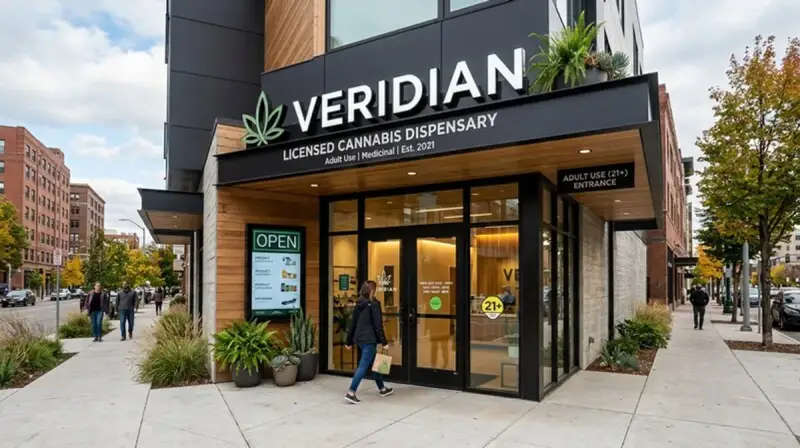
Whether you are a first-time cannabis buyer or an experienced consumer, knowing what to expect at a licensed dispensary makes the experience smoother. Here are the key things to prepare before your visit.
- Bring valid photo ID: All adults must show government-issued ID (driver’s license, passport, or state ID) proving age 21+. Dispensaries are legally required to verify age and may turn away anyone without valid ID regardless of apparent age.
- Cash is useful: Many dispensaries have ATMs on-site. Some accept debit or credit cards through cashless payment systems; confirm before visiting. Having cash as a backup ensures you can complete your purchase.
- Check the menu online: Most licensed dispensaries publish their product menus online with current prices and availability. Reviewing products and prices in advance helps you make informed decisions and saves time at the counter.
- Ask the budtender: Staff at licensed dispensaries are trained to answer questions about products, potency, effects, and consumption methods. Do not hesitate to ask for guidance, especially if you are new to a product type.
- Start low, go slow: If you are new to cannabis or trying a new product type — especially edibles or concentrates — begin with the lowest available dose and wait at least two hours before consuming more. Edibles have a delayed onset of 30–90 minutes.
- Know the legal purchase limits: You may only purchase up to the legal per-transaction limit at any one dispensary per day. Attempting to purchase above-limit amounts is a violation of state law and may result in refusal of sale.
After your dispensary visit, remember that cannabis must be consumed on private property. Keep purchased cannabis in its original sealed packaging until you are in a legal consumption location, and never consume cannabis while operating or riding in a vehicle.
MW
Marcus Webb
Senior Cannabis Policy Editor
Marcus Webb covers cannabis legislation across all 50 states. He tracks regulatory changes, legislative sessions, and court decisions affecting cannabis consumers and businesses.
Even though cannabis is legal in Missouri, federal law and employer policies still apply. Many employers require pre-employment or random drug screening regardless of state law.
The most common pre-employment test is the urine test, which can detect THC metabolites for up to 30 days in regular users. See: How long does THC stay in urine?