










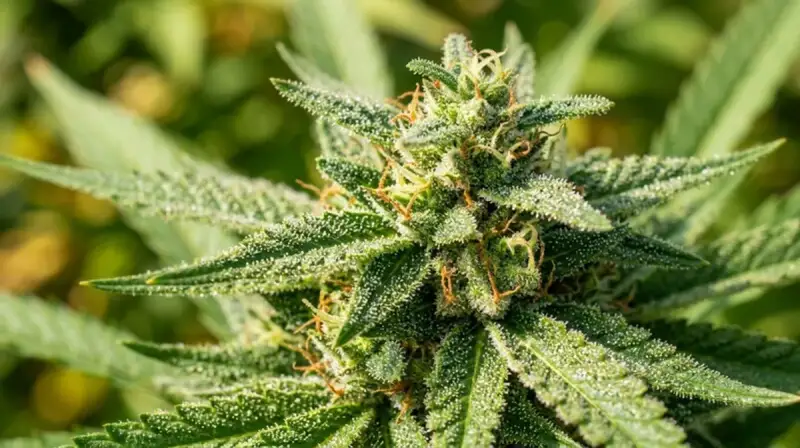
- Measure 91 (2014): Oregon voters approved recreational cannabis 56–44% in November 2014. Adults 21+ can legally possess, purchase from licensed OLCC retailers, and home grow up to 4 plants.
- Possession limits: 1 oz in public; 8 oz at home (flower); 1 oz concentrate; 16 oz solid edibles; 72 oz liquid products.
- Home grow: 4 plants per household (not per person). Enclosed, secure, not visible to public.
- Lowest prices in the US: Oregon’s chronic cannabis oversupply and moderate taxation produce the lowest retail prices nationally — commonly $5–15/g for flower. The market has faced economic stress for many operators due to oversupply.
- OLCC oversight: Oregon Liquor and Cannabis Commission (OLCC) licenses and regulates all recreational cannabis activity. No municipal opt-out of retail permitting (unlike Colorado).
- Measure 110 and HB 4002: Oregon’s 2020 Measure 110 decriminalized all drug possession. HB 4002 (2024) recriminalized small hard drug possession as a misdemeanor with diversion options. Cannabis was not re-criminalized but the broader drug policy landscape shifted.
- Cannabis lounges: Legal under OLCC rules with consumption area endorsement. Limited number of licensed lounges operate in Portland, Bend, and other markets.
- No per se DUI: Oregon has no specific THC blood limit for DUI. Impairment must be demonstrated through totality of evidence.
Oregon Cannabis Law Quick Reference
| Category | Rule / Limit |
|---|---|
| Minimum age for recreational purchase | 21+ |
| Public possession — flower | 1 oz (28 g) |
| Home possession — flower | 8 oz (227 g) |
| Home possession — concentrate | 1 oz (28 g) |
| Home possession — solid edibles | 16 oz |
| Home possession — liquid products | 72 fl oz |
| Home cultivation | 4 plants per household; enclosed, secure, not publicly visible |
| Dispensary purchase limit | 1 oz flower per transaction (plus concentrates and edibles per OLCC rules) |
| Medical programme | Oregon Medical Marijuana Program (OMMP) since 1998 |
| Medical possession | Up to 24 oz dried cannabis; 6 mature plants; 6 immature plants; seeds |
| State excise tax | 17% recreational |
| Local tax | Up to 3% |
| OLCC dispensaries | 700+ licensed recreational retailers statewide |
| Cannabis consumption lounges | Legal with OLCC consumption area endorsement |
| Delivery | Legal for OLCC-licensed retailers in participating jurisdictions |
| Per se DUI limit (THC) | None; impairment-based standard |
| Municipal opt-out | Not available for retail; Oregon has no local opt-out unlike some states |
| Cross-state transport | Federal crime regardless of destination |
Measure 91: Oregon’s Legalization History
Oregon’s cannabis history is long by American standards. Oregon was the first state to decriminalize cannabis possession in 1973, reducing small possession from a criminal to a civil violation decades before the national reform wave. Oregon’s medical cannabis programme began with Ballot Measure 67 in 1998, creating the Oregon Medical Marijuana Program (OMMP) with patient registration, grow rights, and supply from registered caregivers.
Recreational legalization came with Ballot Measure 91 in November 2014, which passed with 55.8% of the vote. The measure was modeled on Colorado’s Amendment 64 and Washington’s Initiative 502 but with several distinctive features: it set possession limits at 1 oz in public and 8 oz at home, allowed home grows of 4 plants (rather than Colorado’s 6 or Washington’s zero), and did not allow municipal opt-outs from retail licensing in the same manner as some other early-legal states.
Recreational retail began on October 1, 2015, making Oregon the third state after Colorado and Washington to open recreational dispensaries. The Oregon Liquor Control Commission (OLCC) — renamed the Oregon Liquor and Cannabis Commission (OLCC) in 2021 — was given oversight authority, following a model that used existing alcohol regulatory infrastructure for cannabis regulation.
Oregon’s Cannabis Oversupply Market and Low Prices
Oregon is internationally known for having the lowest retail cannabis prices in the United States. Flower prices at Oregon dispensaries regularly run $5–10 per gram for standard products and $10–15 per gram for premium strains. “Budget” flower can be found for $3–5 per gram at some dispensaries. These prices are 30–60% lower than comparable products in California, Colorado, or East Coast legal markets.
The low prices reflect structural market conditions: Oregon licenses a very large number of cannabis cultivators relative to its population and in-state demand. The Rogue Valley in southern Oregon (Medford, Ashland, Jacksonville area) and the Willamette Valley have ideal growing conditions and became major cannabis production centers following legalization. Licensed cultivation capacity grew rapidly and has consistently exceeded licensed dispensary demand, creating persistent wholesale oversupply and downward price pressure.
| Product Category | Typical Oregon Retail Price | Comparable Price (East Coast legal state) |
|---|---|---|
| Standard flower (per gram) | $5–10 | $12–20 |
| Premium/craft flower (per gram) | $10–15 | $18–30 |
| Eighth (3.5 g) | $15–35 | $35–60 |
| Concentrate (1 g) | $15–35 | $30–60 |
| Vape cartridge (0.5 g) | $15–25 | $30–50 |
| Edible (100 mg THC) | $8–15 | $15–30 |
The low-price market has created economic hardship for Oregon cannabis businesses. Many licensed cultivators and processors operate at or below the cost of production. Oregon’s OLCC and the state legislature have grappled with the oversupply problem through licensing reform, attempting to slow the growth of new cultivation licences and prevent further market deterioration. Some operators have called for allowing Oregon cannabis exports to other legal states — which federal law currently prohibits — as a solution to the oversupply problem.
For consumers, Oregon’s low prices are a significant attraction. Cannabis tourism from California, Washington, and other higher-priced states contributes to Oregon dispensary sales, particularly in Portland (close to Washington border) and Ashland/Medford (close to California border).
Home Grow and Personal Possession
| Category | Recreational Limit | Medical Limit (OMMP) |
|---|---|---|
| Public possession — flower | 1 oz | 1 oz (when in transit) |
| Home possession — flower | 8 oz (227 g) | 24 oz (680 g) |
| Home possession — concentrate | 1 oz | Included in 24 oz equivalent |
| Home possession — solid cannabis product | 16 oz | N/A (not separately capped) |
| Home possession — liquid cannabis product | 72 fl oz | N/A |
| Home cultivation — mature plants | 4 plants per household | 6 mature plants per patient (+ 6 immature) |
| Gifting between adults (21+) | Up to 1 oz; no compensation | N/A |
| Seeds | 10 seeds per household | Seeds permitted with registration |
Oregon’s home possession limit of 8 oz at home is among the more generous in the country for recreational. Combined with the 4-plant home grow (household limit, not per-person), Oregon’s personal possession framework allows substantial personal-use cannabis without relying on dispensaries. The 4-plant household limit — as opposed to per-person limits — means that even households with multiple adults are limited to 4 total plants, which is less generous than Colorado’s approach of 6 per person up to 12 per household.
Oregon’s no-local-opt-out rule is significant for consistency. In some states, individual municipalities can prohibit retail cannabis establishments within their boundaries, creating a patchwork where legal-state residents may live in communities with no nearby dispensary. Oregon’s framework does not allow municipalities to ban retail cannabis in this manner, ensuring more consistent access across the state geographically.
Tax Structure and Revenue
Oregon’s recreational cannabis tax is relatively moderate compared to early-legal states, which has contributed to the low retail price environment. The state levies a 17% retail excise tax on recreational cannabis purchases. Local jurisdictions may add up to 3% on top of the state tax, bringing the maximum combined rate to 20% in municipalities with the full local tax.
| Tax Type | Rate | Revenue Destination |
|---|---|---|
| State retail excise (recreational) | 17% | Common School Fund (40%), Oregon Mental Health, Alcoholism, and Drug Services (20%), Oregon State Police (15%), Cities and counties (10%), Oregon Health Authority (15%) |
| Local retail tax (optional) | Up to 3% | City/county general fund |
| Medical cannabis | Exempt from retail excise; standard sales tax applies | Standard Oregon tax fund |
Oregon cannabis excise tax revenue has grown steadily since retail launch, reaching approximately $180–200 million annually. The Common School Fund allocation has made cannabis tax revenue a notable contributor to public education funding. Mental health and addiction services receive a portion, a policy design that reflects the broader philosophy of redirecting drug policy enforcement costs toward health services.
Despite the moderate tax rate relative to other states, the combination of very low wholesale prices and the 17% retail excise means that many Oregon cannabis businesses operate on thin margins. The OLCC has worked with the legislature on measures to address industry financial sustainability without significantly raising consumer prices.
Cannabis Dispensaries and Lounges in Oregon
Oregon has over 700 OLCC-licensed recreational dispensaries, concentrated in Portland and the Willamette Valley, with significant presence in Bend/Central Oregon, the Rogue Valley, the Coast, and smaller communities statewide. Dispensaries range from small boutique shops to large multi-product retailers.
Cannabis consumption lounges are legal in Oregon with an OLCC Consumption Area Endorsement. Licensed dispensaries may apply for this endorsement to allow on-site consumption. Lounges cannot serve alcohol. Customers must be 21+. The number of operating lounges has grown since the initial rules were established, with Portland, Bend, and Ashland home to several operating venues. Cannabis lounges represent Oregon’s contribution to the social consumption model that Amsterdam coffeeshops pioneered internationally.
Delivery is available in Oregon from OLCC-licensed retailers. Delivery orders may be placed for home delivery within the licensed retailer’s delivery area. Delivery adds convenience for patients and recreational consumers who prefer not to visit a dispensary in person.
Measure 110 and HB 4002: Oregon’s Drug Policy Evolution
Oregon’s 2020 Measure 110 was the most radical drug policy initiative in American history at the time of passage. Voters approved Measure 110 with 58% of the vote in November 2020, making Oregon the first state to decriminalize personal possession of all drugs including heroin, methamphetamine, cocaine, and other controlled substances. Under Measure 110, simple possession of these substances became a civil violation rather than a crime, with a $100 fine and access to a drug treatment line rather than criminal charges.
Measure 110 was not about cannabis — cannabis was already legal in Oregon by 2020. Measure 110 addressed harder drugs and was based on the evidence from Portugal’s 2001 drug decriminalization, which reduced drug-related deaths and HIV infections while maintaining low use rates. Oregon’s implementation faced significant challenges, however. The treatment funding mechanism was slow to deploy, visible drug use in Portland increased significantly, and public perception of the policy was negative in the context of Portland’s broader social order challenges post-2020.
In February 2024, the Oregon Legislature passed House Bill 4002, which reversed the full decriminalization of hard drugs. Under HB 4002, possession of small amounts of heroin, methamphetamine, and other hard drugs became a misdemeanor again, though with a diversion and treatment option. Cannabis was never part of Measure 110’s decriminalization structure and is not affected by HB 4002 — cannabis remains fully legal in Oregon under Measure 91.
The Measure 110 / HB 4002 cycle is relevant for understanding Oregon’s broader drug policy approach and public health philosophy. Oregon remains a state where cannabis policy is well-settled and progressive, even as the broader drug decriminalization experiment produced contentious political results and a partial reversal.
DUI and Cannabis in Oregon
Oregon’s DUII (Driving Under the Influence of Intoxicants) law (ORS 813.010) does not set a specific per se THC blood concentration limit. Oregon is one of the few legal states without a numerical THC threshold. Prosecutors must prove impairment through officer observations, field sobriety test performance, driving behavior evidence, and chemical test results. A positive blood test for cannabis alone is not sufficient for conviction without supporting impairment evidence.
This approach is more defendant-friendly than Colorado’s 5 ng/mL standard or Wisconsin’s zero-tolerance rule. Oregon courts have emphasized that the standard for DUII is actual impairment of driving ability. DRE testimony is used in Oregon cannabis DUII cases, and Blood Alcohol Content (BAC) tests are supplemented with blood THC testing when cannabis use is suspected.
| DUII Offense | Classification | Penalties |
|---|---|---|
| First DUII | Class A misdemeanor | Minimum 48 hours jail or 80 hours community service; $1,000–$6,250 fine; 1-year license suspension; mandatory treatment assessment |
| Second DUII within 5 years | Class A misdemeanor | Minimum 240 hours community service or 48 hours jail; $1,500–$6,250 fine; 3-year suspension |
| Third DUII within 10 years | Class C felony | 90-day minimum jail; $2,000–$125,000 fine; lifetime license revocation (with petition possible after 10 years) |
| DUII with passenger under 18 | Enhanced charges | Additional mandatory jail; DUII + Child Endangering charges |
Employment, Housing, and Expungement
Oregon has enacted employment protections for cannabis users. Under Oregon law (ORS 659A.112), employers generally may not take adverse action against employees or applicants based solely on off-duty cannabis use or a positive drug test for cannabis metabolites (for most employers and positions). Exceptions exist for safety-sensitive positions, federally regulated roles, and employers who can demonstrate that off-duty cannabis use impairs job performance.
Oregon’s employment protection is among the stronger in the country but not absolute. The federal preemption of state employment law for DOT-regulated employees, federal contractors, and federally funded programme employees means these workers remain subject to federal zero-tolerance. Oregon’s defense sector, Coast Guard facilities, and federally funded public safety workers are not protected by the state employment rule.
Oregon has an expungement mechanism for prior cannabis convictions. Under SB 420 (2021) and earlier measures, individuals with prior cannabis convictions for conduct that is now legal may petition for expungement. Oregon also moved toward automatic expungement of certain prior offenses. The process and eligibility depend on the specific offense, conviction date, and subsequent criminal history.