









Cheese Strain: The UK Underground Legend
Cheese is one of the most iconic and recognisable cannabis strains ever produced — a balanced hybrid born from a legendary Skunk #1 phenotype with a sharp, funky aroma and reliably euphoric, body-melting effects. Its story begins not in California or the Netherlands, but in a field in Luton, England, where a collective called Exodus preserved a single cutting that would change cannabis culture forever.
- Genetics: Skunk #1 phenotype (clone-only original), stabilised in the UK late 1980s
- THC Range: 15–20% (avg. ~17%)
- Top Terpenes: Myrcene, Caryophyllene, Limonene
- Main Effects: Euphoria, relaxation, creativity, body relief
- Medical Uses: Stress, chronic pain, mild anxiety, appetite stimulation, insomnia
- Yield (Indoor): 400–500g/m² | Outdoor: 500–600g per plant
- Flavour Profile: Sharp cheese, earthy skunk, subtle sweetness
- Origin: United Kingdom (Exodus collective, Luton, ~1988–1995)
Origin & Genetics: Luton, the Exodus Collective, and a Clone That Changed Everything
The story of Cheese begins in the late 1980s in the United Kingdom, deep within the underground cannabis culture that flourished despite strict prohibition. A collective known as Exodus, based in Luton, Bedfordshire — about 30 miles north of London — is widely credited with isolating and preserving a remarkable phenotype of Skunk #1. This particular plant produced an unusually sharp, tangy, almost dairy-like aroma unlike any cannabis of the era, and it became known simply as "Cheese."
The Exodus collective was part of a broader UK free party and acid house movement that emerged in the late 1980s. As the Criminal Justice and Public Order Act 1994 cracked down on raves and unlicensed gatherings, the culture went further underground — and Cheese clones spread through the network of travellers, activists, and music fans who formed its backbone. By the mid-1990s, Cheese was the defining strain of British underground cannabis culture, particularly in the Midlands and the South East.
Unlike most strains bred by crossing two parents, the original Cheese was a clone-only phenotype — its genetics preserved exclusively through vegetative cuttings for over a decade. This kept it remarkably consistent. When the UK cannabis market began opening to seed banks in the early 2000s, Big Buddha Seeds stabilised Cheese genetics into seed form by crossing the original clone with an Afghani indica — introducing yield and reliability without sacrificing the essential character. The UK Cheese and Exodus Cheese strains that followed are direct descendants of this lineage.
Today the Cheese family has expanded into dozens of crosses globally. Blue Cheese (Cheese × Blueberry) is among the most celebrated. But the original Exodus cutting remains the reference point — the ur-Cheese against which everything else is measured. For a deeper exploration of the UK strain heritage, read our UK Cheese strain guide and our Exodus Cheese guide.
Cannabinoid & Terpene Profile
Cheese's psychoactive experience is driven by a THC range of 15–20%, making it a moderately potent strain suited to intermediate and experienced users. Its CBD content is typically below 1%. The terpene profile is where Cheese truly distinguishes itself: the combination of myrcene's sedative earthiness, caryophyllene's spicy depth, and limonene's citrus brightness creates an immediately recognisable sensory experience. These terpenes also contribute meaningfully to effects — myrcene enhances body-heavy relaxation, caryophyllene provides anti-inflammatory support, and limonene elevates mood. Read our terpenes guide for a deeper exploration.
| Compound | Type | Typical % in Cheese | Primary Effect | Aroma Note |
|---|---|---|---|---|
| THC | Cannabinoid | 15–20% | Euphoria, psychoactivity, pain relief | — |
| CBD | Cannabinoid | <1% | Minor anti-anxiety support | — |
| Myrcene | Terpene | 0.30–0.55% | Sedation, muscle relaxation | Earthy, musky, herbal |
| Caryophyllene | Terpene | 0.20–0.35% | Anti-inflammatory, stress relief | Spicy, peppery, woody |
| Limonene | Terpene | 0.10–0.25% | Mood elevation, anti-anxiety | Citrus, lemon zest |
| Alpha-Pinene | Terpene | 0.05–0.15% | Mental clarity, memory retention | Pine, fresh forest |
Effects of Cheese Strain
Cheese delivers a well-rounded hybrid experience that leans slightly toward the indica side in terms of body sensation while maintaining enough sativa energy to keep the mind engaged. The onset is typically 2–5 minutes when smoked or vaped, with peak effects around 20–30 minutes and duration of 2–3 hours. Edibles have delayed onset of 45–90 minutes but extend effects to 4–6 hours. Explore cannabis effects and onset times in our dedicated guide.
Phase 1: Warm Euphoric Onset (0–20 min)
The first wave is unmistakably cerebral — a soft, spreading warmth behind the eyes and across the forehead that lifts mood without the jittery edge sometimes associated with high-THC sativas. Conversations come more easily, background tension dissipates, and there is a pleasant sense of mental openness. Creativity and social ease are the dominant notes at this stage.
Phase 2: Physical Settlement (20–60 min)
The indica heritage becomes apparent as the body effect deepens. A progressive warmth begins in the chest and shoulders before moving through the limbs. Muscle tension releases, minor aches soften, and there is a grounding heaviness that encourages comfortable seating. This phase is the sweet spot for most Cheese users — the mind remains present and engaged while the body is fully at ease.
Phase 3: Deep Relaxation (60 min+)
At higher doses or as the session extends, Cheese settles into deep relaxation. The cerebral component fades into a more dreamy, introspective headspace. Couch-lock is possible with heavier doses. This phase makes Cheese particularly popular for evening and nighttime use — it is a natural precursor to sleep without the immediate knockout of a pure indica. For medical users exploring cannabis for pain or insomnia, this profile is well-matched.

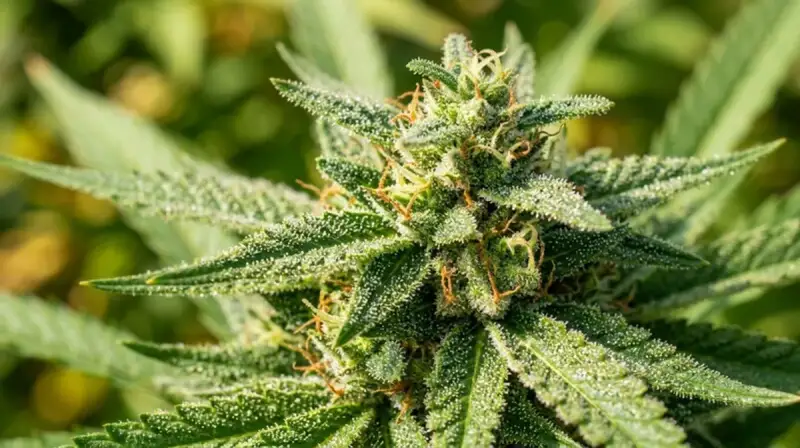
The distinct structure and trichome density of Cheese-family strains — a direct expression of their Skunk #1 genetics.
"Cheese has a way of making you feel like everything is going to be okay — it's that rare strain that hits the body and mind in equal measure, without tipping you too far in either direction."
Cheese and British Cannabis Culture
Cheese is not simply a popular strain in the UK — it is a cultural artefact. Its spread through the early 1990s free party circuit, particularly via the Exodus collective's network across Luton, Bedfordshire, and surrounding counties, made it synonymous with a specific era of British countercultural identity. The same years that saw Cheese distribute through photocopied flyers and late-night convoy drives also produced some of the most enduring British electronic music — Orbital, Prodigy, Underworld, Massive Attack. Cannabis, and Cheese specifically, was part of that texture.
When the Criminal Justice Act 1994 attempted to suppress the free party movement, it inadvertently cemented Cheese's mystique. The strain survived precisely because it was a clone — passed between trusted hands, impossible to seed-police, and deeply embedded in the social fabric of a generation. By the time cannabis seed banks began commercialising derivatives in the early 2000s, Cheese had a two-decade head start in the UK's collective cannabis memory.
For visitors exploring the UK cannabis cultural landscape, our travel guides cover the cities most associated with this heritage: London, Manchester, and Bristol all have Cheese-era roots running through their music and nightlife identities.
Cheese vs. Similar Strains
While Cheese stands alone in terms of its pungent aroma, it shares dispensary space with strains offering overlapping effect profiles. The table below compares Cheese against five commonly encountered varieties. For more, explore our full strain index.
| Strain | Type | THC Range | Top Effect | Best For | Aroma |
|---|---|---|---|---|---|
| Cheese | Hybrid | 15–20% | Euphoria + body relaxation | Stress, pain, creativity | Sharp cheese, skunky |
| UK Cheese | Hybrid | 18–20% | Deep body relaxation + euphoria | Pain, insomnia, stress | Intense cheese, skunk |
| Blue Cheese | Indica-Hybrid | 15–20% | Deep body relaxation | Insomnia, muscle tension | Blueberry + cheese |
| Skunk #1 | Hybrid | 15–19% | Balanced euphoria | Daytime, socialising | Skunky, earthy |
| OG Kush | Hybrid | 19–26% | Cerebral + physical | Stress, depression, pain | Fuel, lemon, spice |
| Northern Lights | Indica | 16–21% | Full body sedation | Insomnia, chronic pain | Sweet, pine, spicy |
Growing Cheese
Cheese is a rewarding cultivar for intermediate growers and above. Its Skunk #1 heritage provides vigorous, forgiving genetics that adapt well to a range of environments — soil, coco, and hydroponic setups all suit it. The plant grows with a characteristic bushiness that benefits from early topping or low-stress training to improve light penetration and canopy evenness.
| Parameter | Indoor | Outdoor |
|---|---|---|
| Flowering Time | 8–9 weeks | Mid-October harvest |
| Yield | 400–500g/m² | 500–600g per plant |
| Height | 60–100cm (manageable) | 100–150cm |
| Difficulty | Intermediate | Intermediate |
| Mould/Pest Resistance | Good | Good |
| Odour During Flower | Very strong — carbon filter essential | Very strong — site selection critical |
The single greatest challenge in growing Cheese is odour management. The sulfur compounds responsible for its signature aroma begin expressing strongly around week 4 of flower and intensify through harvest. For indoor growers this demands robust carbon filtration — undersized fans and filters will not cope. Outdoor growers should consider site selection carefully; Cheese plants in flower can be detected from considerable distance on warm, still evenings.
On the positive side, Cheese shows excellent resistance to common moulds and pests thanks to its Skunk #1 backbone. It is not easily stressed, recovers well from training, and rewards growers who invest in good feeding schedules and adequate light during the final weeks of flower. Flushing for the last 10–14 days before harvest improves the flavour profile noticeably.
Cheese and Drug Testing
THC from Cheese metabolises into THC-COOH, the primary metabolite detected in drug tests. Detection windows vary based on frequency of use, body composition, and metabolism. The table below provides general guidance — individual results vary. Read our full drug testing guide for detail on panel tests, cutoff levels, and false positives from CBD products.
| Test Type | Occasional User | Regular User | Daily User |
|---|---|---|---|
| Urine | 3–7 days | 10–21 days | Up to 30+ days |
| Blood | 1–3 days | 3–7 days | 7–14 days |
| Saliva | 24–72 hours | 3–5 days | Up to 7 days |
| Hair Follicle | Up to 90 days | Up to 90 days | Up to 90 days |