










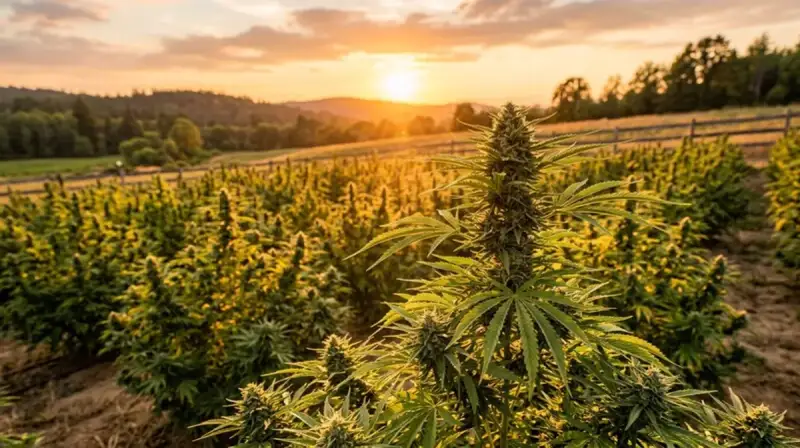
Mango Haze: The Tropical Sativa for Daytime Creativity
Mango Haze is the product of one of cannabis breeding’s most successful formula combinations: the legendary Haze lineage tempered by the stability and physical ease of Northern Lights #5, with Skunk #1’s potency contribution and the whole package wrapped in a tropical fruit aroma that has made it one of the most recognizable sativa-dominant strains in the global cannabis market. Developed by the respected Mr. Nice Seed Bank, Mango Haze achieves something that eluded many Haze derivatives: it delivers the cerebral clarity and creative energy of its Haze heritage in a form that is genuinely accessible to moderate consumers, without the raciness or duration that can make pure Haze varieties challenging. The result is a strain that has found consistent popularity among creative professionals, medical cannabis patients, and daytime consumers who want mental elevation without sedation.
- Genetics: Northern Lights #5 × Haze × Skunk #1 (Mr. Nice Seed Bank)
- Type: Sativa-dominant hybrid
- THC: 15–18% (accessible potency for creative daytime use)
- CBD: ~0.5% (trace CBD from Skunk #1 lineage)
- Primary Terpenes: Myrcene, Terpinolene, Ocimene
- Aroma/Flavor: Tropical mango, sweet citrus (lemon/orange), herbal spice, earthy finish
- Effects: Uplifting, creative, focused, energetic — excellent daytime productivity strain
- Medical uses: Depression, fatigue, stress, attention/focus, appetite stimulation
- Flowering time: 10–11 weeks indoors; outdoor harvest mid-to-late October
- Yield: Moderate to high; suited to both indoor and outdoor cultivation
- Growing difficulty: Moderate; Haze genetics require attention to stretch and flower time management
| Attribute | Detail |
|---|---|
| Type | Sativa-dominant hybrid |
| Genetics | Northern Lights #5 × Haze × Skunk #1 |
| Breeder | Mr. Nice Seed Bank |
| THC | 15–18% |
| CBD | ~0.5% |
| Primary Terpenes | Myrcene, Terpinolene, Ocimene |
| Aroma | Tropical mango, citrus, sweet, herbal spice |
| Flavour | Mango, lemon-orange citrus, herbal, earthy finish |
| Effects | Uplifting, creative, focused, energetic, euphoric |
| Best For | Daytime productivity, creative work, social interaction, outdoor activities |
| Medical | Depression, fatigue, stress, attention/focus, appetite |
| Flowering Time | 10–11 weeks indoor; mid-late October outdoor |
| Yield | Moderate to high |
| Growing Difficulty | Moderate |
Mango Haze Overview: Genetics & Breeding History
Mango Haze was bred by Mr. Nice Seed Bank, the company founded by legendary figures in cannabis breeding history including Shantibaba (who also co-founded Green House Seeds) and Neville Schoenmakers, often called the “King of Cannabis” for his foundational work establishing the first commercial cannabis seed bank. Mr. Nice operates with a commitment to preserving elite genetics and has produced numerous award-winning strains that have influenced the global cannabis gene pool. Mango Haze is among their most celebrated accomplishments.
The genetic formula — Northern Lights #5 × Haze × Skunk #1 — is one of the most powerful in cannabis breeding history. Each parent contributes distinct characteristics that, in combination, produce something more than the sum of its parts. Northern Lights #5 is one of the most awarded cannabis strains of all time: a mostly indica variety of uncertain North American heritage (likely Pacific Northwest) that became the industry standard for indica stability, resin production, early maturation, and manageable growth structure. It was used as a stabilizing parent in dozens of influential commercial strains precisely because it consistently contributes genetic reliability to otherwise difficult-to-manage varieties.
Haze is the sativa archetype: a complex multi-way landrace cross of Colombian, Mexican, South Asian, and Thai genetics that produces extraordinarily long flowering periods, exceptional cerebral effects, and a spicy-citrus aroma unlike any other cannabis variety. Pure Haze is notoriously difficult to grow (flowering periods of 16+ weeks are not uncommon) and can produce overwhelming cerebral intensity at potent doses. But its effect profile — clear-headed, creative, euphoric, energetic — has made it the foundational sativa parent for the majority of high-performing sativa hybrids in the contemporary market.
Skunk #1 is the third parent and serves a dual role: it contributes potency (amplifying THC expression in the progeny) and adds the genetic robustness that allows Mango Haze to perform reliably across a wider range of growing conditions than its Haze grandparent. Skunk #1 also introduces the subtle earthy-sweet undertones that anchor Mango Haze’s otherwise purely tropical aroma profile.
The result of this three-way combination is a strain that has achieved what cannabis breeders call “hybrid vigor” — demonstrating characteristics that exceed what any of the parent strains could produce individually in a reliable, repeatable form.
Cannabinoid & Terpene Profile
Mango Haze’s cannabinoid profile is notable for its moderate, functional THC range and meaningful CBD contribution. At 15–18% THC, Mango Haze sits in the productive middle of the potency spectrum: strong enough to deliver clear and noticeable effects, moderate enough to remain functional for experienced users and accessible for intermediate consumers. This potency range is specifically suited to daytime use, where the goal is enhancement rather than incapacitation.
The ~0.5% CBD content, while modest, is not insignificant at the pharmacological level. CBD modulates THC’s binding behavior at CB1 receptors in ways that research suggests may reduce anxiety and paranoia responses — a known risk with high-THC pure sativas. For consumers who are sensitive to sativa-induced anxiety, Mango Haze’s trace CBD contribution likely plays a meaningful role in its reputation for delivering Haze-like elevation without the raciness that makes some pure sativa varieties uncomfortable.
| Terpene | Aroma Note | Effect Contribution | Also Prominent In |
|---|---|---|---|
| Myrcene | Tropical, mango, musky | Physical ease, mild sedation reduction of Haze jitter | Mango Kush, Blue Dream, OG Kush |
| Terpinolene | Fresh, floral, herbal, citrus | Uplifting, anti-anxiety, enhances cerebral clarity | Jack Herer, Ghost Train Haze, Dutch Treat |
| Ocimene | Sweet, herbal, tropical fruit | Uplifting, mild antifungal, aromatic amplifier | Golden Goat, Clementine, Green Crack |
| Limonene | Lemon, citrus, bright | Mood elevation, stress relief, anti-anxiety | Super Lemon Haze, Lemon Skunk, Durban Poison |
| Caryophyllene | Spicy, earthy, woody | Anti-inflammatory, CB2 agonist, grounding | Most Skunk descendants, OG strains |
The myrcene-terpinolene combination at the core of Mango Haze’s terpene profile is responsible for the strain’s distinctive character. Myrcene contributes the tropical fruit depth — specifically the mango note that gives the strain its name — while terpinolene adds the fresh, almost floral herbal clarity that prevents the aroma from being simply sweet. Ocimene amplifies both the tropical and herbal dimensions, adding complexity that distinguishes Mango Haze from simpler mango-forward varieties. The limonene contribution adds the citrus brightness that makes the aroma particularly vivid, while caryophyllene provides the earthy spice undertone that grounds the profile and makes it recognizably related to its Skunk #1 parent.
Interestingly, myrcene is the same terpene found in mangoes themselves — the “mango method” of consuming mango before cannabis to amplify effects is based on myrcene’s presence in both. In Mango Haze, myrcene is a primary terpene rather than just a trace component, meaning the aroma connection to actual mango fruit is chemically genuine rather than merely coincidental or the product of flavoring.
Mango Haze Effects: What to Expect
Mango Haze effects follow a clear sativa-dominant pattern with the characteristic NL#5 refinement that sets it apart from rawer Haze varieties. Understanding what to expect across the timeline of effects helps consumers use the strain productively.
Onset (0–20 minutes): Mango Haze’s effects arrive relatively quickly for a Haze-derived strain, typically within 10–20 minutes of inhalation. The initial signal is a brightening of mood and a slight tightening of focus — a sensation many users describe as “waking up” mentally rather than getting high. There is an energetic quality to the onset that motivates movement and activity rather than encouraging stillness.
Peak effects (20–90 minutes): The peak period is characterized by elevated mood, clear-headed mental activity, enhanced creativity, and mild physical energization. Users frequently report that tasks they find tedious or daunting feel more manageable and even enjoyable under Mango Haze’s influence. The creative enhancement is well-documented in user reports: writing, music, visual art, problem-solving, and brainstorming all benefit from the strain’s ability to break mental ruts and encourage lateral thinking. The NL#5 contribution becomes more apparent in the physical dimension: a gentle body ease without sedation that provides physical comfort and prevents the tension or restlessness that can accompany high-THC sativas.
Tapering effects (90–180 minutes): As the peak subsides, Mango Haze transitions into a pleasant, functional mild elevation rather than a sharp comedown. Users retain mental clarity and good mood while the more intense creative activation fades. This phase is often described as productive and pleasant rather than depleting. The absence of a heavy comedown is one of the features that makes Mango Haze popular for daytime use.
| Effect Category | Intensity (1-10) | Character | Onset |
|---|---|---|---|
| Euphoria / Mood Elevation | 8/10 | Bright, clear, sustained | 10–20 min |
| Mental Energy / Focus | 8/10 | Directed, productive, sharp | 15–25 min |
| Creativity Enhancement | 9/10 | Lateral thinking, idea generation | 20–30 min |
| Physical Relaxation | 4/10 | Gentle ease, not sedating | 20–40 min |
| Sociability | 7/10 | Conversational, engaged, warm | 15–30 min |
| Appetite Stimulation | 5/10 | Mild to moderate | 60–90 min |
| Sedation / Couch-lock | 1/10 | Essentially absent at normal doses | N/A |
Watch: Mango Haze Strain Review
Flavor Profile: Tropical Mango & Citrus
The Mango Haze flavor profile is one of its most celebrated attributes — and one of the reasons the strain has maintained consistent popularity over decades despite increased competition from newer high-THC novelties. The aroma and flavor are genuinely distinctive and enjoyable in a way that transcends the cannabis context.
Aroma before combustion: Freshly broken Mango Haze buds release an intensely tropical scent: ripe mango fruit, sweet citrus (primarily lemon and orange notes), and a clean herbal freshness inherited from the terpinolene-dominant Haze parentage. There is nothing musty, skunky, or diesel-like in the primary impression — a departure from many Haze derivatives and sativa hybrids that lean into fuel or cheese notes. The smell is genuinely reminiscent of a ripe mango, and users familiar with the variety often cite the aroma as immediately recognizable.
Flavor on the inhale: The combustion flavor maintains fidelity with the aroma: tropical mango sweetness is the dominant note, with citrus brightness (particularly lemon) in the upper register. The Haze parentage introduces a subtle herbal, almost spicy quality that adds complexity without dominating. The smoke is smooth and pleasant, reflecting the moderate resin levels and lack of harsh chemical precursors in the terpene profile.
Flavor on the exhale: The exhale introduces the earthy, slightly woody character of the Skunk #1 lineage and the caryophyllene spice note. This provides a grounding quality to the finish that balances the tropical sweetness of the inhale. The aftertaste is clean — a brief herbal sweetness rather than the heavy residual often left by high-myrcene indica varieties.
In concentrate and extract form: Mango Haze’s terpene profile translates exceptionally well to live resin and full-spectrum concentrate production. Cold-extraction methods that preserve volatile terpenes (particularly the ocimene and terpinolene fractions) produce concentrates with an intensified mango-citrus quality that can be genuinely stunning for consumers unfamiliar with high-quality sativa extracts. Mango Haze live resin is sought out by concentrate enthusiasts for precisely this reason.
Medical Cannabis Uses
Mango Haze’s combination of uplifting effects, moderate potency, minimal sedation, and pleasant flavor profile makes it a well-regarded medical strain for daytime use across several condition categories. Its functional profile distinguishes it from heavier sedating strains used for sleep and pain management; Mango Haze is a daytime therapeutic rather than a nighttime relief strain.
| Condition | Mechanism | Evidence Level | Notes |
|---|---|---|---|
| Depression | Mood elevation via endocannabinoid system; serotonergic interaction | Moderate — user reports + preclinical | Uplifting effect profile well-matched; avoid high doses that may cause rebound low |
| Fatigue | CNS energization; dopaminergic component of sativa effect | Moderate — user reports | Functional daytime energy without stimulant jitter; replaces not supplements caffeine for some users |
| Stress & Anxiety | Anxiolytic terpenes (limonene, terpinolene); moderate THC | Moderate — dose-dependent | Effective at low-moderate doses; high doses may increase anxiety in sensitive users |
| ADD/ADHD | Focus-enhancing effect profile; dopamine regulation hypothesis | Anecdotal — user reports | Many users report improved task focus; individual response varies widely |
| Appetite Stimulation | CB1 activation; munchies mechanism well-established in research | Well-established cannabinoid effect | Milder than indica strains; appetite arrives in the later effect phase |
| Mild Pain | Caryophyllene CB2 agonism; endocannabinoid analgesia | Moderate — preclinical + user reports | Best for mild-moderate pain; not suited to severe or neuropathic pain (consider higher-CBD alternatives) |
Medical cannabis patients using Mango Haze for depression and fatigue management should be aware of the dose-response relationship. At low to moderate doses (1–2 inhalations for experienced users), Mango Haze reliably produces the uplifting, energizing effects it is known for. At higher doses, the THC component can produce an overactivated state in sensitive individuals that paradoxically worsens anxiety. Starting with the minimum effective dose and titrating upward based on personal response is the standard medical cannabis protocol for sativa-dominant strains.
Growing Mango Haze
Mango Haze cultivation follows the general pattern of Haze-influenced hybrids: rewarding for growers willing to accommodate the strain’s particular needs, particularly around stretch management and flowering duration. The NL#5 and Skunk #1 genetics have meaningfully reduced the challenges that made original Haze impractical for most indoor growers, but Mango Haze still demands more attention than pure indica or indica-dominant hybrid varieties.
| Growing Factor | Detail | Grower Notes |
|---|---|---|
| Plant height | Tall, stretchy — may reach 150–200cm+ indoors | Top early and train (LST, SCROG) for indoor height management; essential for tent growers |
| Flowering time | 10–11 weeks indoor; mid–late October outdoor | Longer than average; plan harvest timing accordingly. Patience rewarded with terpene development. |
| Yield indoor | Moderate to high; 400–550g/m² with optimal conditions | SCROG training significantly improves canopy utilization and yield |
| Yield outdoor | High potential; up to 700–900g per plant in ideal conditions | Warm, dry climate preferred; extended season allows full terpene development |
| Climate preference | Mediterranean, warm temperate, subtropical | Haze genetics prefer warm dry conditions. Oregon/California ideal outdoor. High humidity increases mold risk late flower. |
| Nutrient demands | Moderate to high N during veg; reduce N, increase PK in late flower | Sativa genetics respond well to moderate feeding; avoid overfeeding (nutrient burn shows quickly) |
| Training response | Excellent response to topping, FIM, LST, SCROG | Haze-dominant plants benefit greatly from early training; multiple top colas improve per-plant yield |
| Pest/Disease resistance | Good overall; watch for spider mites in dry conditions, botrytis late flower | Good airflow essential in dense canopy; inspect frequently in final 2–3 weeks before harvest |
| Trichome development | Moderate density, excellent resin quality | Harvest timing at ~70% milky/30% amber trichomes preserves the cerebral effect profile characteristic of the strain |
One of the most important decisions in Mango Haze cultivation is harvest timing. The Haze genetics mean that this strain continues to develop cannabinoid and terpene content deep into the flowering period; growers who pull early to save time sacrifice the terpene richness that defines the strain’s character. Trichome inspection with a jeweler’s loupe or digital microscope is essential. At the optimal harvest window (roughly 70% milky/30% amber trichomes), Mango Haze has reached its peak combination of THC potency and terpene expression. Harvesting earlier results in a sharper, more racy effect; harvesting later (at majority amber) produces a more sedating effect that loses the strain’s characteristic daytime quality.
Consumption Methods for Mango Haze
Mango Haze’s terpene-rich, aromatic profile responds differently to different consumption methods. Understanding which method best expresses the strain’s qualities helps consumers choose the approach that delivers the full character of the variety.
Vaporizer (dry herb) — recommended for terpene expression: Low-temperature dry herb vaporization (175–190°C) is the best method for experiencing Mango Haze’s full terpene profile. At these temperatures, the volatile aromatic terpenes (particularly terpinolene and ocimene) vaporize without the combustion byproducts that obscure them in smoke. The tropical mango and citrus character is most vivid and accurate through a quality vaporizer. Cannabinoid delivery is efficient and onset is rapid (5–10 minutes).
Joint or pipe (combustion): Traditional combustion delivers Mango Haze’s effects effectively but with some loss of terpene nuance due to high temperatures destroying the most volatile compounds. The mango-citrus character is still present but less vivid than vaporization. For social consumption and convenience, a joint or pipe remains a practical choice; flavor-maximizing consumers will prefer vaporization.
Live resin vape cartridge: The ideal compromise between convenience and terpene expression. Live resin cartridges produced from Mango Haze material (flash-frozen at harvest) preserve volatile terpenes that conventional extraction destroys. The effect profile is notably sativa-forward and the flavor is intensely tropical compared to distillate cartridges, which lose virtually all original terpene character.
Edibles: Mango Haze in edible form produces a different and substantially more intense experience than inhalation. The decarboxylation of THC to 11-hydroxy-THC in the liver creates a more sedating and longer-duration effect (2–6 hours) that partially undermines the strain’s daytime productivity advantage. For edible use, start conservatively (5–7.5mg THC) and allow 90 minutes for full onset before redosing.
Similar Strains to Mango Haze
Consumers who enjoy Mango Haze and want to explore related varieties have several excellent options that share some combination of Haze genetics, tropical terpene profiles, or daytime-focused sativa effects.
| Strain | Similarity | THC | Key Difference |
|---|---|---|---|
| Super Silver Haze | NL#5 × Haze × Skunk #1 (same parents, different expression) | 18–23% | Higher THC, more intense cerebral activation, less tropical fruit aroma |
| Jack Herer | Haze-dominant, creative, uplifting, aromatic | 18–24% | Spicy pine-citrus rather than tropical; named after cannabis activist |
| Mango Kush | Strong mango aroma, tropical profile | 16–20% | Indica-dominant; more sedating; different effect profile despite similar aroma |
| Tangie | Citrus-dominant sativa hybrid, uplifting, creative | 19–22% | Orange citrus rather than mango; California Orange descent; very popular craft market strain |
| Green Crack | Sativa-dominant, energetic, daytime productivity | 17–21% | Less aromatic tropical character; more purely stimulating effect profile; no Haze genetics |
Author
Frequently Asked Questions: Mango Haze
What is Mango Haze strain?
Mango Haze is a sativa-dominant hybrid created by Mr. Nice Seed Bank, bred from Northern Lights #5 × Haze × Skunk #1. It delivers an intensely tropical mango and sweet citrus aroma backed by the cerebral sativa energy of its Haze parentage, with THC 15–18% and CBD ~0.5%. It is valued for daytime productivity and creative uplifting effects.
What are the effects of Mango Haze?
Mango Haze produces uplifting, energetic, creative effects with clear-headed focus and euphoric mood elevation. The NL#5 component contributes gentle physical ease without sedation, making it manageable for moderate consumers. Effects are well-suited to daytime tasks, creative projects, social interaction, and outdoor activities.
What does Mango Haze taste like?
Mango Haze has a rich tropical flavor dominated by ripe mango sweetness with strong lemon-orange citrus undertones. The Haze parentage contributes spicy herbal complexity beneath the fruit notes. There are subtle earthy undertones on the finish from the Skunk #1 lineage. The combination is widely regarded as one of the most pleasant in the sativa-dominant category.
Is Mango Haze good for focus and productivity?
Yes. Mango Haze is particularly well-regarded for focus and daytime productivity. The Haze-derived mental clarity combined with Northern Lights physical ease produces a functional high that supports concentration on creative tasks, writing, visual arts, and analytical work. Many medical users report using it for managing attention issues, depression, and fatigue during productive hours.