










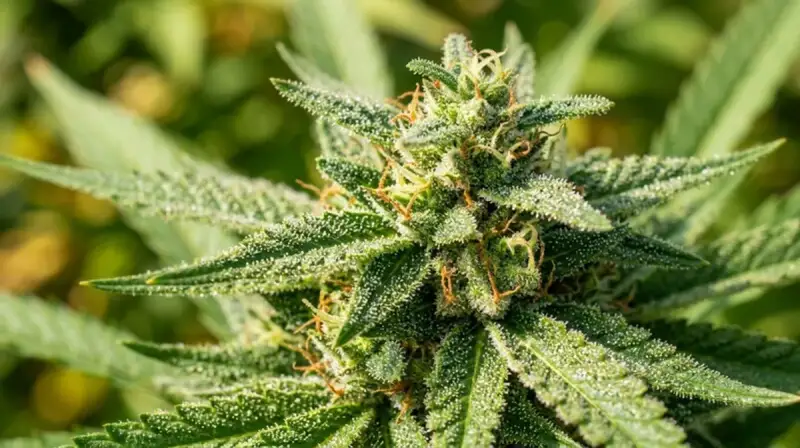
- Flash-frozen starting material is the defining characteristic of live resin: plants go from cut to cryogenic storage within minutes of harvest.
- Terpene preservation is the primary goal; fresh cannabis contains 2–5% terpenes by weight, and conventional drying destroys up to 60% of these volatile compounds.
- BHO extraction at sub-zero temperatures selectively dissolves cannabinoids and terpenes while leaving behind unwanted plant waxes and lipids.
- Potency range 65–95% THC makes live resin significantly stronger than flower (15–30% THC) and comparable to other premium concentrates.
- Live resin vs. live rosin: live resin uses hydrocarbon solvents; live rosin is solventless (heat + pressure only)—both start with fresh-frozen material.
- Price premium reflects the specialised cryogenic equipment, higher labour costs, and lower commercial yields compared to cured-bud extracts.
- Storage at 35–50°F in an airtight container preserves terpene integrity for up to six months after opening.
What Is Live Resin? A Complete Introduction
Live resin is one of the most celebrated cannabis concentrates on the modern market. Unlike conventional extracts made from dried and cured cannabis flower, live resin is produced using fresh cannabis plants that are flash-frozen immediately after harvest—often within minutes of being cut. This critical difference in starting material is what sets live resin apart and gives it its name: the plant is essentially “alive” when processing begins.
The goal of this approach is to preserve the full, living chemistry of the cannabis plant at its peak moment of potency and aromatic richness. When cannabis is harvested and allowed to dry and cure, a significant portion of its volatile terpenes evaporate or degrade. Industry data indicates that fresh cannabis flower contains anywhere from 2% to 5% terpenes by weight. Conventional drying and curing at room temperature can destroy 55–65% of those compounds within 72 hours. By freezing the plant immediately, live resin producers lock in these aromatics before they have a chance to dissipate.
The result is a concentrate widely regarded as one of the most flavorful and aromatic products available, prized by cannabis connoisseurs and medical patients alike for its full-spectrum character. Whether you’re new to concentrates or an experienced consumer, this guide covers everything you need to know about live resin—from the science of terpene preservation to extraction mechanics, potency comparisons, storage best practices, and price expectations.
Origins: Who Invented Live Resin?
Live resin as a defined product category emerged around 2013 in Colorado, credited largely to extractor William Fenger, known in the industry as “Kind Bill,” and EmoTek Labs founder Jason Emo. They developed the technique of using specially designed, low-temperature BHO extraction equipment to process fresh-frozen cannabis. Before this innovation, virtually all extractors worked exclusively with dried, cured material. The idea that freezing fresh cannabis could yield a dramatically superior terpene profile spread rapidly through the extraction community and became a commercial staple as legal cannabis markets matured. Today, live resin is produced by licensed processors in nearly every legal state and is available in dispensaries in multiple textures: sauce, sugar, badder, budder, and cartridges.
How Live Resin Differs From Other Concentrates
The cannabis concentrate market offers many options: shatter, wax, budder, distillate, rosin, and more. What distinguishes live resin from all of these is the starting material and the preservation of the plant’s natural terpene and cannabinoid ratio. Distillate is highly refined to isolate specific cannabinoids, stripping away most terpenes in the process. Shatter and wax are typically made from dried, cured flower that has already lost a substantial portion of its volatile aromatics. Live resin, by contrast, mirrors the chemistry of the living plant as closely as possible, delivering a richer, more layered experience that experienced consumers describe as the true expression of a given strain.
Why Cold Matters: The Science of Terpene Preservation
To understand why live resin commands a price premium and a devoted following, it helps to understand what terpenes are and why preserving them matters. Terpenes are the aromatic volatile compounds found throughout the plant kingdom—responsible for the citrus scent of limonene, the earthy notes of myrcene, and the sharp pine of alpha-pinene. In cannabis, terpenes interact with cannabinoids and the human endocannabinoid system in ways that researchers believe modulate the quality and character of psychoactive and therapeutic effects—a phenomenon commonly known as the entourage effect.
The challenge is that terpenes are highly volatile. Many begin to evaporate at temperatures as low as 70°F (21°C), and enzymatic processes that activate at the moment of harvest accelerate their degradation. Traditional harvest, dry, and cure cycles expose the plant to ambient temperature, UV light, reduced humidity, and oxygen—conditions that collectively destroy the majority of its terpene load before extraction even begins.
Flash-freezing the freshly harvested plant stops enzymatic activity and halts evaporation by dropping tissue temperature below the threshold at which volatile compounds can escape. When the frozen biomass is then processed at sub-zero extraction temperatures, the resulting concentrate retains a terpene profile meaningfully closer to the living plant. This is why laboratory tests consistently show that live resin has more complex, strain-accurate flavours than concentrates made from cured flower.
| Starting Material | Extraction Process | Estimated Terpene Retention | Aroma Profile |
|---|---|---|---|
| Fresh-frozen whole plant | BHO closed-loop (live resin) | 85–95% | Full, complex, strain-accurate |
| Fresh-frozen whole plant | Heat + pressure (live rosin) | 80–90% | Full, clean, solventless |
| Dried & cured flower | BHO (shatter / wax) | 35–50% | Moderate, partially degraded |
| Dried & cured flower | CO2 supercritical | 40–55% | Moderate, clean but muted |
| Dried & cured flower | Ethanol extraction | 20–40% | Low; mostly used for distillate |
| Any material | Short-path distillation | <5% (reintroduced artificially) | Neutral unless terpenes added back |
How Live Resin Is Made: The Closed-Loop BHO Process
The production process is more complex and equipment-intensive than most other extraction methods, requiring specialised closed-loop systems, cryogenic freezing capabilities, and rigorous safety protocols. In all legal jurisdictions, live resin production is strictly a licensed, commercial operation.
Step 1 — Harvesting and Flash-Freezing
The process begins at harvest. As soon as cannabis plants are cut, enzymatic degradation begins and terpene off-gassing accelerates. To prevent this, live resin producers flash-freeze harvested plants almost immediately using dry ice, liquid nitrogen, or ultra-cold freezers set to temperatures around −40°F (−40°C) or lower. The frozen material is then stored and transported under cryogenic conditions until it reaches the extraction facility. Farms growing specific cannabis strains for live resin production often have freezing equipment on-site to minimise the time between cut and freeze—ideally under 30 minutes. This step is the defining characteristic that separates live resin from all other concentrate types.
Step 2 — Closed-Loop Hydrocarbon Extraction
At the extraction facility, the frozen biomass is loaded into a closed-loop extraction system. Butane, propane, or a blend of both is chilled to sub-zero temperatures—typically between −20°F and −40°F—and passed through the frozen plant material. At these temperatures, the solvent selectively dissolves cannabinoids and terpenes while extracting fewer waxes and lipids than warm extraction would. The resulting “miscella” solution is collected in a recovery vessel. The entire system is sealed and pressurised; commercial facilities meet strict safety and ventilation standards under applicable cannabis regulations. Closed-loop systems also allow the solvent to be recovered and reused, reducing both waste and operating costs significantly.
Step 3 — Purging Residual Solvent
After extraction, the solvent is removed through a combination of gentle heat, typically 90–110°F, and vacuum pressure—a process called purging. The goal is to eliminate residual solvent below regulatory thresholds (typically under 500 ppm butane) while preserving as much terpene content as possible. Depending on how the extract is handled during and after purging, it can take on different textures: sauce (terpene-rich liquid with crystalline THCA), sugar (grainy wet texture), badder or budder (creamy consistency), or snap-and-pull (taffy-like). Each texture represents a different terpene-to-cannabinoid ratio and handling technique, catering to different consumer preferences.
Step 4 — Third-Party Laboratory Testing
In all regulated cannabis markets, finished live resin must pass third-party laboratory testing before sale. Tests measure cannabinoid potency, residual solvent levels, pesticide residues, heavy metals, and microbial contamination. Consumers can request a Certificate of Analysis (COA) from any licensed dispensary for the specific batch they’re purchasing. Reviewing the COA is the most reliable way to verify the potency, purity, and terpene content of a live resin product. Our guide to Certificates of Analysis explains what to look for.
Live Resin Potency: THC Content Compared to Other Products
Live resin is a high-potency product. Most commercially produced live resins test between 65% and 95% total cannabinoids by weight. Because live resin preserves the full-spectrum profile of the plant rather than isolating a single cannabinoid, it also retains meaningful levels of CBD, CBG, CBN, THCV, and terpenes. This is why many users report that live resin effects feel more nuanced and less one-dimensional than those of high-purity distillate at comparable THC percentages.
| Product Type | Typical THC Range | Terpene Content | Experience Profile |
|---|---|---|---|
| Cannabis flower | 15–30% | 1–3% | Mild to moderate, slow onset |
| Kief / dry sift | 40–60% | 2–5% | Moderate, broad spectrum |
| BHO shatter (cured bud) | 60–85% | 0.5–2% | High, some terpene loss |
| Live resin (fresh-frozen) | 65–95% | 3–8% | High, full-spectrum, complex |
| Live rosin (solventless) | 65–90% | 3–7% | High, solventless, very clean |
| Distillate | 85–99% | <1% | Very high THC, flat effect |
| THCA diamonds in sauce | 95–99% | varies (in sauce fraction) | Extremely high, crystalline |
The Entourage Effect and Why It Matters for Live Resin
The concept of the entourage effect—proposed by researchers including Dr. Raphael Mechoulam—holds that cannabinoids and terpenes work synergistically, producing effects greater than the sum of their individual contributions. Live resin’s full-spectrum character makes it one of the product types most likely to deliver this synergistic experience. For example, a live resin high in myrcene may produce more pronounced body-focused effects compared to a THC-matched distillate; a limonene-rich live resin may feel more uplifting and cerebral. This is why strain selection matters significantly when purchasing live resin, and why consumers are encouraged to review terpene data on COAs rather than focusing solely on THC percentage. Our terpene explainer covers the most important cannabis terpenes and their effects in detail.
Live Resin vs. Live Rosin: A Clear Comparison
The terms live resin and live rosin are frequently confused. Both products start with fresh-frozen cannabis, which is why both carry the word “live.” The difference lies entirely in the extraction method used after freezing.
Live resin uses hydrocarbon solvents (typically butane or propane) in a closed-loop extraction system. This solvent-based approach is highly efficient, produces consistent results at commercial scale, and is the reason live resin is more widely available and more affordable than live rosin. The finished product must be purged of residual solvent and tested to regulatory standards before sale.
Live rosin is completely solventless. After the fresh-frozen cannabis is processed into bubble hash using ice water agitation, the bubble hash is pressed with heat and pressure in a rosin press. No chemical solvents are introduced at any stage. Because the process is more labour-intensive and yields are lower, live rosin commands a significant price premium—often $80–$150+ per gram compared to $40–$80 for live resin. Many connoisseurs consider live rosin the purest expression of a strain available in concentrate form. For a detailed comparison of rosin production methods, see our what is rosin guide.
For consumers who prioritise avoiding all solvents, live rosin is the better choice. For those who want the full-spectrum, fresh-frozen terpene experience at a more accessible price, live resin delivers exceptional value. Both are superior to concentrates made from dried, cured flower in terms of terpene preservation.
How to Consume Live Resin: Methods and Dosage
Live resin’s versatility is one of its core appeals. Depending on its texture and preferred consumption method, it can be consumed via dabbing, vape cartridge, or as a flower topper.
Dabbing is the traditional method and allows the greatest control over temperature, enabling consumers to experience the full terpene profile. Low-temperature dabs at 315–400°F are recommended to preserve terpenes; higher temperatures produce larger clouds but sacrifice flavour and can introduce combustion byproducts. Read our complete guide on what is dabbing for equipment setup and technique.
Live resin vape cartridges offer a convenient, discreet alternative. These cartridges are pre-filled with live resin oil and attach to a standard 510-thread battery. Because live resin is more viscous than distillate, live resin cartridges require ceramic coil hardware rather than wick systems. The result is a vaping experience substantially closer to the flavour profile of the living plant than distillate-based cartridges. Learn more in our vape cartridge explainer.
Topping flower involves adding a small, rice-grain-sized amount of live resin to the top of a packed bowl or into a joint. This is the most accessible entry point for consumers who already smoke flower but want to experience live resin without specialised equipment.
Dosage Guidance
Because live resin is significantly more potent than flower, dosage requires care. A standard dab is typically 25–50 mg of concentrate. At 80% THC, that represents 20–40 mg of THC per session—a dose that would overwhelm most beginners. Experienced consumers recommend starting with a rice-grain-sized amount, waiting 10–15 minutes to assess effects, and only redosing if needed. Inhalation delivers cannabinoids to the bloodstream within seconds, so onset is near-immediate. See our cannabis dosing guide for broader guidance on concentration-appropriate starting doses.
Storage, Shelf Life, and Price of Live Resin
Proper storage is essential to maintaining the terpene richness and potency that make live resin worth its premium price. Without appropriate storage, terpenes continue to evaporate and cannabinoids can degrade into CBN over time.
The ideal storage environment is a cool (35–50°F / 2–10°C), dark, airtight container—either food-grade silicone or glass. Silicone is easier to clean and does not create condensation, making it preferred for short-term storage. Glass with a tight-fitting lid is preferred for longer-term storage. Avoid plastic containers, which can absorb terpenes and leach plasticisers into the product. UV radiation degrades both cannabinoids and terpenes, so light exposure should be minimised. Stored correctly, live resin retains its full aroma and potency for three to six months after opening.
Price expectations: Live resin typically retails at $40–$80 per gram at licensed dispensaries—compared to $25–$45 for standard BHO shatter or wax. The premium reflects the cost of cryogenic freezing infrastructure, premium fresh-frozen biomass, and more labour-intensive extraction workflows. Live resin vape cartridges typically retail at $45–$70 per 0.5g cartridge. Always purchase from licensed dispensaries and check the COA for batch-specific data. Our full concentrate guide compares all major concentrate types by cost, potency, and use case.