Misdemeanor (<28g, 1st offense)
Possession Penalty
CBD epilepsy only (SB 150)
Limited Medical
✓
Last reviewed: May 2026 — Verified against South Carolina Code of Laws and SC Farm Bureau hemp program guidance
Key Facts — Cannabis in South Carolina
- Legal Status: Illegal — recreational fully prohibited, no comprehensive medical program
- Possession (<28g, 1st offense): Misdemeanor — up to 30 days jail, $200 fine
- Possession (<28g, 2nd offense): Misdemeanor — up to 1 year jail, $2,000 fine
- Limited CBD: SB 150 (Julian’s Law) — CBD oil for epilepsy patients with neurologist approval only
- Hemp CBD: Widely sold statewide — SC Farm Bureau hemp program under 2018 Farm Bill
- Local policies: Columbia and Charleston have reduced enforcement priority for small amounts
- Legislature: Republican majority has blocked comprehensive medical bills repeatedly
Cannabis is illegal in South Carolina (SC) for recreational use. South Carolina does not have a comprehensive medical cannabis program. The state has one of the most limited cannabis-related laws in the Southeast: SB 150 (known as Julian’s Law), which allows only epilepsy patients with a neurologist’s written approval to use CBD oil containing no more than 0.9% THC. This is not a medical cannabis program — it is a highly restricted, condition-specific exemption.
Hemp-derived CBD products are widely available and sold at retail throughout South Carolina under the SC Farm Bureau hemp program. However, cannabis itself — in any form beyond the narrow SB 150 epilepsy allowance — remains fully illegal.
South Carolina’s legislature has seen multiple comprehensive medical cannabis bills narrowly fail in recent sessions, often passing one chamber only to stall in the other. The Republican majority has generally opposed full medical legalization, though a growing number of Republican legislators have supported limited medical access.
South Carolina’s possession penalties escalate significantly from first to subsequent offenses:
| Amount / Offense | Charge | Jail | Max Fine |
|---|
| Under 28g — 1st offense | Misdemeanor | Up to 30 days | $200 |
| Under 28g — 2nd offense | Misdemeanor | Up to 1 year | $2,000 |
| 28g – 10 lbs (1st offense) | Felony | Up to 5 years | $5,000 |
| 10 lbs – 100 lbs (trafficking) | Trafficking felony | 1–10 years mandatory | $10,000 |
| 100 lbs – 2,000 lbs | Trafficking felony — tier 2 | 25 years mandatory | $25,000 |
| Cultivation (any plants) | Felony | Up to 5 years | $5,000 |
South Carolina imposes mandatory minimums for trafficking amounts. First-offense small possession carries the lowest penalties in the state’s history — previous law carried up to 6 months; the current $200/30-day first-offense standard reflects partial reform. However, a second offense carries dramatically increased penalties.
South Carolina passed SB 150, known as Julian’s Law, to provide a narrow legal pathway for epilepsy patients to access CBD oil. This is not a medical cannabis program — it is a very targeted exemption with strict parameters:
| Element | Requirement |
|---|
| Qualifying condition | Epilepsy only |
| Required authorization | Written approval from licensed neurologist |
| Product type | CBD oil only |
| Maximum THC | 0.9% THC (higher than standard hemp threshold) |
| Dispensaries | No dispensary system — patients must source product |
| Recreational use covered | No — zero recreational access |
The bill was named for Julian Stringer, a South Carolina child with Dravet syndrome whose family advocated for CBD access. While meaningful for the small number of epilepsy patients it covers, SB 150 falls far short of the comprehensive medical cannabis programs operating in neighboring states like North Carolina (no program) or Georgia (limited medical program).
South Carolina has seen several attempts at broader medical cannabis legislation. The Compassionate Care Act (known by various bill numbers across sessions) would establish a comprehensive medical cannabis program covering a wider range of conditions. Its legislative history:
- The Compassionate Care Act has passed the Senate in multiple sessions but stalled repeatedly in the House
- Republican leadership in the House has been the primary obstacle, with concerns about implementation and federal conflict
- Growing bipartisan support exists — several conservative Republican senators have backed limited medical access
- Polling shows strong majority support for medical cannabis among South Carolina voters across party lines
- No near-term path to recreational legalization exists; medical remains the focus of reform advocates
South Carolina does not have a citizen initiative process for statewide ballot measures, meaning all reform must pass through the legislature. This places South Carolina alongside Indiana and Kansas in requiring legislative action for any reform.
While South Carolina state law applies uniformly, two major cities have adopted policies that reduce enforcement priority for small cannabis amounts:
- Columbia: City Council has passed resolutions directing city police to make small-quantity cannabis possession a low enforcement priority. Charges under state law remain possible but are less commonly pursued within city limits for small personal amounts
- Charleston: Charleston has similarly adopted de-prioritization policies, with police guidance steering officers away from pursuing misdemeanor cannabis charges as a priority
These local policies are not legal protections. State law applies throughout South Carolina, and state law enforcement (SC Highway Patrol, SLED) can and does enforce state cannabis statutes regardless of local city policies. A de-prioritization ordinance in Columbia or Charleston provides no defense against state-level prosecution and creates no expectation of non-enforcement by non-city officers.
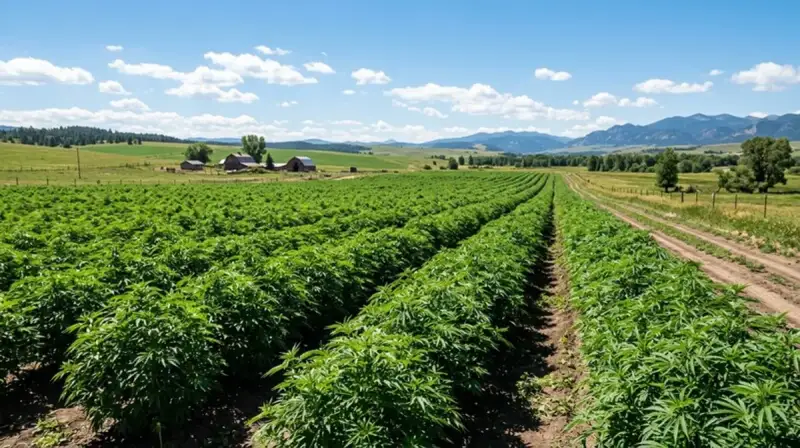
The South Carolina Farm Bureau hemp program, operating under 2018 Farm Bill guidelines, has been active and growing. Hemp-derived CBD products are widely available throughout South Carolina at retail shops, gas stations, health food stores, and online retailers shipping to the state.
| Product | Status in South Carolina |
|---|
| Hemp-derived CBD oil (<0.3% THC) | Legal — widely sold statewide |
| Hemp-derived CBD edibles/gummies | Legal (subject to food labeling requirements) |
| CBD oil for epilepsy (0.9% THC) | Legal under SB 150 with neurologist approval |
| Smokable hemp flower | Gray area — enforcement risk; carry COA documentation |
| Delta-8 / Delta-10 products | Sold widely; legal gray area; enforcement inconsistent |
| Cannabis-derived products (non-SB 150) | Illegal — criminal penalties apply |
SC Farm Bureau hemp growers must be licensed and test their crops to confirm compliance with the 0.3% THC threshold. Retail CBD products sold in South Carolina should carry certificates of analysis. When in doubt, purchase from established retailers with transparent sourcing documentation.
South Carolina employers face no restrictions on cannabis drug testing. The state has no off-duty use protections and no medical patient exemptions for employer drug testing. SB 150 epilepsy patients can still be terminated for positive cannabis tests at most employers.
See: How long does THC stay in urine? and Workplace Drug Testing Laws by State.
MW
Written & reviewed by
Marcus Webb — Senior Cannabis Policy Editor
Marcus covers US state cannabis legislation and regulatory policy. Analysis based on South Carolina Code of Laws, SB 150 text, and SC General Assembly legislative records.
South Carolina sits in a region where cannabis policy varies significantly by state. Understanding these differences helps residents and visitors manage legal risk at state borders:
| State | Status | Key Note |
|---|
| South Carolina | Illegal | Limited CBD for epilepsy only (SB 150); no comprehensive medical |
| North Carolina | Illegal | No program; hemp/CBD broadly sold; similar legal landscape |
| Georgia | Limited Medical | Low-THC oil registry program; very restrictive; no dispensaries for years |
| Virginia | Recreational | Recreational legal since 2021; retail since 2023 |
| Tennessee | Illegal | Fully illegal; one of strictest in Southeast |
| Florida | Medical | Comprehensive medical program; dispensaries throughout state |
Virginia is the only state bordering South Carolina’s general region with recreational access. Never transport cannabis across state lines regardless of origin or destination state law — federal law applies to all interstate transport.
Even a first-offense misdemeanor cannabis conviction in South Carolina carries consequences far beyond the immediate $200 fine and 30-day jail possibility:
| Consequence | Impact |
|---|
| Criminal record | Permanent unless expunged; background check impact |
| Employment | Many employers, especially federal contractors and licensed professions, screen for drug convictions |
| Federal student loans | Drug conviction may suspend federal financial aid eligibility temporarily |
| Professional licenses | SC licensing boards (nursing, legal, etc.) may act on drug convictions |
| Firearms | Felony cannabis conviction results in permanent federal firearms prohibition |
| Public housing | Drug convictions can affect eligibility for federally assisted housing |
| SC expungement | First-offense misdemeanor may be expungeable under SC Code of Laws after completion of sentence and waiting period |
South Carolina does have an expungement statute that allows certain first-offense misdemeanor convictions to be cleared from public record. However, expungement is not automatic and requires a court petition, legal assistance, and fees. SC Legal Services and South Carolina NORML provide resources for individuals seeking guidance on expungement eligibility.
- Cannabis is illegal in South Carolina for recreational use; no comprehensive medical program exists
- First-offense possession under 28g = misdemeanor up to 30 days/$200; second offense = up to 1 year/$2,000
- SB 150 (Julian’s Law) provides very limited CBD access for epilepsy patients with neurologist approval only
- Hemp-derived CBD is widely sold and legal statewide under the SC Farm Bureau hemp program
- Columbia and Charleston have de-prioritized enforcement for small amounts — but these provide no legal protection
- The Compassionate Care Act has passed the Senate multiple times but been blocked in the House
- South Carolina has no citizen initiative process; all reform requires legislative passage
For current South Carolina cannabis law information, consult the South Carolina General Assembly official website or a licensed South Carolina criminal defense attorney.
ZenWeedGuide monitors South Carolina cannabis legislation and updates this page whenever significant legal changes occur.
South Carolina employers have full discretion to drug test employees and applicants. There are no state protections for off-duty cannabis use, and no medical patient carve-outs exist (the limited SB 150 program does not create employment protections). Practical implications for South Carolina workers:
| Employment Sector | Drug Testing Common? | Termination Risk |
|---|
| Federal government / contractors | Required | Termination and security clearance loss |
| State government / agencies | Common | Termination possible |
| Healthcare and hospitals | Standard pre-employment and random | High |
| Transportation (CDL holders) | Federal mandate (DOT) | Federal disqualification |
| Construction / industrial | Common for safety-sensitive roles | Common termination policy |
| Private sector (non-safety roles) | Varies by employer policy | Employer discretion |
South Carolina workers should be aware that even using cannabis legally in another state (such as Virginia or Florida) and testing positive upon return to work in South Carolina has no legal protection. The state has not enacted any off-duty use protections, and employers are not required to accommodate any form of cannabis use regardless of where it occurred.
South Carolina’s medical cannabis reform landscape has shown incremental progress over multiple legislative sessions, but a complete bill has not yet been signed into law. Understanding the political dynamics helps set realistic expectations:
- Senate progress: Comprehensive medical cannabis bills have passed the full Senate in multiple sessions, sometimes with bipartisan support including Republican votes
- House obstacle: The South Carolina House of Representatives — and specifically House leadership — has been the primary obstacle; bills have died in committee or failed to reach the floor for a vote
- No ballot initiative: South Carolina does not allow statewide citizen-initiated ballot measures for legislative purposes — all reform must pass through the legislature and receive the governor’s signature
- Governor’s position: Recent governors have indicated conditional openness to a carefully structured medical program but have not championed reform
- Public opinion: Consistent polling shows majority support for medical cannabis among South Carolina voters, providing political pressure for reform
The most likely near-term outcome, if reform advances, is a limited medical program covering serious conditions. Recreational legalization is not on the political horizon for South Carolina in any near-term scenario. Patients who need cannabis for medical reasons have no legal in-state option beyond the narrow SB 150 epilepsy CBD allowance.
Does South Carolina have any form of medical cannabis?
South Carolina has a very narrow CBD-only exemption for epilepsy patients under SB 150 (Julian’s Law). This requires a neurologist’s written approval and covers only CBD oil with no more than 0.9% THC for epilepsy treatment. There is no comprehensive medical cannabis program in South Carolina, and no dispensary system exists for the SB 150 program.
Can I use my out-of-state medical card in South Carolina?
No. South Carolina does not recognize out-of-state medical cannabis cards. Even if you hold a valid medical card from Florida, Virginia, or any other state, possessing cannabis in South Carolina subjects you to full state criminal penalties. There is no reciprocity provision.
Is CBD legal in South Carolina?
Hemp-derived CBD products containing less than 0.3% THC are legal and widely sold throughout South Carolina under the SC Farm Bureau hemp program and federal 2018 Farm Bill guidelines. Cannabis-derived CBD (without the SB 150 neurologist certification for epilepsy) remains illegal. Smokable hemp flower carries enforcement risk due to field testing limitations.
Does Columbia or Charleston decriminalization protect me from state charges?
No. Local de-prioritization policies in Columbia and Charleston direct city police to make small cannabis possession a lower enforcement priority, but they provide no legal protection. State law enforcement, county sheriffs, and state prosecutors are not bound by city policies. A de-prioritization policy is not a legal defense and does not prevent prosecution under state law.