










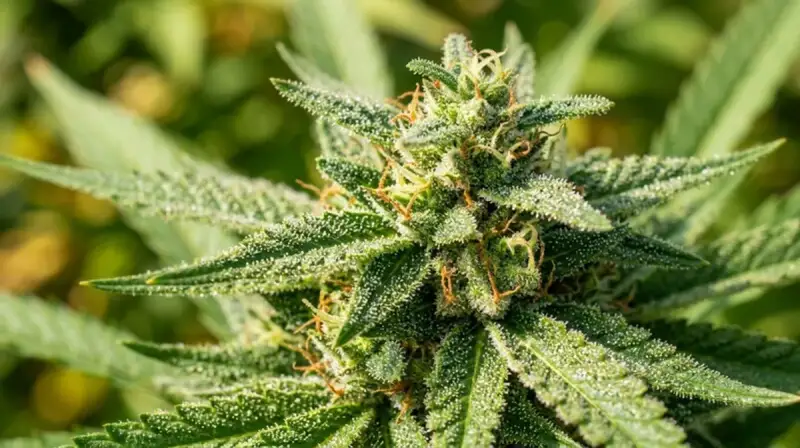
- Fully illegal for cannabis: North Carolina has no recreational or medical cannabis programme. All cannabis possession, cultivation, and distribution is a criminal offense.
- Class 3 misdemeanor: Possession of 0.5 oz or less is a Class 3 misdemeanor — the lowest criminal classification in North Carolina, but still a criminal record. First-time offenders may avoid active jail time but receive a fine and criminal record.
- Escalating charges: Possession above 0.5 oz rises through Class 1 misdemeanor (0.5 oz–1.5 oz), Class I felony (1.5 oz–10 lbs), to high-level trafficking felonies.
- Medical bill repeatedly stalled: The NC Compassionate Care Act passed the Senate in 2023 but died in the House. Similar patterns in prior sessions. House leadership is the primary barrier.
- Major hemp state: North Carolina is consistently among the top 5 states for hemp cultivation acreage. The tobacco-to-hemp agricultural transition has been significant in rural NC counties.
- Charlotte’s Web name note: The famous high-CBD strain is named for Charlotte Figi (from Colorado), not Charlotte, NC. However, the story drove national CBD awareness and indirectly benefited NC’s hemp industry.
- Urban de-emphasis: Durham and Asheville have informally deprioritized small cannabis possession enforcement, though no formal decrim ordinance exists anywhere in North Carolina.
North Carolina Cannabis Law Quick Reference
| Category | Rule / Penalty |
|---|---|
| Recreational cannabis | Fully illegal |
| Medical programme | None (bills repeatedly failed) |
| Possession ≤0.5 oz (first offense) | Class 3 misdemeanor; up to 30 days jail (suspended for first offenders); $200 fine |
| Possession 0.5 oz–1.5 oz | Class 1 misdemeanor; up to 120 days jail; discretionary fine |
| Possession 1.5 oz–10 lbs | Class I felony; 3–12 months prison (presumptive range); fine |
| Possession / sale 10–50 lbs | Class H felony (trafficking): 25–39 months minimum mandatory; $5,000 fine |
| Trafficking 50–2,000 lbs | Class G felony: 35–51 months minimum mandatory; $25,000 fine |
| Trafficking >2,000 lbs | Class D felony: 175–222 months mandatory; $200,000 fine |
| Home cultivation (any plants) | Class I felony minimum (manufacturing); higher for large scale |
| Hemp (≤0.3% THC) | Legal; NC Industrial Hemp Act |
| Public consumption | Criminal; misdemeanor charge |
| Decriminalization | None at state level; some local de-emphasis (Durham, Asheville) |
Possession Penalties in Full Detail
North Carolina’s cannabis penalty structure uses the state’s general criminal classification framework, with cannabis possession escalating from Class 3 misdemeanor through multiple felony levels based on quantity. The Class 3 misdemeanor for small possession is technically the lowest criminal charge in the North Carolina system, but “lowest” does not mean consequence-free — it still creates a criminal record.
| Amount | Charge | Sentence Range | Fine |
|---|---|---|---|
| Up to 0.5 oz (first offense) | Class 3 misdemeanor | 1–20 days (most first offenders: suspended sentence) | Up to $200 |
| Up to 0.5 oz (subsequent offense) | Class 3 misdemeanor | 1–20 days; may be activated | Up to $200 |
| 0.5 oz–1.5 oz | Class 1 misdemeanor | Up to 120 days; probation available | Discretionary |
| 1.5 oz–10 lbs | Class I felony | 3–12 months (presumptive); community/intermediate for first offenders | Discretionary |
| 10–50 lbs (trafficking) | Class H felony | 25–39 months mandatory minimum; no probation | $5,000 |
| 50–2,000 lbs | Class G felony | 35–51 months mandatory; no probation | $25,000 |
| 2,000+ lbs | Class D felony | 175+ months mandatory; no probation | $200,000 |
| Sale near school (1,000 ft) | Enhanced felony | Mandatory upgrade of base charge one class | Enhanced fine |
| Sale to minor | Class D felony minimum | Mandatory prison; lengthy sentence | Substantial |
North Carolina’s trafficking law applies not only to sale but to mere possession of trafficking quantities. Possessing 10 lbs or more — even with no evidence of sale or distribution — triggers the Class H trafficking charge with its 25–39 month mandatory minimum. This means a person who grows a large personal supply (more than 10 lbs of dried flower) faces a mandatory prison sentence regardless of their intent.
The structured sentencing system in North Carolina means that judges have limited discretion for trafficking charges: the mandatory minimums must be imposed. This reduces the relevance of individual circumstances, criminal history, or mitigating factors in the most serious cannabis cases.
North Carolina’s Hemp Industry
North Carolina has emerged as one of the most significant hemp-producing states in the country. The state’s deep agricultural heritage — particularly its history as the largest tobacco-producing state for much of the 20th century — translated well to hemp cultivation. Tobacco farmers possessed the land, equipment, curing facilities, and agronomic expertise needed to transition to hemp, and many did so following the collapse of tobacco price supports and shifting consumer trends away from tobacco.
The North Carolina Industrial Hemp Act authorized hemp cultivation under state and federal oversight. North Carolina consistently ranks among the top five states nationally for licensed hemp acreage. The Research Triangle area (Raleigh-Durham-Chapel Hill) also hosts academic and startup activity around hemp processing, CBD extraction, and hemp-derived product development.
| Hemp Industry Element | Details |
|---|---|
| Hemp cultivation licences | Thousands of licensed growers; NC Dept. of Agriculture oversight |
| Primary growing regions | Piedmont and eastern NC tobacco-belt counties: Wayne, Wilson, Johnston, Harnett |
| Primary products | CBD biomass, CBD oil extraction, hemp fiber, hemp grain, hemp food products |
| Academic research | NC State University hemp agronomy programme; NC A&T University (land grant) |
| Retail CBD market | Extensive; hemp CBD products sold in pharmacies, grocery stores, health shops, and online statewide |
| Delta-8 THC | Widely sold; no specific NC prohibition; enforcement gray area |
| THCA products | Sold as “hemp” in some shops; legal ambiguity under NC law |
The tobacco-belt historical connection to hemp is significant beyond agriculture. For generations, many North Carolina politicians — particularly those from tobacco-growing eastern and Piedmont districts — defended tobacco farming as a legitimate industry and economic backbone of rural communities. Some of these same lawmakers and their successors now apply similar framing to hemp, creating a political bridge between traditional agricultural constituencies and cannabis reform that is unusual compared to other Southern states.
Charlotte’s Web and the CBD Moment
The story of Charlotte’s Web CBD is foundational to understanding the national CBD legalization movement and frequently generates confusion about its connection to North Carolina. Charlotte’s Web is a high-CBD, very low-THC cannabis strain developed by the Stanley Brothers in Colorado and named for Charlotte Figi, a young Colorado Springs girl who suffered from Dravet Syndrome — a severe form of epilepsy causing hundreds of seizures per week.
Charlotte Figi began using Charlotte’s Web oil as a young child and experienced a dramatic reduction in seizure frequency. Her story was featured in Sanjay Gupta’s 2013 CNN documentary “Weed,” which catalyzed national public attention to medical cannabis and specifically to CBD for pediatric epilepsy. The story drove legislative action in dozens of states, including the passage of CBD-specific bills in conservative states that had previously rejected all cannabis reform — the “Charlotte’s Web laws” that proliferated from 2014 onward.
The name Charlotte refers to Charlotte Figi, not Charlotte, North Carolina. Charlotte, NC and Charlotte’s Web the strain have no direct connection. However, the cultural resonance of the Charlotte name and the broader CBD advocacy movement materially contributed to public acceptance of hemp and CBD in North Carolina, indirectly supporting the state’s hemp industry growth. Charlotte Figi passed away in 2020 due to complications from COVID-19, but her legacy continues to shape cannabis policy advocacy nationally.
The NC Compassionate Care Act: Medical Cannabis Reform
The North Carolina Compassionate Care Act represents the most substantive medical cannabis reform legislation in the state’s history. The bill, introduced with bipartisan support in the North Carolina General Assembly, would establish a state-regulated medical cannabis programme allowing patients with qualifying conditions to obtain cannabis from licensed dispensaries.
In 2023, the North Carolina Senate passed the Compassionate Care Act by a 35–15 bipartisan vote, including support from multiple Republican senators. The bill would have created a medical programme for patients with cancer, HIV/AIDS, ALS, Parkinson’s, multiple sclerosis, PTSD, autism, chronic pain, and other serious conditions. Despite Senate passage, the House did not bring the legislation to a floor vote before the end of the session, effectively killing it for that term.
The pattern is consistent with prior sessions: Senate versions of medical cannabis bills have gained traction while the House has been the structural barrier. House leadership has cited concerns about youth exposure, implementation complexity, and the absence of an FDA-approved medical framework for cannabis as reasons to delay action. Critics note that 38+ states have operational medical cannabis programmes and the safety and efficacy evidence base is extensive.
Research Triangle Park (RTP) — one of the nation’s premier technology and biopharmaceutical research clusters — adds an unusual dimension to North Carolina cannabis politics. RTP hosts dozens of pharmaceutical companies, biotechnology firms, and research institutions that employ tens of thousands of educated, high-income professionals who tend to hold more progressive views on cannabis than the state’s rural legislative base. The RTP workforce’s political influence has grown but has not yet overcome the structural advantages of rural and suburban conservative districts in the General Assembly.
Urban Enforcement: Durham and Asheville
Durham, home to Duke University and a significant Democratic urban electorate, has informally de-emphasized cannabis enforcement for small amounts under the discretion of the Durham County District Attorney. The DA’s office has directed prosecutors to exercise discretion in declining to pursue Class 3 misdemeanor possession cases, particularly for first-time offenders. This does not constitute decriminalization and creates no legal right for defendants, but it reflects a practical reduction in prosecution risk for small possession in Durham.
Asheville, a progressive mountain city known for its arts community, craft beer industry, and relatively liberal politics for western North Carolina, has similarly seen reduced cannabis enforcement compared to rural western NC counties. The Buncombe County Sheriff and DA have reflected community preferences by deprioritizing small cannabis offenses.
By contrast, enforcement in Mecklenburg County (Charlotte), Wake County (Raleigh), and most rural NC counties is more consistent with the letter of state law. The political and cultural variation across North Carolina’s diverse geography — from the Outer Banks to the Research Triangle to the tobacco belt to the mountains — creates meaningfully different practical cannabis risk environments within the same state legal framework.
DUI and Cannabis in North Carolina
North Carolina’s DWI law (G.S. 20-138.1) prohibits driving while impaired by any impairing substance, including cannabis. North Carolina does not have a specific per se THC blood threshold. Impairment must be proven by the totality of evidence: driving behavior, officer observations, field sobriety tests, and chemical testing.
North Carolina uses the Standardized Field Sobriety Tests (SFSTs) developed for alcohol impairment, plus additional observations relevant to drug impairment. DRE (Drug Recognition Expert) certification is available to select NC law enforcement officers, and DRE evaluations are used in drug DWI prosecution.
| DWI Offense | Level | Penalties |
|---|---|---|
| Level V (least serious) | Misdemeanor | 24 hours–60 days jail (24 hrs mandatory); $200 fine; 1-year license revocation |
| Level IV | Misdemeanor | 48 hours–120 days; $500 fine |
| Level III | Misdemeanor | 72 hours–6 months; $1,000 fine |
| Level II | Misdemeanor | 7 days–1 year (7 days mandatory); $2,000 fine |
| Level I (most serious misdemeanor) | Misdemeanor | 30 days–2 years (30 days mandatory); $4,000 fine |
| Aggravated Level I | Misdemeanor (enhanced) | 12 months–3 years (12 months mandatory); $10,000 fine |
Employment, Housing, and Federal Conflict
North Carolina has no employment protection for cannabis users. Employers may test, refuse to hire, and terminate employees based on positive cannabis tests. The state’s large military and federal contractor workforce — Fort Liberty (formerly Fort Bragg), Camp Lejeune/Jacksonville, Seymour Johnson AFB, Pope Field, multiple Coast Guard stations — is subject to federal zero-tolerance drug policies with no state-law exception.
North Carolina is a major banking and financial services hub (Bank of America, Truist, Wells Fargo all headquartered or with major operations in Charlotte). These federally regulated financial institutions maintain strict drug-free workplace policies under federal banking regulations and risk management requirements, creating an employment protection gap for cannabis-using professionals in one of the state’s largest industry sectors.
Housing protections are absent under state law. Federal housing at military bases and HUD-assisted housing follows federal zero-tolerance rules. Private landlords in North Carolina have full discretion to prohibit cannabis use in rental properties and are not prohibited from discriminating against tenants based on cannabis use history.