










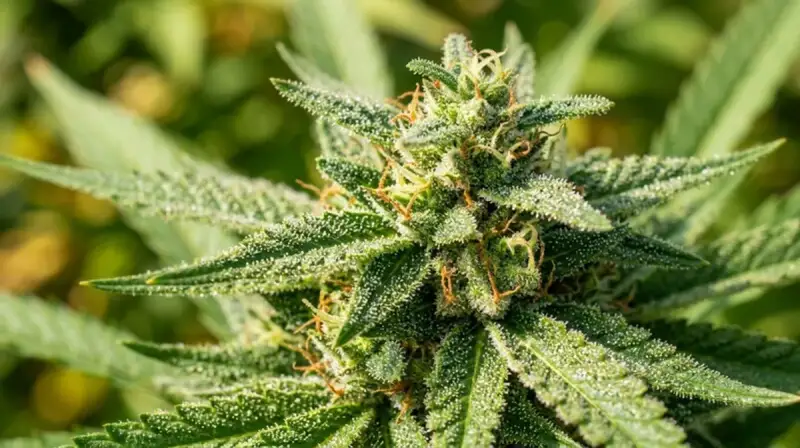
- Fully illegal: Tennessee has no recreational or functional medical cannabis programme. All cannabis possession, cultivation, and sale is criminal under state law.
- Misdemeanor threshold: Possession of 0.5 oz (14.2 g) or less is a Class A misdemeanor: up to 11 months 29 days in jail and a $2,500 fine on first offense.
- Felony above 0.5 oz: Possession of more than 0.5 oz is a Class E felony carrying 1–6 years in state prison.
- No medical programme: Tennessee’s only relevant law (SB 280, 2015) technically permits low-THC CBD oil for intractable seizures but created zero infrastructure — no dispensaries, no registry, no supply chain.
- Hemp/CBD legal: Hemp-derived products with 0.3% THC or less are legal under the Tennessee Industrial Hemp Act and are sold openly in retail stores statewide.
- Delta-8 gray zone: Delta-8 THC products derived from hemp are sold openly but operate in a regulatory gray zone; enforcement has been inconsistent.
- Reform unlikely near-term: Tennessee’s Republican supermajority legislature has rejected every medical and recreational cannabis bill. Reform advocates point to changing public opinion, but no major legislative movement is expected before 2027.
Tennessee Cannabis Law Quick Reference
| Category | Rule / Penalty |
|---|---|
| Recreational cannabis | Fully illegal; no possession, use, or sale permitted |
| Medical cannabis programme | None (SB 280/2015 has no functional infrastructure) |
| Possession ≤0.5 oz (first offense) | Class A misdemeanor: up to 11 mo 29 days jail, $2,500 fine |
| Possession ≤0.5 oz (second offense) | Class A misdemeanor; enhanced sentence likely |
| Possession >0.5 oz | Class E felony: 1–6 years state prison |
| Possession >10 lbs | Trafficking — Class B felony: 8-year mandatory minimum |
| Sale / distribution (any amount) | Class E felony minimum; higher felony classes for larger quantities |
| Sale near school (1,000 ft) | Enhanced charge; mandatory additional penalties |
| Home cultivation (any plants) | Illegal; treated as manufacturing; felony charges |
| Driver’s license | Automatic suspension upon conviction for any drug offense |
| Hemp/CBD (0.3% THC or less) | Legal; sold in retail stores statewide |
| Delta-8 THC | Gray area; widely sold but subject to potential enforcement |
| Decriminalization | None at state level; some local de-emphasis in Nashville/Memphis |
| Expungement | Limited; misdemeanor possession records may be expungeable after 5 years |
| Public consumption | Illegal; criminal charge |
Tennessee’s Legal Status: The Full Picture
Tennessee is among the most restrictive states in the country on cannabis policy. Unlike neighbouring states that have moved toward decriminalization or medical programmes — Kentucky passed a limited medical cannabis law in 2023, and Virginia has full adult-use cannabis — Tennessee has maintained criminalization across the board with minimal shift in enforcement philosophy or legislative appetite for reform.
The state’s legal framework is governed primarily by Tennessee Code Annotated (TCA) Title 39, Chapter 17, which defines controlled substance offenses. Cannabis is listed as a Schedule VI controlled substance under Tennessee law, which is a lower classification than Schedule I federally, but the criminal penalties for possession, sale, and manufacturing remain substantial and felony-level for most meaningful quantities.
The legislature has rejected medical cannabis legislation in every session it has been introduced. Conservative lawmakers cite concerns about diversion, youth access, federal law conflicts, and opposition from law enforcement lobby groups. A 2021 poll showed 73% of Tennessee residents support some form of legal cannabis, creating a significant gap between public opinion and legislative policy — a gap that advocates attribute to structural political factors including gerrymandering and outsized rural political influence.
The political landscape is dominated by a Republican supermajority in both chambers. Pro-cannabis Republicans have occasionally broken ranks to sponsor medical bills, but these have consistently failed to reach a floor vote. The governor’s office has historically opposed any cannabis legislation. Without a citizen initiative process available in Tennessee (unlike states such as Arizona or Florida that passed medical or recreational cannabis via ballot), reform requires legislative action, making the path to change significantly slower.
Possession Penalties in Detail
| Amount | Classification | Penalty Range | Additional Consequences |
|---|---|---|---|
| 0.5 oz or less — first offense | Class A misdemeanor | Up to 11 mo 29 days jail; $2,500 fine | Automatic license suspension; possible probation |
| 0.5 oz or less — second offense | Class A misdemeanor (enhanced) | Increased jail likelihood; same max fine | License suspension; employment impact |
| 0.5 oz–10 lbs | Class E felony | 1–6 years state prison; up to $3,000 fine | Felony record; loss of voting rights; housing disqualification |
| 10 lbs–70 lbs | Class B felony (trafficking) | 8–30 years; $100,000 fine | Mandatory minimum 8 years; no parole eligibility for minimum |
| 70 lbs–300 lbs | Class B felony (enhanced trafficking) | 8–30 years; $200,000 fine | Same mandatory minimums |
| 300 lbs+ | Class A felony | 15–60 years; $500,000 fine | Most serious drug trafficking classification in state |
| Paraphernalia possession | Class A misdemeanor | Up to 11 mo 29 days jail; $2,500 fine | Charged separately from possession; double charge possible |
Tennessee’s 0.5 oz threshold for felony charges is one of the lowest in the country. In states such as New York, Virginia, and Colorado, possession of multiple ounces is a minor offense or not criminal at all. The practical effect is that a cannabis user carrying what might be a week’s personal supply — more than 0.5 oz but far less than a pound — faces felony prosecution with potentially multi-year prison sentences.
The automatic driver’s license suspension upon any drug conviction (T.C.A. §55-50-502) is a collateral consequence that disproportionately affects working-class defendants who depend on driving for employment. Suspension periods range from 6 months to 1 year on first offense and can be extended for repeat convictions.
The SB 280 CBD Oil Law: What It Does and Doesn’t Do
In 2015, Tennessee passed SB 280, commonly described as a “CBD oil law.” The law amended the controlled substance schedule to allow possession of cannabis oil with 0.9% THC or less for individuals with intractable seizure disorders, provided they have documentation from a physician. The law was written narrowly and passed with bipartisan support driven primarily by parents of children with severe epilepsy who had seen dramatic seizure reduction from CBD.
However, SB 280 has critical functional deficiencies that render it essentially unusable for most patients. The law created no regulatory framework, no dispensary system, no cultivation licenses, no patient registry, and no supply chain. A qualifying patient has no legal way to obtain the oil within Tennessee because no licensed seller exists. The law does not authorize any form of production, distribution, or sale — only possession by already-registered patients who somehow already have the product.
In practice, many families of children with severe epilepsy continued to source CBD oil from other states or from the grey market, often risking federal or state charges during transport. The passage of the federal 2018 Farm Bill, which legalized hemp-derived CBD at the federal level, largely superseded SB 280’s limited scope because hemp-derived CBD products became widely commercially available without any prescription or registry.
Multiple attempts to expand this law into a functional medical programme — including bills in 2019, 2020, 2021, 2022, and 2023 — have failed in committee or on the floor. The most substantive proposals would have created a dispensary licensing system similar to Louisiana’s, but these failed to gain traction with leadership in the Republican-controlled House and Senate.
Hemp, CBD, and Delta-8 in Tennessee
Tennessee’s hemp industry is one of the more significant in the South. The Tennessee Industrial Hemp Act authorized hemp cultivation before the federal 2018 Farm Bill, positioning the state to develop hemp agriculture, processing infrastructure, and a retail CBD market. By 2026, thousands of Tennessee retailers including gas stations, health food stores, vape shops, and smoke shops sell hemp-derived CBD products statewide.
| Product Type | Legal Status in Tennessee | Notes |
|---|---|---|
| Hemp flower (≤0.3% THC) | Legal | Sold openly; no age restriction under state law; resembles cannabis visually |
| CBD oil/tinctures | Legal | Widely available; no prescription needed |
| CBD edibles/gummies | Legal | Popular retail category; no THC limit if hemp-derived |
| Delta-8 THC | Gray area — widely sold | Derived from hemp; not explicitly banned under Tennessee law; sold at gas stations; enforcement inconsistent |
| Delta-9 THC (cannabis) | Fully illegal | Any amount; criminal charges apply |
| Cannabis concentrates (any THC) | Fully illegal | Wax, shatter, oil with cannabis THC; felony charges possible |
| Cannabis edibles | Fully illegal | Any cannabis-derived edible; same penalty as flower possession |
Delta-8 THC presents a particular legal complexity in Tennessee. Delta-8, a mildly psychoactive cannabinoid that can be synthesized from legal hemp-derived CBD, is sold in vape cartridges, gummies, and other products at thousands of Tennessee retailers. The Tennessee Department of Agriculture has not formally banned delta-8, and the state legislature has not passed specific delta-8 prohibition. However, district attorneys in some counties have taken the position that synthetic delta-8 may fall under analog drug laws. The legal uncertainty creates risk for consumers and sellers alike.
Nashville and Memphis: Enforcement Variation
While state law applies uniformly across Tennessee, enforcement practices vary significantly between urban and rural jurisdictions. Nashville (Davidson County) and Memphis (Shelby County) have historically deprioritized low-level cannabis enforcement, reflecting the policy preferences of urban communities and elected district attorneys who have emphasized violent crime prosecution over cannabis misdemeanors.
Nashville’s police department has, at various points, issued internal guidance directing officers to focus limited resources on serious crime rather than small cannabis possession. Memphis similarly has seen declining cannabis-related arrests compared to statewide trends. However, it is critical to understand that this represents informal enforcement discretion, not legal protection. There is no decriminalization ordinance in Nashville, Memphis, or any other Tennessee city. State law still applies, and a misdemeanor charge remains possible at any arrest.
In rural Middle and East Tennessee counties, enforcement tends to be stricter and prosecution rates higher for cannabis possession. Tennessee Bureau of Investigation (TBI) data consistently shows that cannabis arrest rates per capita are significantly higher in rural counties than in Shelby and Davidson counties, even controlling for population-adjusted use estimates.
The risk of cross-county enforcement is real. A Nashville resident who travels to a conservative rural county — for hiking, visiting family, or attending an event — faces the full weight of state cannabis law with no de-facto protection from Nashville’s enforcement culture. Travelers from legal states visiting Tennessee must understand that cannabis is not tolerated in Tennessee courts or by Tennessee law enforcement outside major urban centres.
Drug Tourism Risk: Bordering Legal States
Tennessee shares borders with eight states, several of which have now moved toward legal cannabis. Virginia has adult-use cannabis retail. Missouri has adult-use retail. Kentucky passed a medical cannabis law in 2023 with dispensaries beginning operation. This creates a drug tourism dynamic where Tennessee residents drive across state lines to legally purchase cannabis — a practice that is legal in the destination state but becomes illegal the moment cannabis re-enters Tennessee.
Transporting cannabis purchased legally in Virginia or Missouri across the Tennessee state line is a federal crime (interstate drug trafficking) and a Tennessee state crime (possession or trafficking depending on quantity). Tennessee law enforcement, including state troopers on interstates, are aware of this dynamic and have stated that they conduct stops and searches on traffic returning from legal states.
Specific risk zones include:
- I-81 and I-26 corridors from Virginia through Bristol and Kingsport
- I-64 and US-60 routes from Kentucky into East Tennessee
- I-55 and I-40 routes from Missouri through Memphis
Tennessee state troopers have authority to search vehicles under plain smell doctrine, and the odour of cannabis in a vehicle is considered probable cause for a warrantless search under Tennessee Supreme Court precedent. This means that even driving with empty packaging from a legal-state dispensary could trigger a full vehicle search on the Tennessee side of any border crossing.
DUI and Cannabis in Tennessee
Tennessee has a zero-tolerance approach to cannabis and driving. Unlike some states that have adopted per se THC blood thresholds (such as Colorado’s 5 ng/mL standard), Tennessee uses a zero-tolerance impairment standard: any detectable amount of cannabis metabolites in the bloodstream while driving can support a DUI charge under T.C.A. §55-10-401.
Tennessee DUI law does not require proof of impairment at the time of driving for cannabis — only proof of the presence of a controlled substance. This means that a person who used cannabis in a legal state three days before driving in Tennessee could technically face a DUI charge based on metabolite presence even if they are not impaired. THC metabolites (THC-COOH) are detectable in blood for 1–7 days in occasional users and up to 30 days in heavy users.
| Offense | Classification | Penalty Range |
|---|---|---|
| First DUI (cannabis) | Class A misdemeanor | 48 hours–11 mo 29 days jail; $350–1,500 fine; 1-year license revocation |
| Second DUI within 10 years | Class A misdemeanor (enhanced) | 45 days–11 mo 29 days jail; $600–3,500 fine; 2-year revocation |
| Third DUI within 10 years | Class A misdemeanor (multiple DUI) | 120 days–11 mo 29 days jail; 6-year revocation |
| Fourth or more DUI | Class E felony | 150 days–6 years; $3,000–15,000 fine; 8-year revocation |
| DUI with child in vehicle | Enhanced; mandatory aggravating factor | Additional mandatory jail time; child endangerment charges |
Tennessee also requires an ignition interlock device (IID) for DUI convictions, including cannabis-related DUI. While IIDs measure alcohol, not THC, the installation and maintenance costs are an additional financial burden. Tennessee’s IID requirement can apply even on first offense if blood results are requested and cannabis is detected.
Employment, Housing, and Cannabis in Tennessee
Tennessee has no employment protection for cannabis users. Employers may test for cannabis, refuse to hire applicants who test positive, and terminate employees for positive drug tests — regardless of when and where the cannabis was used. There is no state law analogous to those in New Jersey, Montana, or Minnesota that prohibit employer discrimination against legal off-duty cannabis users.
Tennessee’s status as an employment-at-will state with no cannabis employment protection means that private employers have near-total discretion. Even if a Tennessee employee legally consumed cannabis in Virginia on a weekend with no work obligations and returned to Tennessee days later, a positive drug test is valid grounds for termination without legal recourse under Tennessee state law.
Housing is similarly unprotected. Landlords in Tennessee may prohibit cannabis use on rental properties and may include cannabis-use prohibition in lease terms. Section 8 and federally subsidized housing follows federal law, which prohibits cannabis regardless of state law. Public housing authorities in Nashville, Memphis, and Knoxville are bound by federal rules.
Federal employees and contractors working at Tennessee’s substantial federal facilities — Oak Ridge National Laboratory, Arnold Air Force Base, numerous VA facilities, TVA operations — are subject to federal zero-tolerance drug policies with no state-law exception.
Expungement in Tennessee
Tennessee has limited expungement provisions that may apply to first-time cannabis misdemeanor convictions under certain conditions. T.C.A. §40-32-101 allows expungement of certain misdemeanor convictions after a waiting period, provided the person has completed all sentence requirements (jail, probation, fines) and has not been convicted of another offense during the waiting period.
The waiting period for misdemeanor cannabis possession expungement is generally five years from the completion of sentence. Felony cannabis convictions are not expungeable under current Tennessee law. The expungement process requires a petition to the court, payment of a fee (up to $450 for expungements following conviction), and a hearing.
Tennessee has not enacted any automatic expungement legislation for legacy cannabis convictions, unlike states such as Illinois, California, and Colorado that have implemented mass automatic record clearing programmes following legalization. Without legalization, there is no political driver for automatic expungement in Tennessee. Advocates argue that tens of thousands of Tennesseans carry cannabis conviction records that limit employment, housing, and educational opportunities for offenses that would not be crimes in most neighbouring or progressive states.
The Reform Political Landscape
Tennessee’s path to cannabis reform faces structural obstacles beyond ordinary legislative opposition. The state has no citizen ballot initiative process, meaning reform must come exclusively through the Republican-controlled General Assembly. The Republican caucuses in both the House and Senate contain members who are philosophically opposed to any cannabis legalization on moral, public health, or law enforcement grounds.
A handful of Republican lawmakers have sponsored medical cannabis bills over the years, citing constituent stories of patients with epilepsy, PTSD, and chronic pain who benefit from cannabis but must break the law to access it. However, leadership in both chambers has consistently blocked these bills from reaching a floor vote. The Speaker of the House and Lt. Governor (who serves as Senate Speaker) have significant gatekeeper authority over what reaches a vote.
The Tennessee Medical Cannabis Commission was created by the legislature in 2021 to study medical cannabis and report findings. Their 2023 report acknowledged evidence for medical benefit in several conditions but declined to make a strong recommendation for full medical legalization. The commission’s work has been cited by both proponents and opponents, making its conclusions politically ambiguous.
Poll data from Vanderbilt University’s Center for the Study of Democratic Institutions (2023) found 73% of Tennessee residents support medical cannabis and 53% support adult recreational use. This public majority has not translated to legislative movement, which observers attribute to the primary election system that rewards ideologically conservative positions, limited campaign finance reform, and opposition from law enforcement associations and some religious organizations.
Federal vs. State Conflict
Since Tennessee has not legalized cannabis, there is no significant state-federal conflict of the type seen in Colorado, California, or Oregon. Tennessee state law and federal law are in alignment: cannabis is illegal under both. Tennessee law enforcement cooperates with federal drug task forces and DEA operations without the tension that exists in states where state and federal law diverge.
However, the federal conflict becomes relevant for Tennessee residents who use cannabis legally in other states. Federal law prohibits transporting cannabis across state lines regardless of the legal status in either state. It also prohibits cannabis use by individuals who work in federally regulated industries, hold federal security clearances, or live in federally subsidized housing — regardless of whether their state has legalized cannabis.
The Tennessee Valley Authority (TVA), Oak Ridge National Laboratory (ORNL), multiple Army and Air Force installations, and a substantial federal contractor workforce in Tennessee all operate under federal zero-tolerance drug policies. Employees in these sectors who use cannabis legally while in another state may face federal employment consequences upon return to Tennessee and their federal workplace.
Watch: US Cannabis Law by State Overview
Related State & Legal Guides
- Kentucky Cannabis Laws →
- Virginia Cannabis Laws →
- North Carolina Cannabis Laws →
- Georgia Cannabis Laws →
- Texas Cannabis Laws →
- Missouri Cannabis Laws →
View All 50 US State Cannabis Laws → | Full Legalization by State Guide →
See our guide to Best Dispensaries in Nashville, TN